June 2022
The delays here are just so frustrating. It was tested against earlier Omicron variants. They then delayed in purchasing it and new variants emerged. They then said "it hasn't been tested against the later variants". By the time those tests are done... more variants will exist. https://t.co/3m0lcBpCVr
Today I am speaking (pre-recorded with live Q&A) at the Business Librarians Association Conference on "Fairness, Openness, Access, and Evaluation". Slides and video of the talk available here for everyone: https://eprints.bbk.ac.uk/id/eprint/48402/
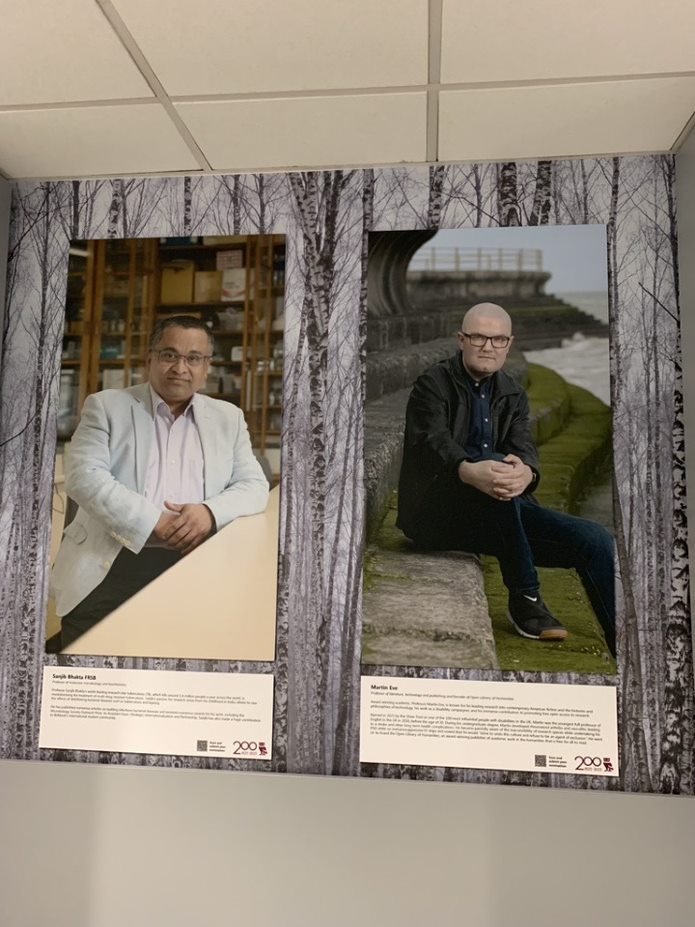
Ah! Here I am in @BirkbeckUoL main reception as part of our College's 200th anniversary celebrations! I wish I could see it in person. Perhaps that time will come.
Urgh. As a terrible side effect of the terrible US judicial news, this is awful. Methotrexate is a frontline, safe, inexpensive go-to treatment for RA. Given that 2/3rds of RA patients are women, too... https://t.co/C8wrK5epqk
Hospitals bring back masks on wards just weeks after rules relaxed. Thank heavens.
https://www.independent.co.uk/news/health/hospitals-masks-covid-surge-b2111021.html
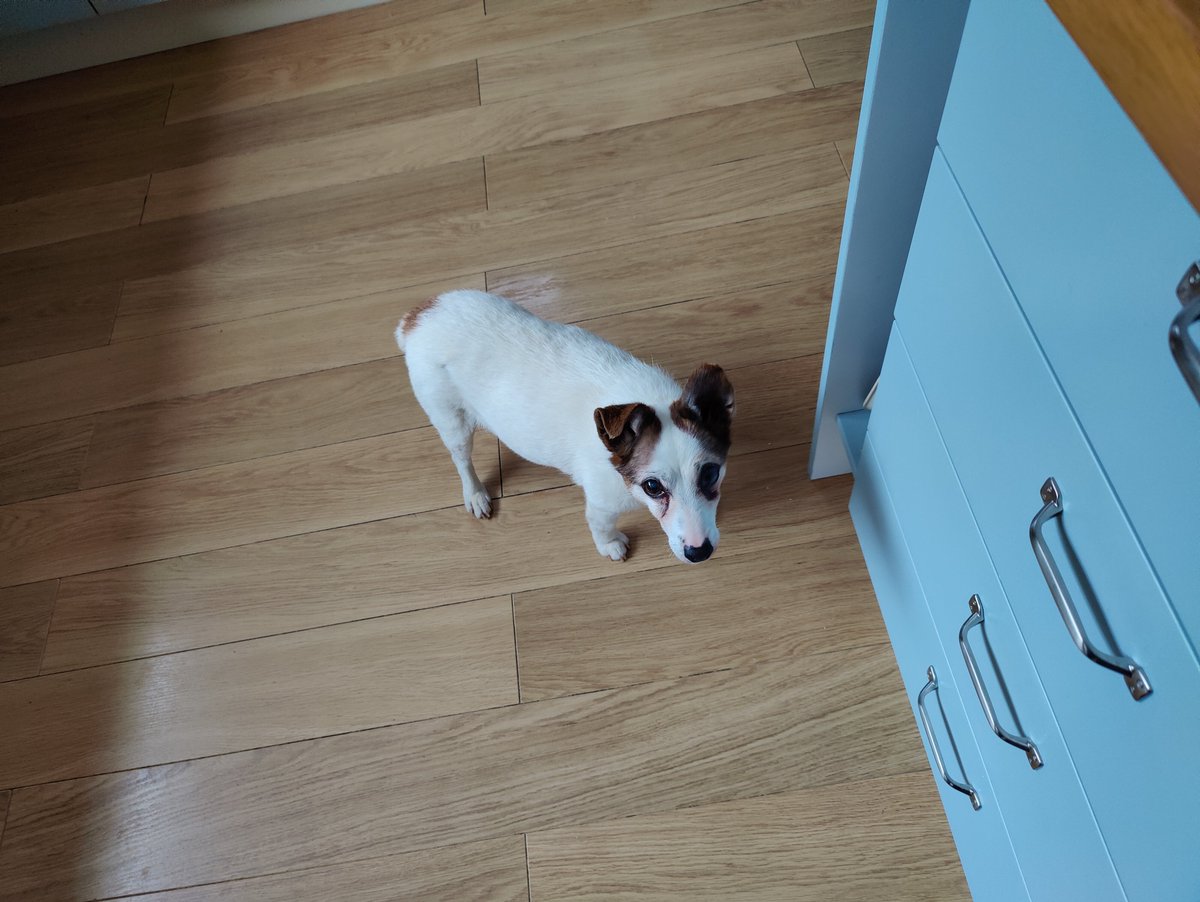
Toby scared us witless this evening. Suddenly decided he was going to sleep somewhere totally different and was virtually unresponsive for an hour or so. We were worried sick. Called the vet. Then he just got up and started pottering around again, perfectly happy.
Fact of the day: apparently punched cards made up 20% of IBM's revenue in the 1950s
Wahl, ‘The History of Punched Cards: Using Paper to Store Information’, in The Routledge Companion to Media Technology and Obsolescence, ed. by Wolf (New York: Routledge, 2019), pp. 27–45, p. 36
"In 1995, when the United States Social Security Administration decided to replace their existing punched-card system, it was estimated that they would save $10 million per year". p. 40
This morning I am reading the fascinating Mark J. P. Wolf, ed., The Routledge Companion to Media Technology and Obsolescence (New York, NY: Routledge, 2019). Love that there's a chapter "Timeline of Obsolescence".
We know that many people still shielding are suffering extreme psychological distress with ongoing isolation and anxiety. A clinical psychologist in our group has written an article with support tips that some may find useful.
https://getevusheld.uk/5_support.html
Highlights from Git 2.37 | The GitHub Blog
https://github.blog/2022-06-27-highlights-from-git-2-37/
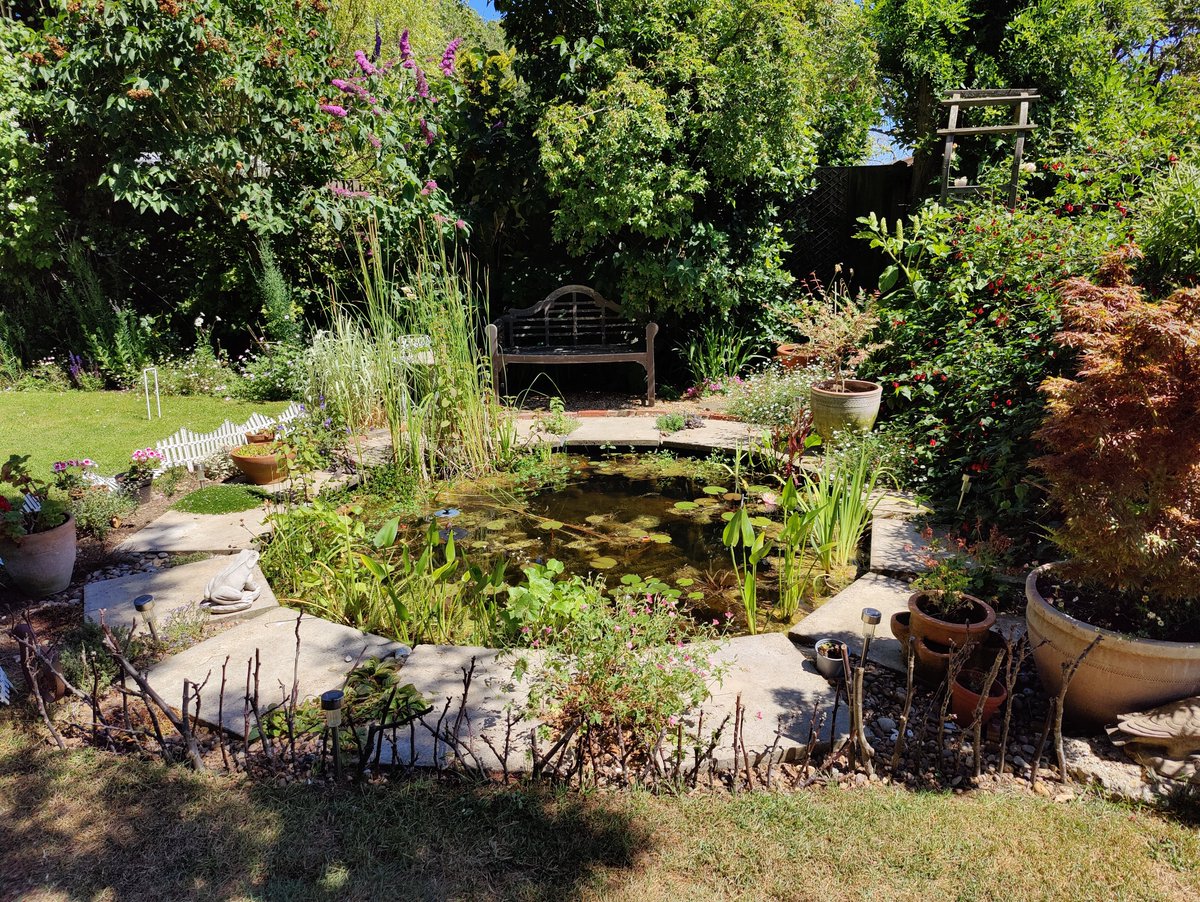
A spot of lunchtime garden tranquility
Also pictured: unattractive white plastic fence to keep Toby from falling into the pond
I hope to write something about this, but a small academic publisher, The White Horse Press, has decided to adopt a Subscribe2Open-like model for its journal, Nomadic Peoples. Crucial as this journal deals with people who may struggle with access barriers. https://www.whpress.co.uk/publications/2886-2/
It's really good to see a small press, which could easily have just sat back and argued that "we can't do anything", trying to do the right thing with respect to OA. It's more than lots of publishers are doing, sadly. @rmounce
This morning I am on a preparatory call for the five-yearly national evaluation of The Flemish Academic Bibliographic Database for the Social Sciences and Humanities (VABB-SHW). I feel honoured to be called back to appraise this for the second cycle in a row.
That said, it's also really sad. This time around, I have had to request remote participation on grounds of disability, whereas I would love to have gone to Brussels to meet colleagues in person.
An amusing note occurred to me. People have been so sympathetic about my broken foot. I am grateful for such kindness. But what most people only know in a very abstract way is that I also suffer from rheumatoid arthritis. And every day, the pain of RA is worse than a broken foot.
There's something about acute trauma that is easier to convey and understand. Most people are used to seeing pain as transient and coming from an external source. Whereas conditions like RA and vasculitis attack you viciously from within. And they don't stop.
So it's interesting to have a comparison like this as it helps to give perspective: if I could have the rest of the day pain free, I'd rather have my foot broken at 9am every morning than the pain of RA.
We're in an extremely confusing position with respect to Evusheld authorisation in the UK. The DHSC kept claiming, well into April, that it needed live virus assay figures. But figures for BA.1, BA.1.1 and BA.2 seem to have been available since March. https://mhraproducts4853.blob.core.windows.net/docs/093bddf485ab05ac7a4fb2a4e3191e912a5e354c
A series of essays over on Public Books on Octavia E. Butler that I look forward to reading https://www.publicbooks.org/the-world-continues-to-need-octavia-e-butler/
Mmm, it's phantom citation time! Reference in a book published over two years ago to a forthcoming book that is still awaited. So what is actually being cited that we should "see"? This is the kind of metadata ontology/taxonomy territory that I love.

Doing some reading for and writing of my book this evening while jamming to Multi Culti Transmissions w/ @zillasonacid
https://soundcloud.com/kioskradio/outsiders-multi-culti-4
Thanks so much to @roopikarisam and @elotroalex for the special issue and for having me in it! https://x.com/martin_eve/status/1541408572831137792
New today from me in Digital Humanities Quarterly: Lessons from the Library: Extreme Minimalist Scaling at Pirate Ebook Platforms http://www.digitalhumanities.org/dhq/vol/16/2/000587/000587.html
A powerful piece.
Two years of being Clinically Extremely Vulnerable, a name I never knew I would have. #BehindTheMask @evusheld4theuk
https://www.coproductioncollective.co.uk/news/two-years-of-being-clinically-extremely-vulnerable-a-name-i-never-knew-i-would-have
They missed a trick not calling Strange New Worlds "The Previous Generation"
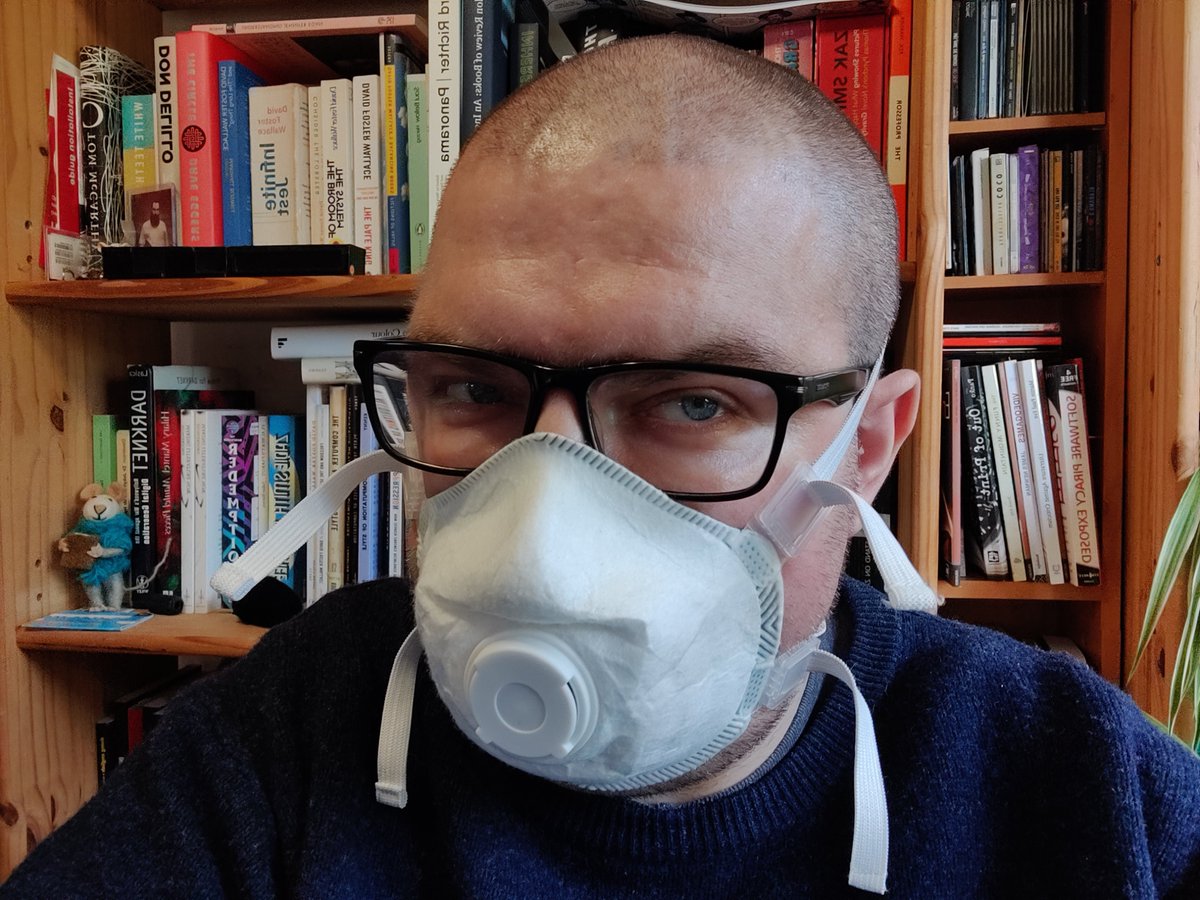
#behindthemask 36 years old and immunocompromised secondary to rituximab treatment for rheumatoid arthritis and vasculitis. Still having to shield well over two years later. Like the 30 other countries that have it, we need @evusheld4theuk.
Interesting profile piece on unusual trades, including a papermaker
https://www.theguardian.com/lifeandstyle/2022/jun/26/tricks-of-their-trade-meet-the-uks-most-unusual-master-crafters
For those interested, I'm maintaining a full list of all research (and general media) articles covering Evusheld. https://getevusheld.uk/4_media.html
A really interesting new article detailing the path of @evusheld4theuk to date. All clinical trials and evidence bases.
Keam, Susan J. ‘Tixagevimab + Cilgavimab: First Approval’. Drugs, 21 June 2022. https://doi.org/10.1007/s40265-022-01731-1.
Blood Cancer UK says Government ‘needs to do more’ amid battle for Evusheld https://www.express.co.uk/life-style/health/1629554/blood-cancer-uk-treatment-evusheld-covid
So disgusted, not wanting to believe that anybody, let alone anybody in power could say this, I had to look this up just to verify it. Now I feel even sicker than yesterday at the US political situation. https://x.com/summerbrennan/status/1540748265783578626
A bit of work in progress...
Did the hobbyist programming bit of my day. Caretaker now has post-execution hooks. This allows end users to specify shell actions to take once a backup has been created (so you can rsync it offsite). Still have 100% test coverage too. https://github.com/MartinPaulEve/django-caretaker
Toby's having a taxing morning

A thread about the discoverability of humanities monographs, born out of frustration. As followers may know, I'm writing a chapter in my book on the background whiteness of the digital page. It involves a lot of work on "blank" space, on which there is quite a bit written.
Yesterday, really far into this research process, I stumbled, by absolute chance, on Maguire, Laurie E., The Rhetoric of the Page (Oxford: Oxford University Press, 2020). Does that sound like a book about blank space? It does not.
But, I assure you, it is.
"This is a book about blank space and blank spaces in early modern printed books." (p. 1)
but
"The title of this book, The Rhetoric of the Page, may need some explanation." (p. 11).
The book has no subtitle or other easily locatable aspect of its metadata that immediately made me think "if I am writing about blank printed space, this will be a good thing to read and cite".
The reason the book is so titled is that the author's "large claim in this book is that Elizabethan concepts of rhetoric extended to the layout of the page" (p. 14). OK, fair enough, but the title still gives us no indication that this is what is going on.
So how is someone who wants to learn new things about blankness supposed to find this work? The book has substituted a useful title for a clever one and it's really frustrating.
It also feels, to me, as though the supposition is that either 1.) you already know what the author was working on and the book was about, so you'll read it or 2.) the author is a person of such stature that she is instead the discoverability mechanism.
As in: people in the field know that the most recent work of Maguire will be important and so will read it. This makes for extremely insular fields with little external penetration or interdisciplinary crossover.
early on, with my first book, I was hit by the publisher with a title change that I didn't like. I wanted to call my book "The Critical Pynchon" and they made me use "Pynchon and Philosophy" instead. The latter is crude and blunt. But it gives people a much better idea.
I think there can be room for clever titles if you also subtitle the book well, but this is a plea for more useful book titles that actually tel us what is going on
full-text search *does* help us with this to some extent -- but only if we have digital, openly accessible books. Otherwise, these things remain very hard to find and use.
Another good one. Woudhuysen, H. R., ‘Early Play Texts: Forms and Formes’, in In Arden: Editing Shakespeare: Essays in Honour of Richard Proudfoot, ed. by Ann Thompson and Gordon McMullan (London: Arden Shakespeare, 2003), pp. 48–61
That's also about blank pages.
It doesn't tell you anywhere that it is, though.
Some work does this much better (into article territory now). McKitterick, David, ‘What Is the Use of Books without Pictures? Empty Space in Some Early Printed Books’, La Bibliofilía, 116.1–3 (2014), 67–82.
"Empty Space". Yes!
A further point: you can't always know, when titling something, *how* am end reuser may engage with your work. For instance, someone studying digital texts reading about 15th C manuscripts.
What I'm objecting to, though, are titles that are so far from the direct stated actual subjects of the work.
Rheumatoid arthritis is really flarey today, with wrists, knees, feet, and neck hot and painful. Got the general RA feeling as though I have flu, with fever, as well. Waiting for the painkillers and steroids to kick in so I can do some writing. #ralife
Today's plans are some research writing and reading, some hobbyist programming, some music making, some music listening. Will probably end with some Star Trek. A good Saturday.
"Someone at the meeting seriously suggested that we add an extra button to the keyboard. One would be 'Delete, but I may want this back' and another would be 'Delete, now and forever'."
https://www.theregister.com/2022/06/24/on_call/
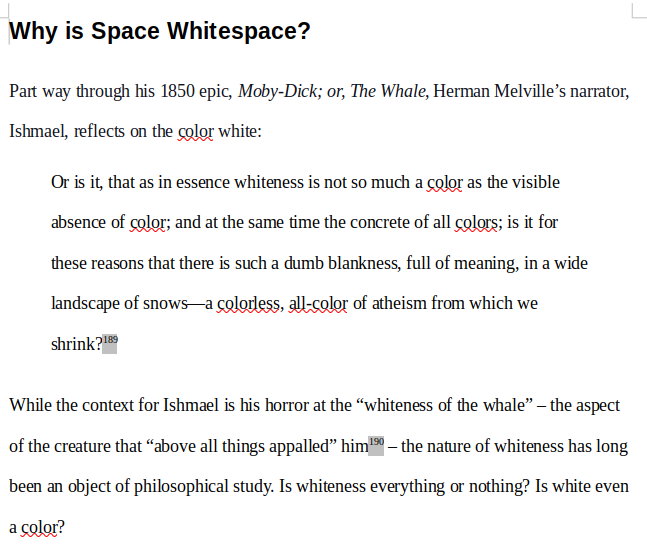
Today's research work was on chapter three of Paper Thin. The "whitespace" chapter.
Sending solidarity to my US friends in the wake of today's SCOTUS ruling.
Today's output from me is v0.5.0 of django-caretaker ("Data"): https://github.com/MartinPaulEve/django-caretaker/releases/tag/v0.5.0
New features: full SQL export; single-line import of JSON, SQL, or media zip; a local storage backend instead of cloud-backed.
Working in the Dark: Not Tracking Positive Covid Cases Is Reckless by @ernestopriego
https://ernestopriego.com/2022/06/24/working-in-the-dark-not-tracking-positive-covid-cases-is-reckless/
I'm now shattered. We had 200 attendees at our #RLUKCOPIMOA webinar today. I gave a talk, chaired a couple of panels, and listened intently. We'll have a video recording available in the near future. https://eprints.bbk.ac.uk/id/eprint/48518/
huge thanks to our speakers @rachelbruce @carenmilloy @TashaMellCoh @simonjbains @sarah_thomp5263 @ChrisBanks @RLUK_David and our organizing gurus @ScholTom and Melanie Cheung.
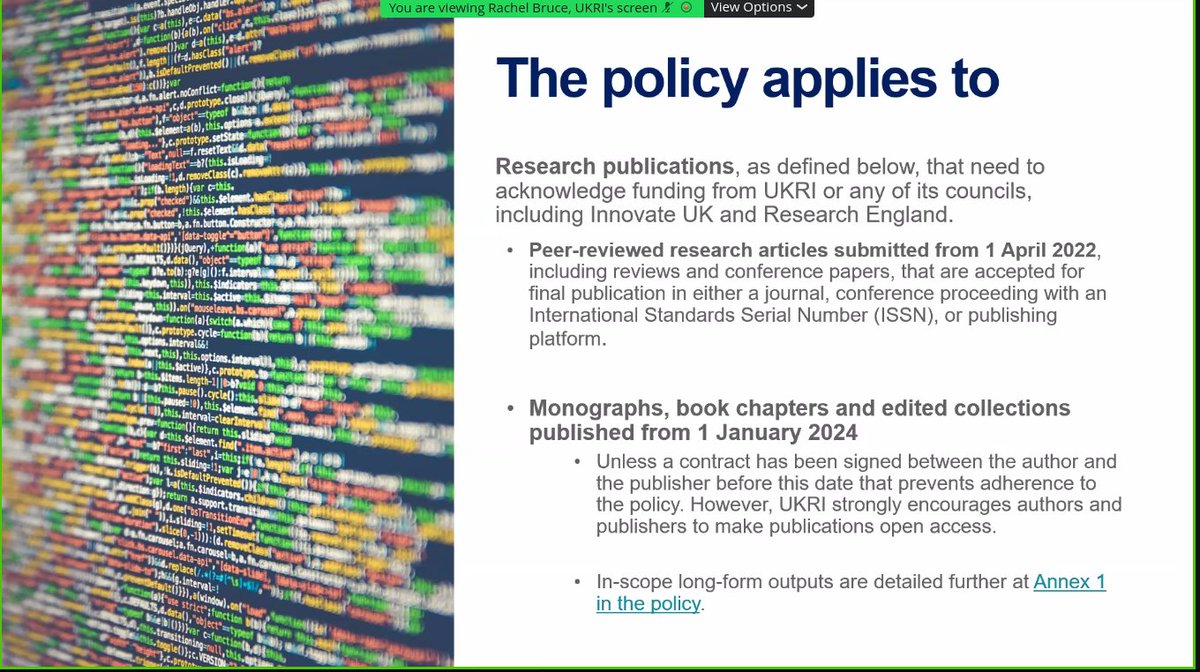
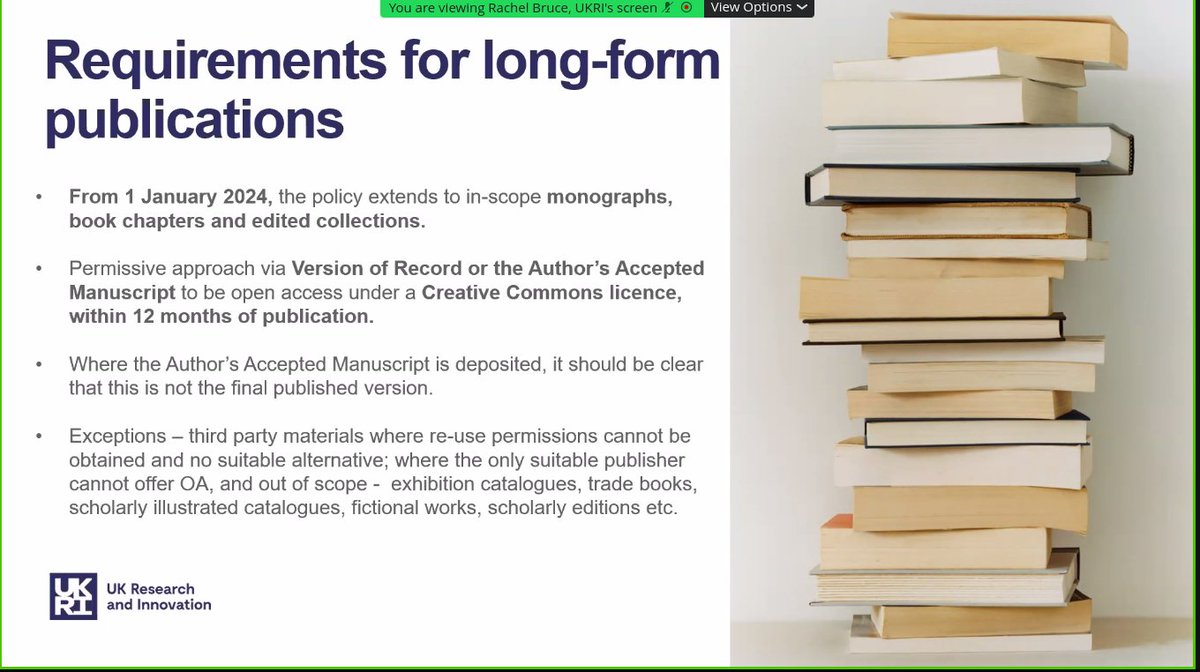
We're kicking off #RLUKCOPIMOA with a talk from @rachelbruce on the UKRI monograph mandate and policy context.
A recording will be available afterwards for anybody interested who can't make today's event or who didn't hear about it in time #RLUKCOPIMOA
The shape of the UKRI policy. If you've got a contract before this date that doesn't have OA, it's exempt. #RLUKCOPIMOA
Permissive approach to licensing (more restrictive licenses are allowable) and VoR or AAM acceptable with embargo. #RLUKCOPIMOA
We have identified a problematic regression in the pre-release of Janeway v1.4.2. This will be fixed today. As always, pre-release versions are recommended only for development systems.
One thing among many that is really terrible about England's marketised HE is how much institutional time is devoted to working out,basically, which students go to which institution and what the catastrophic financial implications of those allocations are.
Well, I spent 7 hours today doing meetings and admins and emails and forms. But I also then just closed it all at that point and spent the last hour and a half finishing the introduction to my next book. Feeling pleased with how it's coming together!

Someone I know posted this and I can't stop thinking about the kind of person who might have a "favourite form"

New press release today. I would be _very_ grateful if you could retweet and pass on to any media contacts.
UK “Outlier” in Not Protecting 500,000+ Vulnerable Patients with New Lifesaving Drug. AstraZeneca Denies Government Claims of Further Testing.
https://getevusheld.uk/assets/downloads/2022-06-21-Press-Release.pdf
Binary Modernisms: Re/Appropriations of Modernist Art in the Digital Age.
New at @openlibhums
https://olh.openlibhums.org/article/id/8917/
We have over 300 registered participants for our RLUK event this week. I will be speaking about how we get from policy mandates to the reality of open-access monographs. We have a brilliant line-up of other speakers, too! https://www.rluk.ac.uk/event/open-access-monographs/

We're continuing our campaign to try to get Evusheld available in the UK, as it is in 30 other countries that are doing much more to protect their immunocompromised populations https://getevusheld.uk/

New today at @openlibhums Bickley Trott, A., (2022) “'Unity in Diversity': Centralised British Identity in the Post-War Work of Robert Colquhoun and William Scott”, Open Library of Humanities 8(1). doi: https://doi.org/10.16995/olh.4696
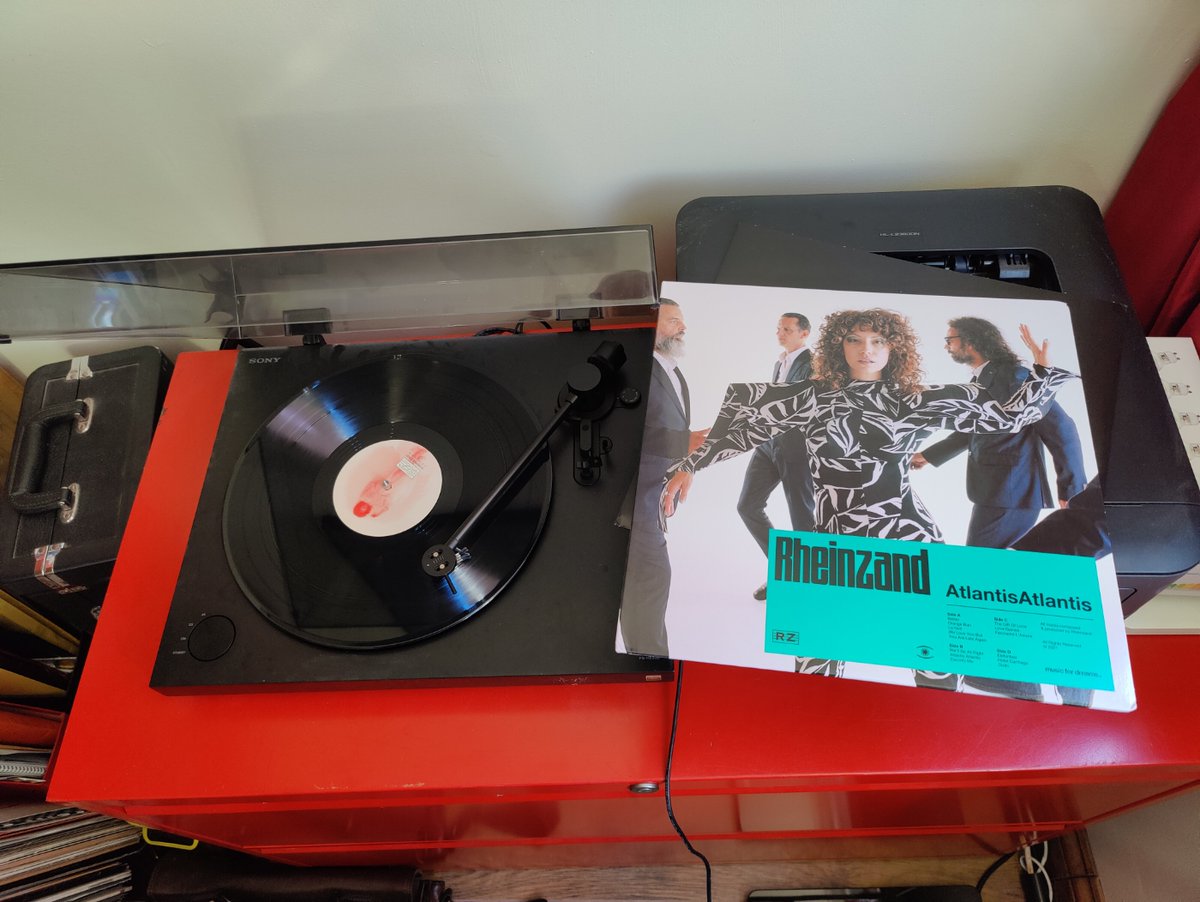
Today's lunchtime listening is the new Rheinzand album, which is really great.
Just added 18 articles to our list of research outputs demonstrating the efficacy and importance of Evusheld (tixagevimab / cilgavimab).
https://getevusheld.uk/4_media.html
I read yesterday that Sherwood, based on two real-life murders from the recent past, has caused immense upset to the family the victims. It's prompted a real moral evaluation in our house of whether we can or should watch it. (Let alone whether it should have been made.)
It took me many years to come to a similar conclusion. OA activism that devalues labour does not have the characteristic of socialistic sharing that is often uttered in the same breath. However, this devaluation of labour is also not unique to OA activism. https://x.com/samoore_/status/1538242070724464642
I think I articulated this to some extent in "Open Publication, Digital Abundance, and Scarce Labour" https://eprints.bbk.ac.uk/id/eprint/19432/
I think @kfitz's work on Generous Thinking has also been working in this direction for many years now
Someone invented a train, except terrible https://x.com/TheFigen/status/1537145721442410497
Someone once scoffed at me when I was railing against tuition fees "ha, and I suppose you'd just like the government to decide which universities to fund?!" As though this was an absurd idea. Yes, that is what I would like, with fixed-size universities and financial stability.
Because if it's rough now, the next decade in UK HE looks far, far worse. As the bottom third of the sector contracts while the top third take their tuition income (which will only be worth 50% of what it was when fees were set), some institutions will disappear.
This will lead to a massive loss of opportunity. But it will also radically worsen the experience for those who do go to university, who will increasingly be taught in large number groups by totally overworked staff at the remaining Russell Group institutions.
Eventually there will have to be another review of HE finance, but that will be done once vulnerable institutions have been snuffed out.
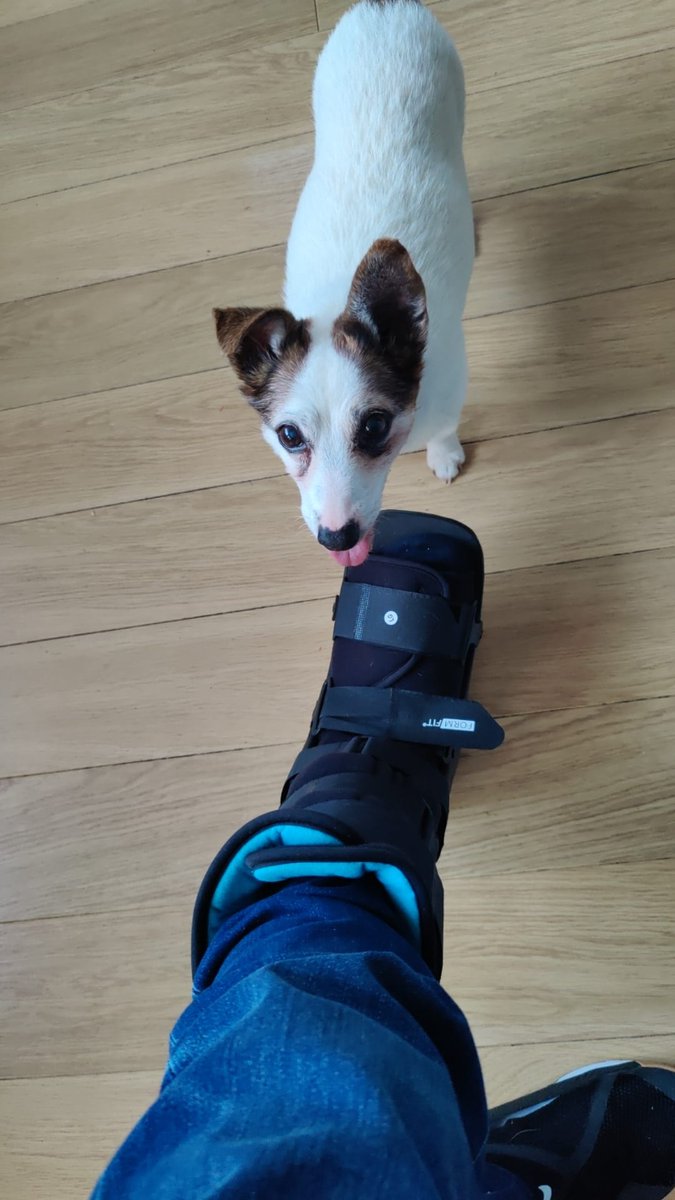
Toby inspects the broken foot
I realised yesterday that the activity I like most is making new things that solve (knowledge) problems. Often that's new thought in my writings, but I get a similar pleasure from software development, and even practical business/charity implementations (like OLH).
I Tried Polyphasic Sleep and Almost Lost My Mind
https://www.cnet.com/health/sleep/features/i-tried-polyphasic-sleep-and-almost-lost-my-mind/
Ha. Ha. Ha.
Director of Freedom of Speech and Academic Freedom job with DEPARTMENT FOR EDUCATION
https://www.timeshighereducation.com/unijobs/listing/296625/director-of-freedom-of-speech-and-academic-freedom/
Couldn't resist because it still exists.
Wordle 362 2/6
⬜🟨🟨⬜⬜
🟩🟩🟩🟩🟩
People who don't have to deal with hospitals have, I think, no idea how painful the whole process is, administratively.
I've been under rheumatology at my hospital for 16 years. Recently, they somehow dropped me from their books. So I left a message asking for an appointment.
Remarkably, they booked me an appointment. OK, on a day that's totally inconvenient, but I'll reschedule my life around it. No biggie. Except it's in person. And I'm still shielding. *ON THE HOSPITAL'S ADVICE*. Good joined up thinking.
So I phone again and ask for telephone clinic. I leave a message because you can't really easily speak to anyone in the dept. They get back to me and change... A clinical immunology appointment, rather than the rheumatology appointment. Helpful, but not what I requested.
So now I have to phone again to fix this. That's 3x phone calls to the hospital so far to sort one appointment.
Sounds trivial. But this kind of admin ends up consuming significant portions of time for people with long-term health conditions.
Ya know, it would actually be great if hospitals had mask wearing, by default, as basic infection control, regardless of Covid. Rheumatology clinics, for instance, are *full* of immunocompromised people. I've picked up life-threatening infections from attending clinics. https://x.com/Kit_Yates_Maths/status/1537340701528055808
I was at a meeting this week where someone said "some subjects like English are really very clear about what they study, whereas *ours*..." and I almost spat out my tea.
Very sorry to miss speaking at SCURL yesterday, spending it in A&E instead. Thanks to everyone for the kind words. The broken foot hurts. A lot. But I have good painkillers.
Along with @viroviacum, @ChrisBanks, and @curtisbrundy, @simonjbains has been a great early supporter of our work to move university presses to equitable open models. There are many others showing top leadership, but these struck me as worth celebrating tonight. https://x.com/simonjbains/status/1537076456127451137
@ferli90 - you're on the list, too!
Yep. Broken my foot. Have an immobilising boot for 5 weeks. Did this just by standing up due to weak bones.
I am in a very unsafe A&E department. Due to my medications, I have osteoporosis. I put my foot down a little too hard. There was an almighty crack. It's now swollen up to tennis-ball proportions. I think I've broken it, essentially by standing up.
An article this week showed a 30% fatality rate from Covid for people with my condition. There's no mask enforcement here. It's rammed. No isolated waiting. People are coughing. So I am risking a 1/3 chance of dying just now to get a broken foot sorted.
Could just actually ask someone who has been in such a relationship about whether it "works out"? Like my 15-year marriage to someone quite a lot older than me...
I mean, the obvious answer is: sometimes it will work out, sometimes it won't. "Ever" is a ridiculous statement/question.
Tilting at windmills criticizing Metro, I know

If you find yourself, as a government minister, having to say that your actions are "absolutely moral", there is a good chance that they are, in fact, not.
Sorry if you are waiting on a reply from me. Afraid I've been very unwell over the weekend and am still not in a great state.
Here are a few of our patient stories, showcasing the diversity of people who need Evusheld https://getevusheld.uk/4_patients.html
Lupus patients, cancer patients, rheumatoid arthritis patients, transplant patients. All exceptionally vulnerable.
Call for Contributions: Special Issue on the works of Percival Everett
https://call-for-papers.sas.upenn.edu/cfp/2022/06/09/call-for-contributions-special-issue-on-the-works-of-percival-everett
Literary studies people: what's the best thing I could read on the setting of fantasy novels vs real national histories and the blurring of such mythological contexts?
Detecting and Characterising Transmission from Legacy Collection Catalogues
http://www.digitalhumanities.org/dhq/vol/16/2/000615/000615.html
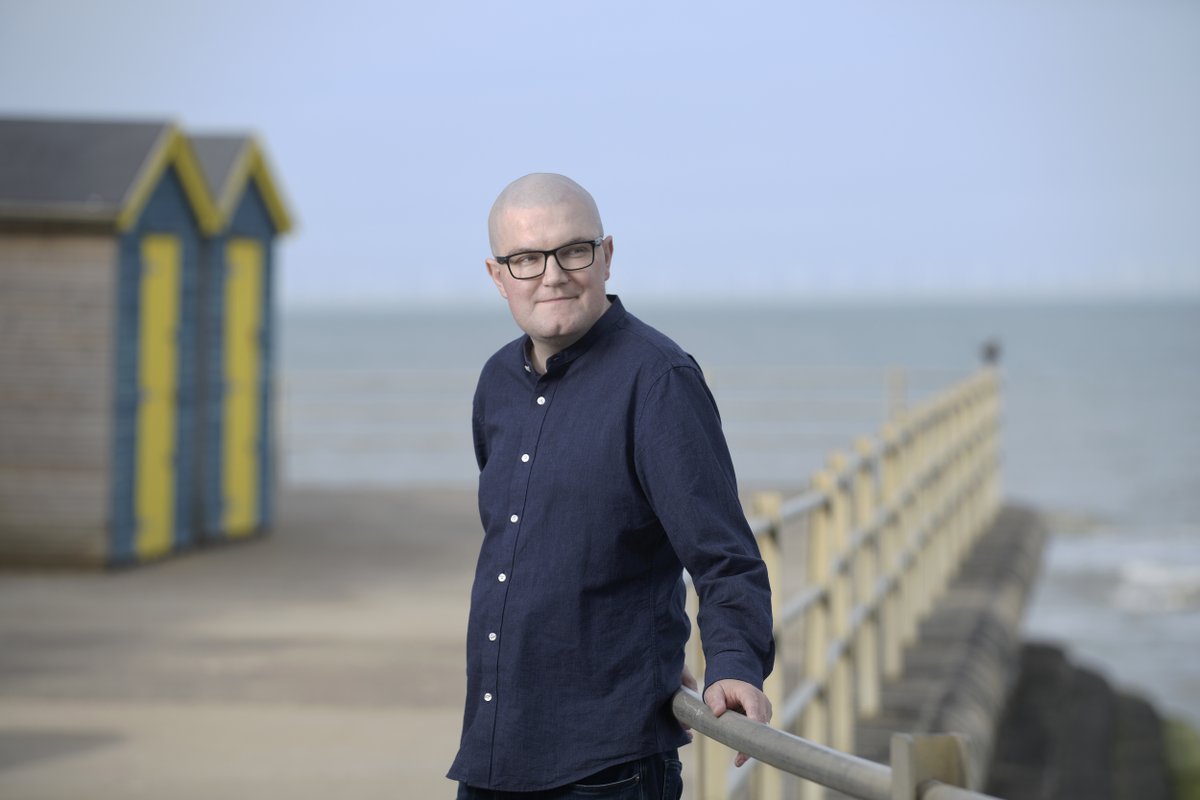
Another nice picture from my recent hilarious photoshoot experience
Another outrageous point. The UK government's *own website* brags about how Evusheld has been authorized for UK usage. But it is not available because they haven't bought it. https://www.gov.uk/government/news/evusheld-approved-to-prevent-covid-19-in-people-whose-immune-response-is-poor
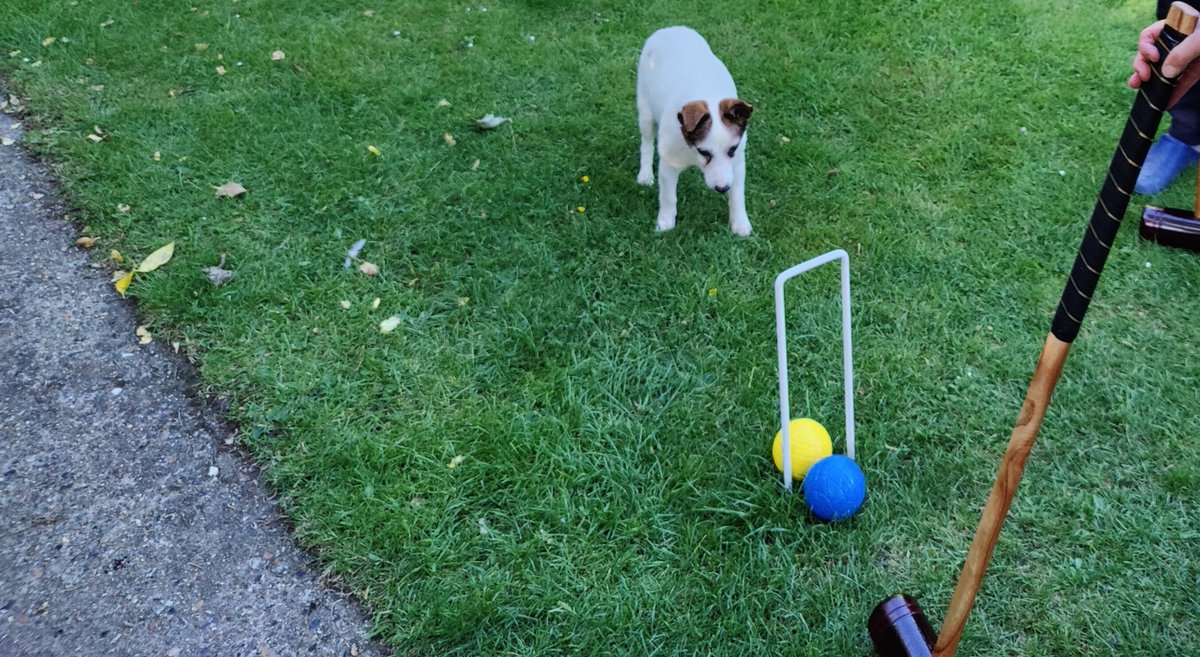
Toby is in on the croquet
I have collected all the media articles, press releases, research articles, medical opinion pieces, and events on Evusheld in the UK. Huge weight of evidence behind it and continually frustrating that we are still waiting, three months later. https://getevusheld.uk/4_media.html
Mmm
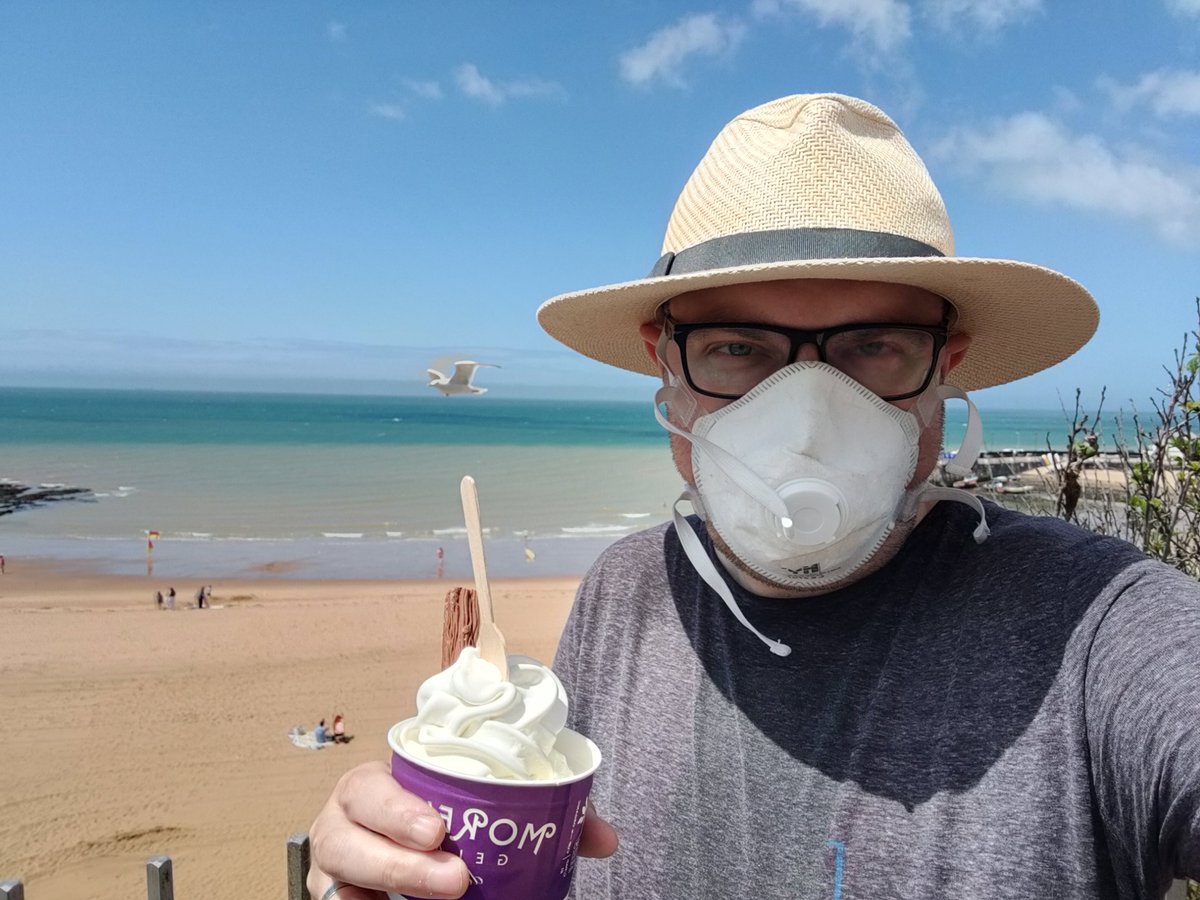
Out today on tici taci is another cheeky number from the mysterious "Boy Division", bouncing along with "Velvet Pelmet". https://www.junodownload.com/products/boy-division-velvet-pelmet/5596038-02/

Our campaign group for Evusheld for the vulnerable now has a web page with up-to-date information and resources. @GwynneMP @vickyfoxcroft @CarolineLucas @evusheld4theuk
https://getevusheld.uk/
This is a Jekyll 4.0 static site deployed to GitHub Pages using the Forty theme.

I'm on a day of annual leave today, but nonetheless pleased that django-caretaker now has full documentation coverage. Just need to keep it that way. https://django-caretaker.readthedocs.io/en/latest/py-modindex.html
with thanks to my friend and colleague, Mauro, for helping me to get Sphinx autodoc working
Decided it was time to leave Kansas this evening.
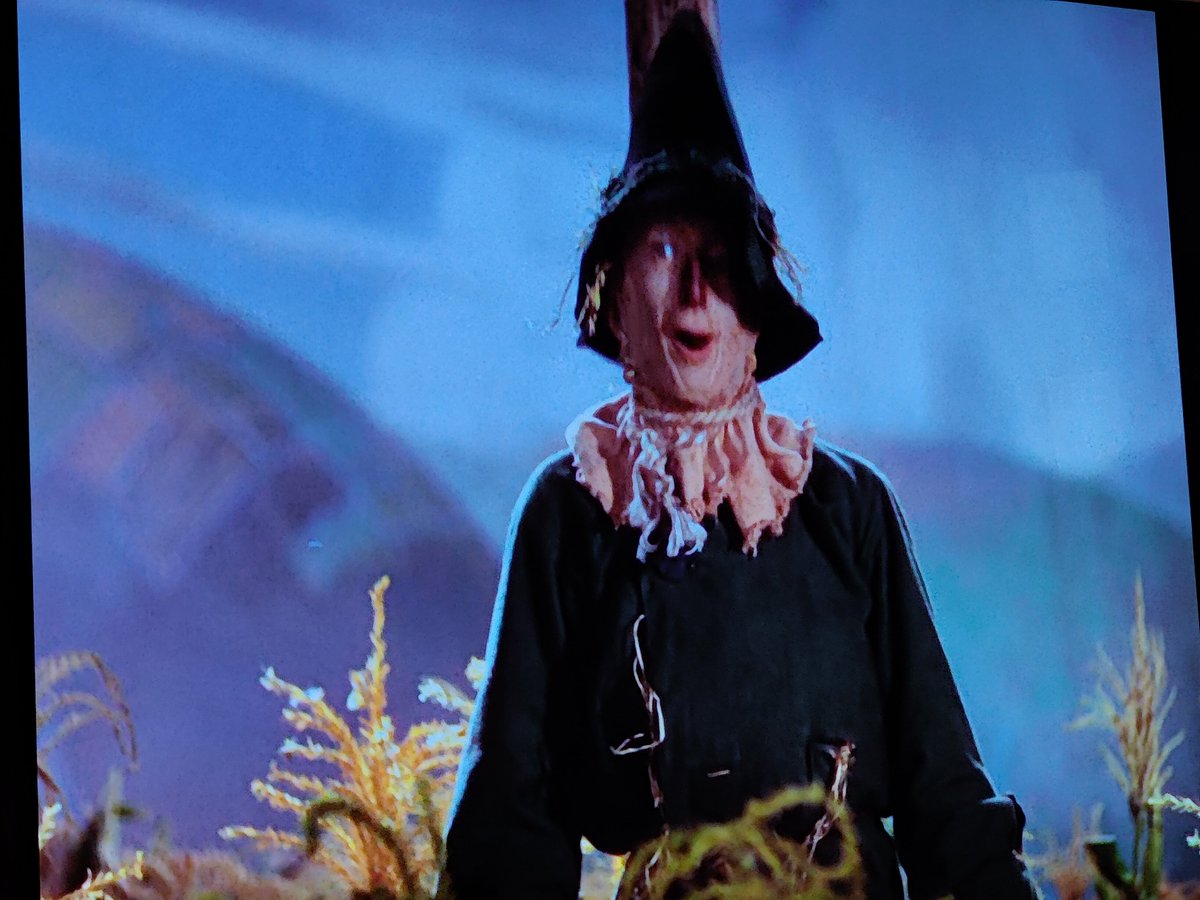
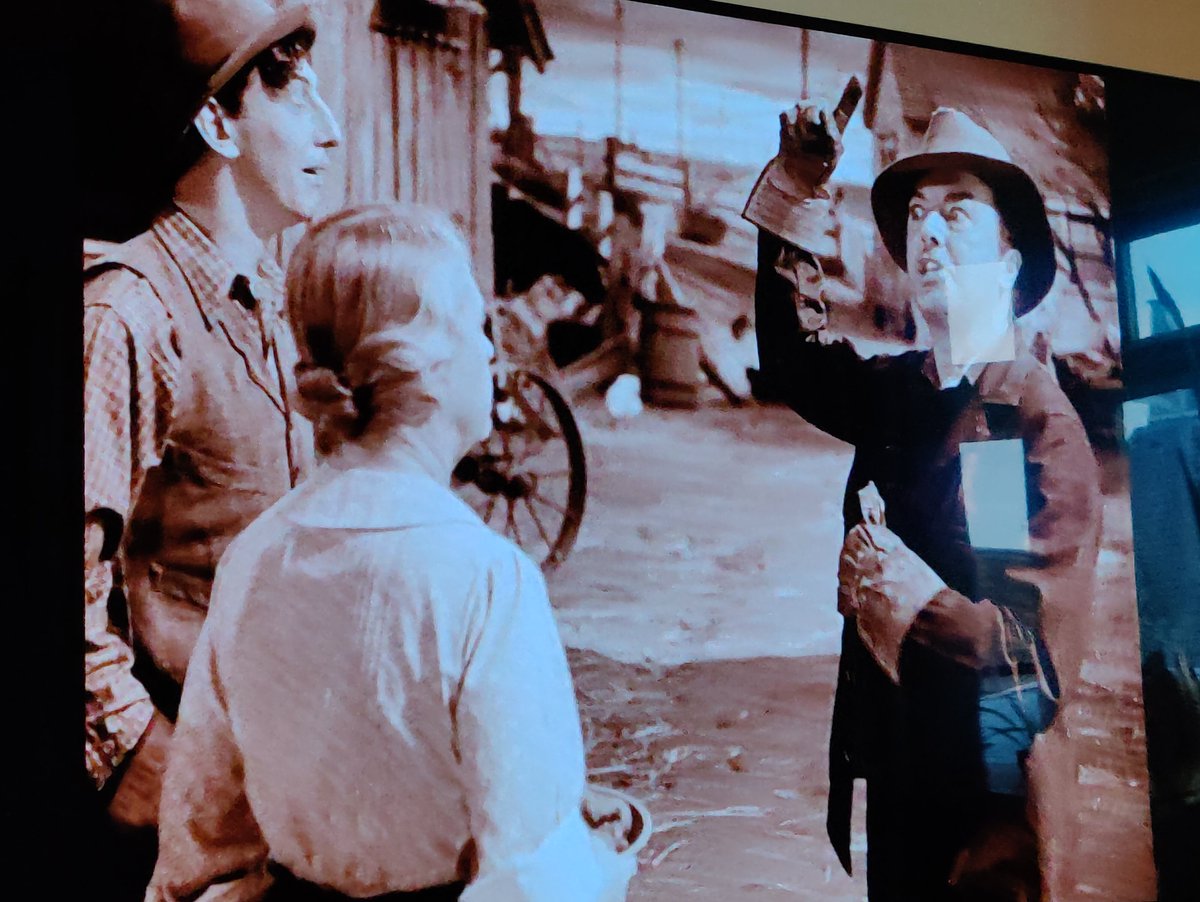
We have noticed, at @openlibhums over the past two years, a substantial escalation in declines to review for reasons of time. I'm not blaming anyone for that - workloads in HE are problematic to say the least - but this is obviously a difficult situation. https://x.com/smgaddis/status/1534208549806481410
At £800 per patient for Evusheld, if it were administered to the theoretical maximum number of vulnerable UK patients, you're looking at £400m. The government wrote off £10bn of unusable PPE early in the pandemic. So just 4% of that waste... https://www.astrazeneca.com/content/astraz/media-centre/press-releases/2022/evusheld-significantly-prevented-covid-19-disease-progression-or-death-in-tackle-phase-iii-treatment-trial.html
Kuala Lumpur news announced today that the drug will soon be available there. But the UK still hasn't bought it, trapping 500k people at home, remaining shielding.
The expense reclaim that costs more in salary time than the value of the claim is a great one. https://t.co/NzQXbPU4wd
Dangerous territory, but one of the problems with institutional bureaucracy comes from the non-evaluation of how much it *costs* in staff time. That is: institutions that have complex processes with lots of paperwork don't evaluate how much it costs in staff salary to complete.
Because this cost has been pre-sunk (as in: the person gets paid anyway, whether they do this work or something else) these processes proliferate. Whereas in reality it would be good to say: "every time someone fills out one of these HR forms, it costs us £200".
And how many of these forms are filled out every year?
As I say: this is dangerous turf as I don't think everything should be accounted for in cost. But without attaching cost to processes, you just end up in a quagmire of administration.
Woke up at 5am for some reason best known to my body clock and had achieved many all too believable things before breakfast.
Doing a webinar here with Frances Pinter on our Opening the Future model for OA books. She points out, rightly, that about 50% of the cost of academic books, in the old way of doing things, is devoted, in press staff time etc., to _selling_ the book to academic libraries.
More on the software side of my life today. First, further tweaks to NGLP importer. https://github.com/BirkbeckCTP/nglp_importer
Then pushed a new version (0.2.0) of django-caretaker that allows the bundling of new directories https://github.com/MartinPaulEve/django-caretaker
Amusing. Just received a croquet set for my birthday and gave it a test run over lunch 😂
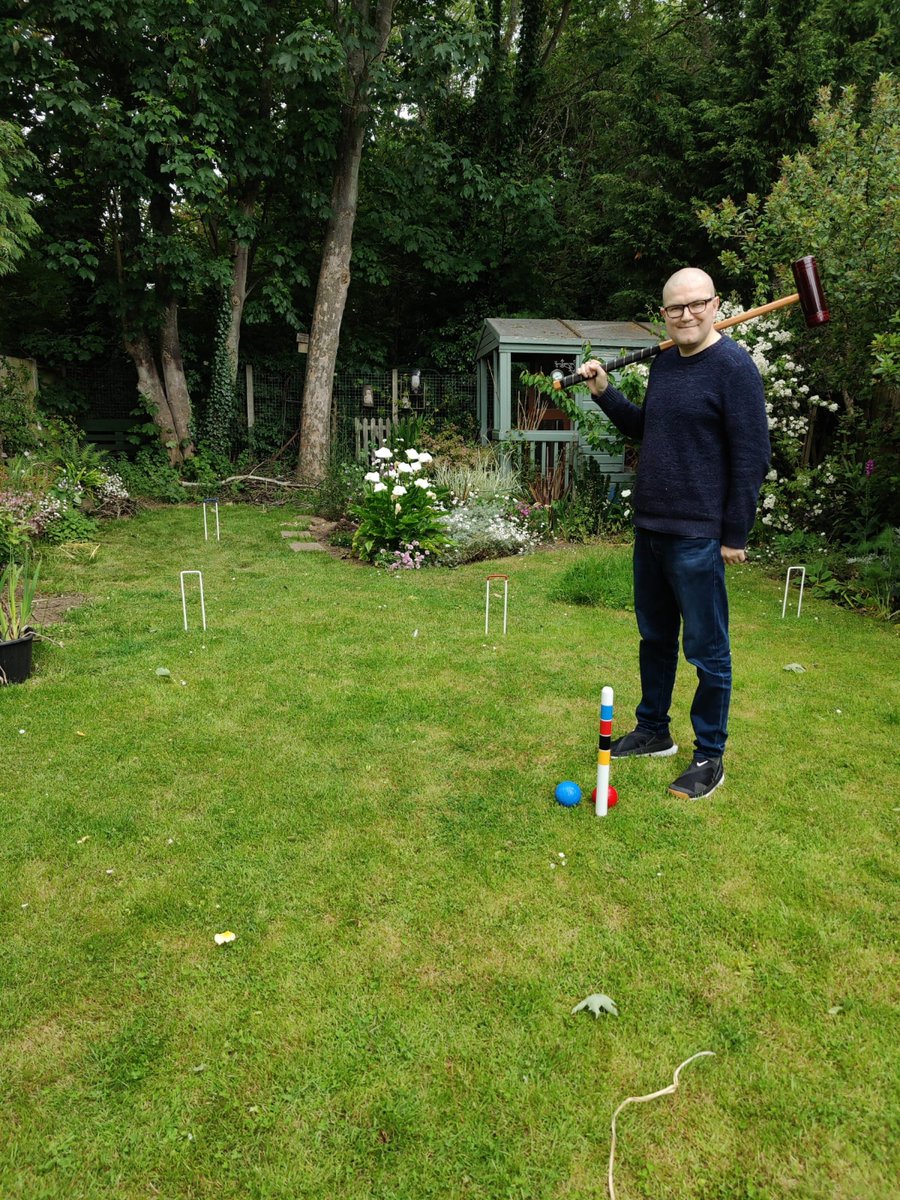
In agile development methods, the end phase is called "burndown" because, by that point, you want to burn down the project.
Watched STARGATE (1994) this evening for the first time in maybe 20 years. Totally bonkers but most enjoyable. The techno-ancient Egyptian theme is hilarious.
I have noticed a marked improvement in the speech-to-text transcription of systems like Panopto over the pandemic period. A combination of UK disability law mandating captions leading to a vastly improved training set and, I suspect, evolution of models and techniques.
It even, just now, gave me "wrath" for "REF".
Just plugged in a USB cable in the correct orientation the first time around (rather than the third) and this can't be real.
This classic
Our OLH CHASE intern, Lindsey Zelvin, wrote some personal reflections on the importance of open access for early-career researchers. It's great to work with Lindsey and she makes excellent points here about access to resources when outside the academy https://www.openlibhums.org/news/571/#
The real threat to "free speech" and academic freedom, about which we hear so much, is this media coercion of my colleagues. https://x.com/jrschlosberg/status/1531889802001391616
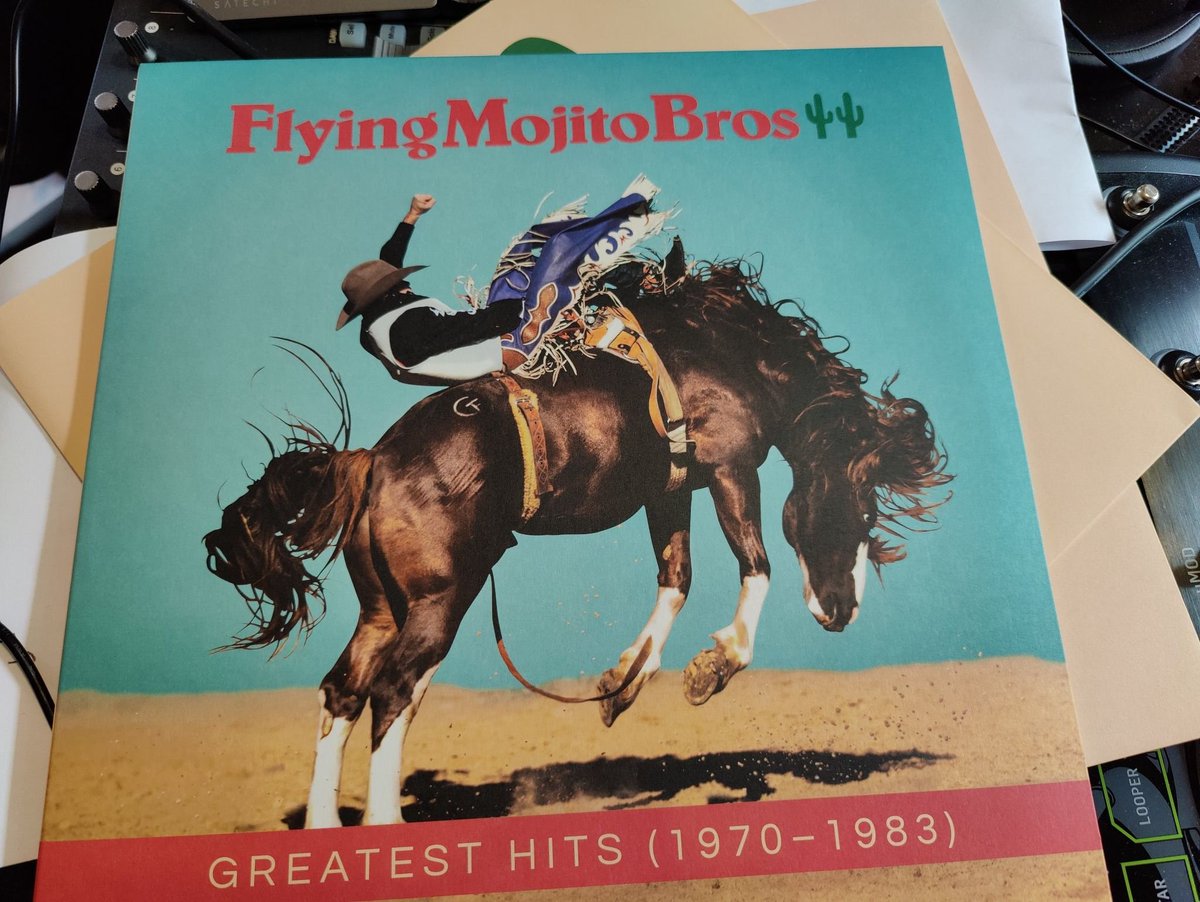
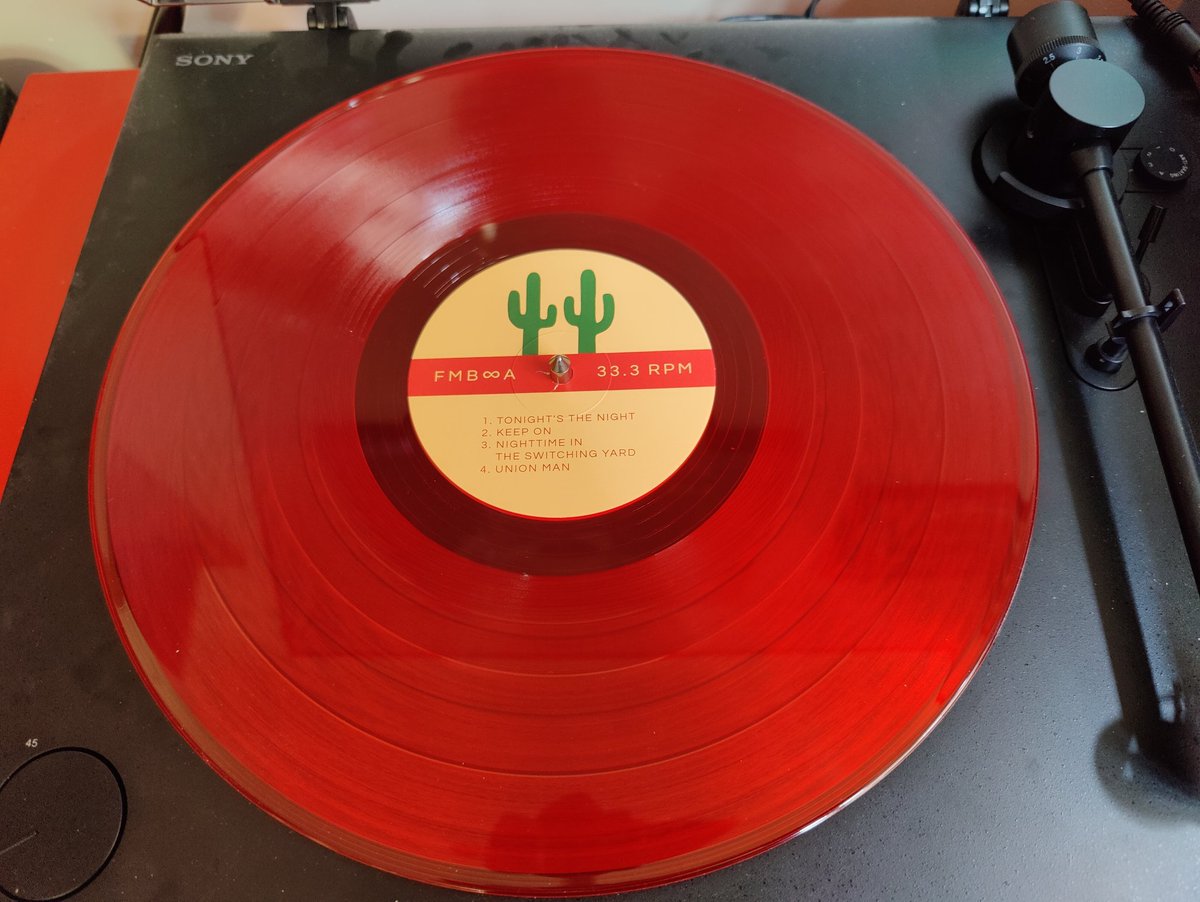
Battling inboxes this AM but have some great background acid country funk edits just arrived from Flying Mojito Bros
Southbound Again
Call for contributions! Special Issue on the works of Percival Everett.
https://orbit.openlibhums.org/news/573/
I'm sure he's very capable, but I'd be a bit wary about receiving urological treatment from the consultant, Mr Burns-Cox
https://www.baus.org.uk/patients/surgeons/f331d58a-a1ab-4403-b7ef-4b23c165d0f8/
Today I built The Caretaker (or, really, django-caretaker): an auto backup plugin for Django apps. It uses versioned S3 bucket objects to maintain a history and comes with Terraform files to provision the infrastructure. https://asciinema.org/a/HnqOncypouhiHcs4r2mZn0TRS
https://github.com/MartinPaulEve/django-caretaker
I learned a lot about python packaging, pip, and Django modules/import paths doing this project. There's near-full automated test coverage, too, but getting these running is a bit of a pain with the structure that you need for distribution.
Irate. Parliamentary Under-Secretary of State for Innovation @ Department of Health replied to a disabled person re Covid drug, Evusheld, that "the evidence points to treatment rather than prophylaxis". Except everyone for whom vaccines work has a prophylactic that we do not.
Just such unbelievable bollocks. This drug is available across Europe. It has passed UK standards for efficacy, cost efficacy, and safety. But the UK government refuses to buy it for those for whom vaccines don't work. It's not expensive. It's disability discrimination.
Just makes me sick to my stomach getting replies like that. There's nothing to make you feel put in your place than a government minister scoffingly saying that you will be denied a life-saving treatment.
@dgurdasani1 @chrischirp @SGriffin_Lab
Also, does anybody recall Medical Proverb #1: prevention is better than cure?
International Pynchon Week 2022. Grateful to Jeff Severs for ensuring this programme is hybridly accessible for those of us still shielding. Will be trying to make as many panels as I can!
https://www.internationalpynchonweek.org/conference-program
IPW was the first academic conference I ever attended, back when I was an MA student. Brilliant vibes.
Toby is taking it easy this holiday weekend

Rolling into the long weekend with From Beyond - Groove Projections https://soundcloud.com/the-ransom-note/premiere-from-beyond-groove-projections-paisley-dark-records
Today is a proofing day!
My little bit
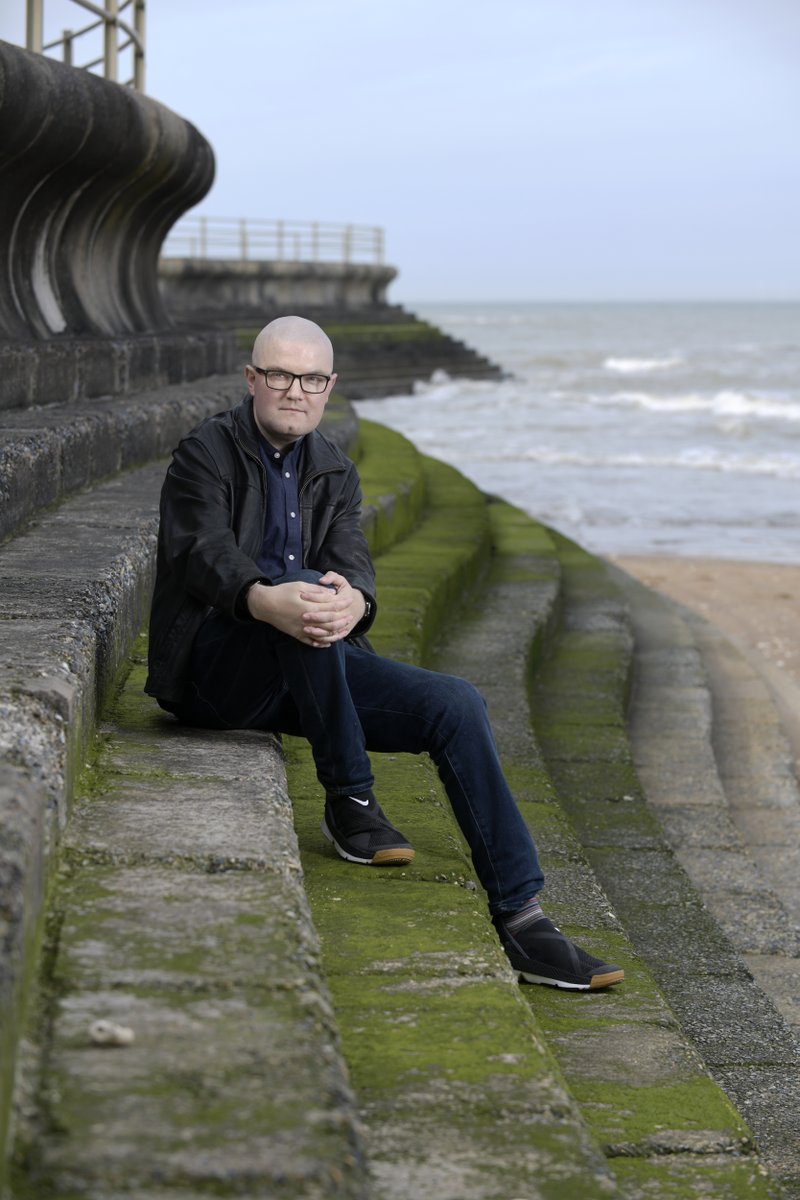
Got back the photos from my pro shoot. They don't like the ones where I am smiling! But I do love this one.
Thanks, Birkbeck!