
July 2026
There is a seemingly terrible plagiarism case at Cambridge.
Prof Jason Arday. The plagiarism seems, in my opinion, Not Good.
But: 'journals & universities across the board “do not regard plagiarism by researchers as actionable”'
https://retractionwatch.com/2026/07/27/cambridge-jason-arday-plagiarism-allegations-times-higher-education-exclusive/
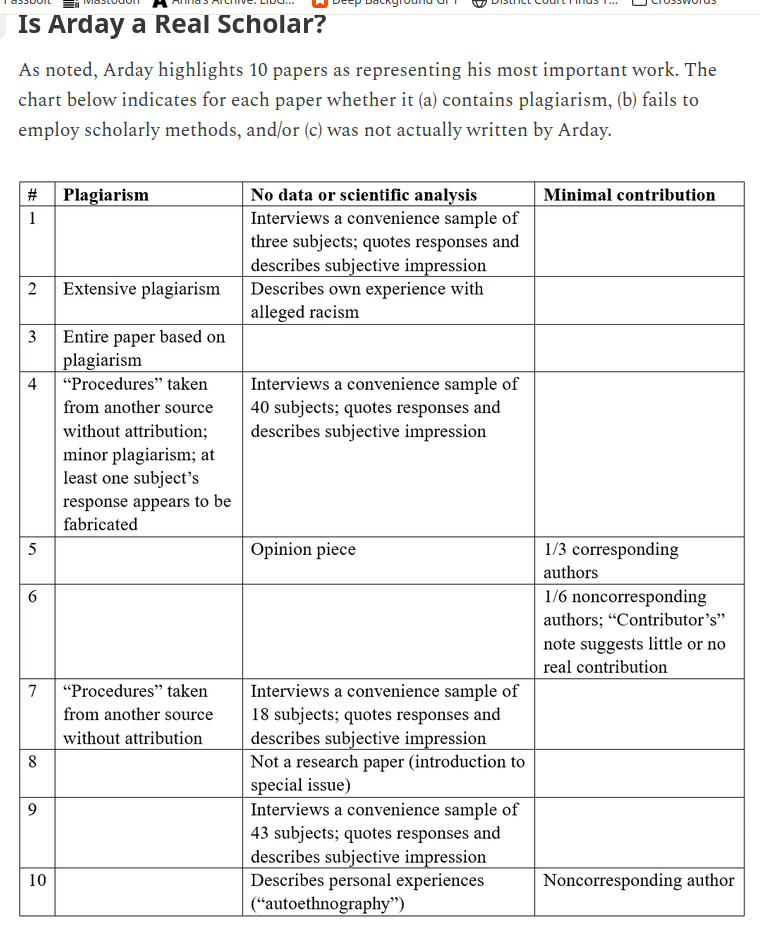
The alleged evidence of plagiarism is extensive.
It is particularly terrible, because this academic has been prominent in Cambridge's DEI efforts. The right wing will be on the march.
Nathan Cofnas (known for his highly controversial views) wrote this: https://ncofnas.com/p/dei-fraud-and-cover-up-at-cambridge
A spokesperson for Cambridge apparently told Retraction Watch that 'Arday was a “victim of a vile campaign to undermine his credibility” and that he had been cleared of “allegations of plagiarism regarding his thesis and journal publications”'.
So is the evidence that Cofnas published not real?
Cofnas has much proposed evidence.
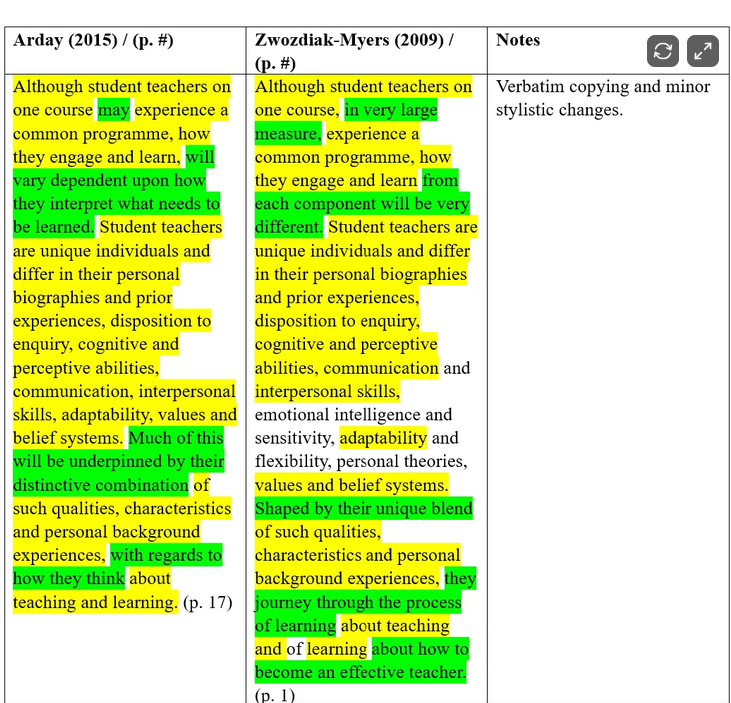
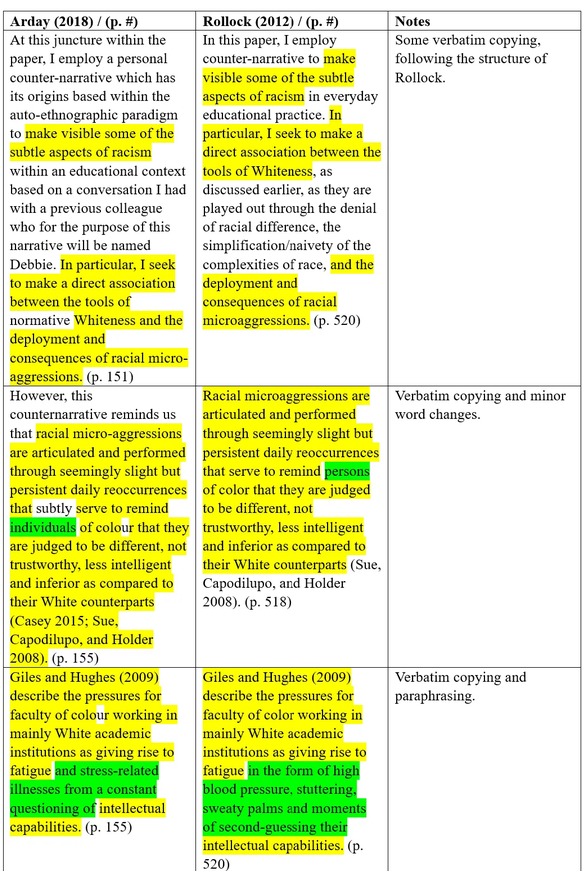
I checked these 2 papers (Arday 2019 and Rollock 2012).
The definition of micro-aggressions for example has the same wording as Rollock. But that paragraph cites *the sources she used*, seemingly bypassing her. He then cites her, in the next sentence.
I very strongly disagree with Cofnas's views and writings as I perceive them and know of them. I believe he describes himself as a "race realist". I do not know the difference between this and a "racist".
I have been loathe to link to his Substack, here. But it's where he put his alleged evidence.
I am happy to correct and clarify that description if needed.
Anyway, Retraction Watch said that THE pulled a story over this, because Arday hired lawyers. I wonder whether he will do the same to Cofnay? Carter-Ruck are vicious. As RW notes, Private Eye calls them Carter-Fuck.
But just the example I examined above does look, to me, like plagiarism. The wording is exact, w/ 2 changes: adding "subtly" and changing "individuals" to "persons". There are no quotation marks.
Is that plagiarism? I would tell a student that it is.
And this list goes on and on.
People (or individuals) like Cofnas will now shout from the rooftops about this.
And it's grim. Cambridge made Arday central to their DEI image. And now this.
There's more evidence here: https://www.arasite.org/plagmenu.html (this is the site of David Harris [I do not know him] and I do not know his political persuasion).
The race arguments are going to rage and I hate it. I want a world devoid of racism. Now this single case is going to set this back.
It IS a single case. It is not right that race should be the subject of discussion.
But the media have made it so. They went for "Cambridge University's Jason Arday becomes youngest black professor" when he was appointed. So now criticism of an individual looks like a debate on diversity.
You could argue: "oh, he went on to cite the work he copied. It's not serious."
But what authority do we have to tell students not to copy, when this is faculty behaviour? It is serious.
I feel angry about this. It should NOT be acceptable.
But I also feel sad at the way this will go.
Images above are screenshotted from Cofnay's blog and credited in the alt text description.
That thread must wait as hospital has beckoned...
I am writing a thread about some litigious individuals and I must take care with the language I use.
Whenever you do this, someone yells at you. "You should have said racist!" or "Do you not know [SOME BASIC FACT]?!"
Bluesky's char limit forces concision. My desire not to be sued, forces caution!
https://www.theguardian.com/lifeandstyle/2026/jul/31/experience-i-drive-a-bus-for-dogs
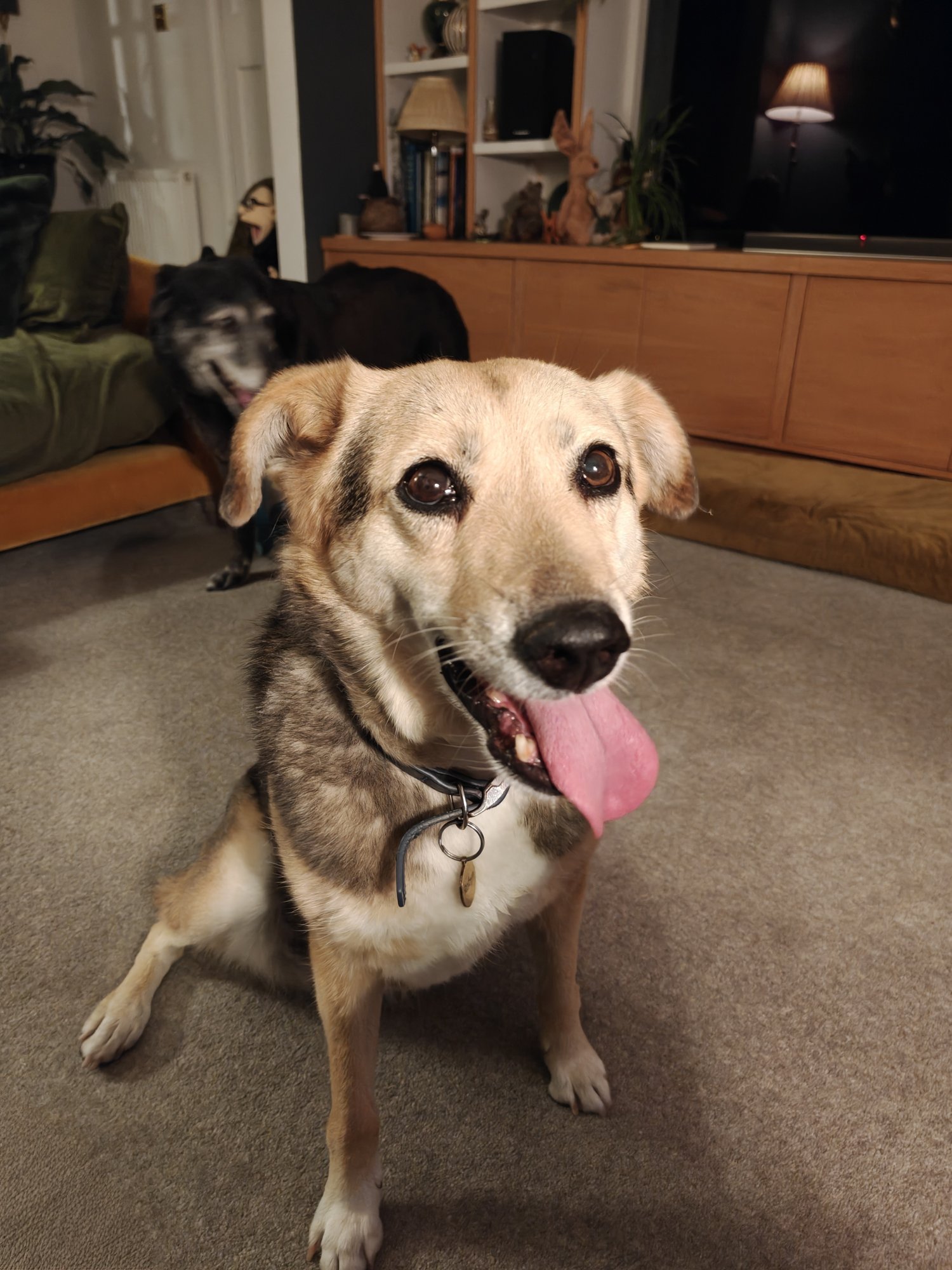
Home sweet home, with my funny little girl
This is in fact, really cool!
You use a tool called "Greaseweazle" to capture the "flux stream"!
Very cool!
"I can't be the only one who has noticed more and more people thinking it is absolutely fine to blast loud music or videos from their phones on public transport, or to have very loud conversations on loudspeaker in such settings. What is going on?"
Totally agree with Liam. So antisocial.
Look, MIT Press are progressive in OA publishing. Heck, I have published with them and have another book under contract with them.
But they always think they are the source of influence, never the influenced. They rarely acknowledge the work of others.
https://www.researchinformation.info/analysis-opinion/amy-brand-publishing-for-a-new-era/
Direct to Open: pretty cool. Launched in 2022. [will have been in prep for years]
But: Opening the Future (similar collective model): started in 2020
Both owe a debt to lots of other collective models: Knowledge Unlatched, Open Library of Humanities, Open Book Publishers, punctum books, arXiv [!!]
It is, in fact, a basic SCHOLARLY principle: acknowledge prior work.
It was not MIT Press building the road alone. So many other people laid the path.
And influence is not unidirectional. The biggest players should acknowledge even the smallest who influenced them.
Having some frustrating site stability problems on my personal website. I am speaking with my host. If the site is down, all posts and writing are available in BIROn, many of them are in KC Works, and the entire site is published to ATProto (Bluesky) [ https://www.atproto-browser.dev/at/did:plc:hnpt7ns2lecdujegbi6qkqqm ]
This site does not track you. There are/is:
No analytics of any kind.
No third-party tracking scripts.
No advertising.
No third-party cookies.
No tracking pixels, beacons, or browser fingerprinting.
I added a privacy page to my site.
https://eve.gd/privacy/
There I am, lurking in black and white on the second row.
Perhaps more important is that John McClane is also there to save the day, in his Backlist to the Future Delorean, just casually hanging in there... 😂
Thanks, @scholtom.bsky.social !
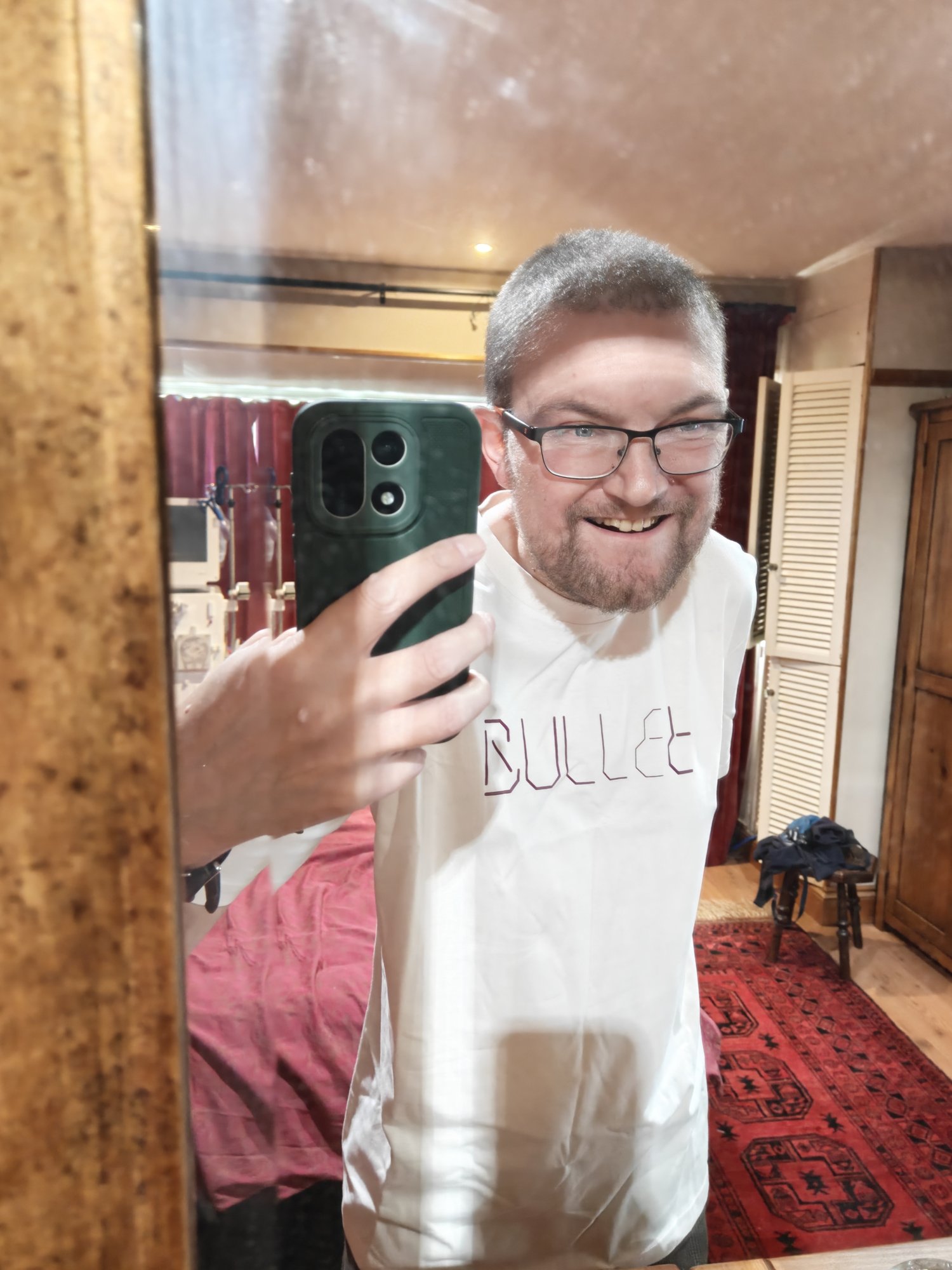
Today's Fluke t-shirt is BULLET.
Everything alright? Ain't nothing wrong.
https://youtu.be/YjCmvLnPEUg?si=pKgG1dHpc5PgZ8ND
Organ trafficking is disgusting. I would rather die than see someone else treated as a commodity for body parts.
Giving a kidney is amazing. But it must be freely given.
Also: I have been treated by the doctor, Peter Dupont, who worked out the coercion, here.
https://www.theguardian.com/news/ng-interactive/2026/jul/30/body-snatchers-young-nigerian-man-lured-london-organ-trafficking-plot
The heatwave kills hundreds of people per day who would otherwise have lived. And almost 40% are like "yeah, I'll have me some more of that!"
So, so many times this week have I almost posted this. Scott did it for me.
Copyright is the root legal scourge that did this. In particular, the US copyright ruling that it's legal to scan a book, IF you destroy it.
Yes, AI companies are evil. But copyright rulings mandated the destruction.
I spoke with a world expert on the virus that destroyed my kidneys. We discussed whether I might be able to clear the virus and be transplanted.
The basic answer was no.
This doesn't change anything, really. But it pushed a door, open by a crack, closed. It's dialysis until the end.
There's a big media stir over Personal Independence Payments to disabled people.
PIP is meant to help people manage the extra cost of being disabled, because our society is inaccessible. E.g. taxis, b/c public transport is un-navigable.
If we had an accessible society, we might not need it.
This is why PIP is not means tested and you can get it while you work. Because it's supposed to help you do things, like work.
If you need to travel to a specialist hospital, 300 miles away, for example, you have to pay for the train and for a PA/companion also to travel. Extra costs of disability.
"I have no plans whatsoever to abandon writing by hand and brain. I strongly believe that we need to continue asserting human voices, amid the cacophony of 'slop'. If we stop writing and thinking for ourselves, then what is the point?"
I added an AI use/automation disclosure page.
https://eve.gd/ai/
Spoilers: I don't use AI for any of my writing. Ever.
I do use a voice transcription system that has AI. But my hands are too sore to type from rheumatoid arthritis some days.
I automatically pull my publication list from our institutional repo. No AI used.
I did use some AI to build my site.
D.I.S.C.O.
The Timms review said "PIP is not fit for purpose". A dire tactical statement.
The review sets out how applicants, who *need* PIP, are put through near psychological torture when applying for this benefit. The process is inhumane.
Papers + gov just take the soundbite. Not fit for purpose. Cut it.
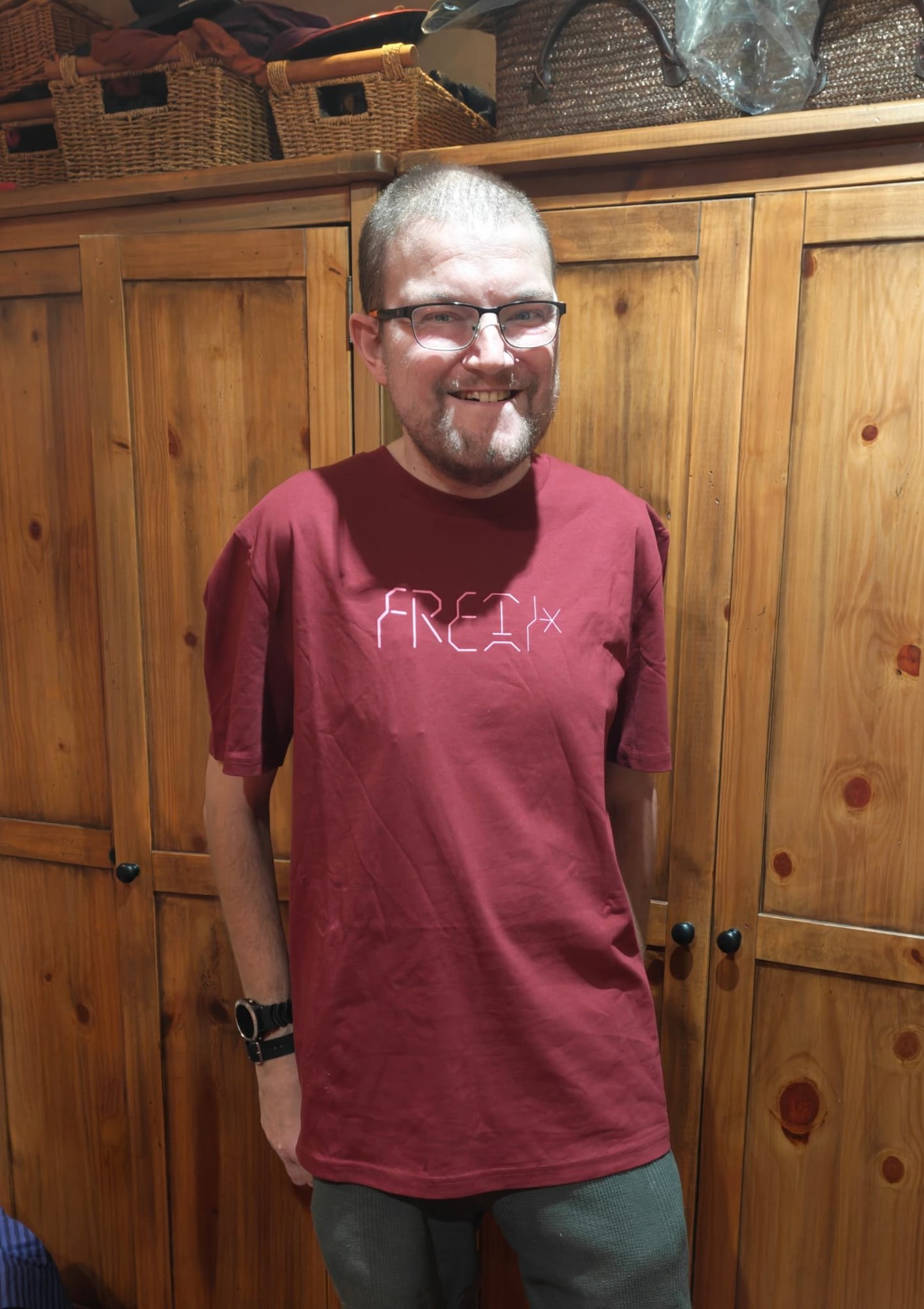
FREAK. LE FREAK, C'EST CHIC.
New Fluke t-shirts ("Freak", "Absurd") arrived here, today. The band also sent me an extra one ("Bullet") just as a gift!
https://fluke.fm/resources/official/the-second-bite-merchandise/
If you get there quickly, you can get a free PDF of this new book, on an important subject:
Berens, Kathi Inman, and Rachel Noorda, How Gen Z Discover and Consume Books, Elements in Publishing and Book Culture (Cambridge University Press, 2026), https://doi.org/10.1017/9781009732857
I have updated my personal website to have an accessibility page, an AI usage policy page, a privacy statement, a contact policy, and a colophon and governance page.
See, for example, the colophon here: https://eve.gd/colophon/
I think it is good that even personal sites provide such information.
All these pages are accessible via the footer of the site. For another example, here's the accessibility page: https://eve.gd/accessibility/
This page sets out what I am doing to remediate the reflexively disclosed and known accessibility problems, where they exist.
'Prime Minister Andy Burnham said "for too long" students had been told to take academic subjects to "do well and be respected".'
How many children of government ministers will be taking these options? Oh wait. None.
https://www.bbc.co.uk/news/articles/cj4k2djd5qpo
Last week, @kfitz.info astutely said "I would pay a lot of money to someone who could just sort out email".
I totally agree. Email is a total pain and bane of many people's working lives.
That said, I am not, myself, sure what that radical reinvention would look like and incorporate...
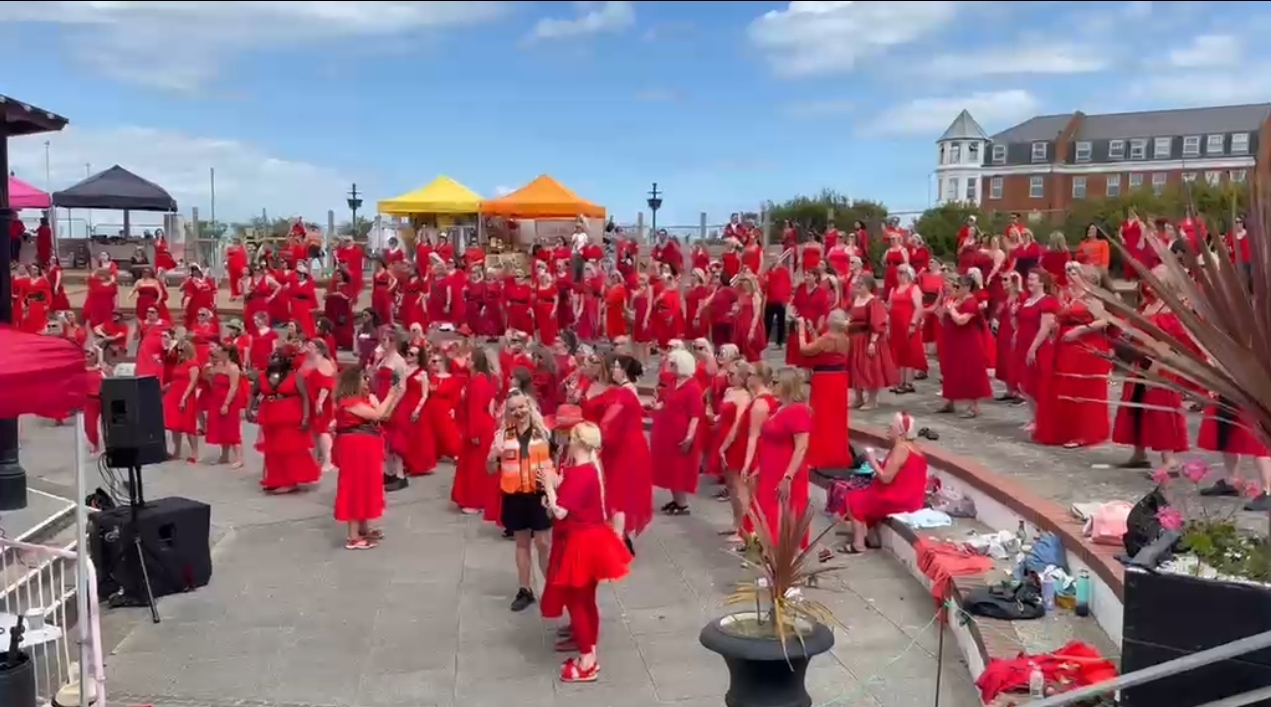
One of my sisters-in-law is currently at the Margate "Kate Bush Most Wuthering Heights Day Ever" event and it looks hilarious 😂
I couldn't attend due to dialysis but I regret this! Haha!
"The agency’s latest modelling suggests that by the middle of the century, Britain could endure long stretches of 40C days, with temperatures hitting 45C."
https://www.ft.com/content/bde8be11-c1de-4167-b2e2-7fee98469b79?accessToken=zwAAAZ-eVwe2kdO96L4Rwd5BZ9Oy4n_umEabeQ.MEUCIQD9GipkYalp9F6XnHFvnYa0DxDbv6uepC3cBSBmzgGABgIgW-LNOyk9tlxIcSfy2MmAl--HN9B6uJuUZBhRSmccDAY&sharetype=gift&token=73718085-30e0-4e59-940e-5b9772e8d820&syn-25a6b1a6=1
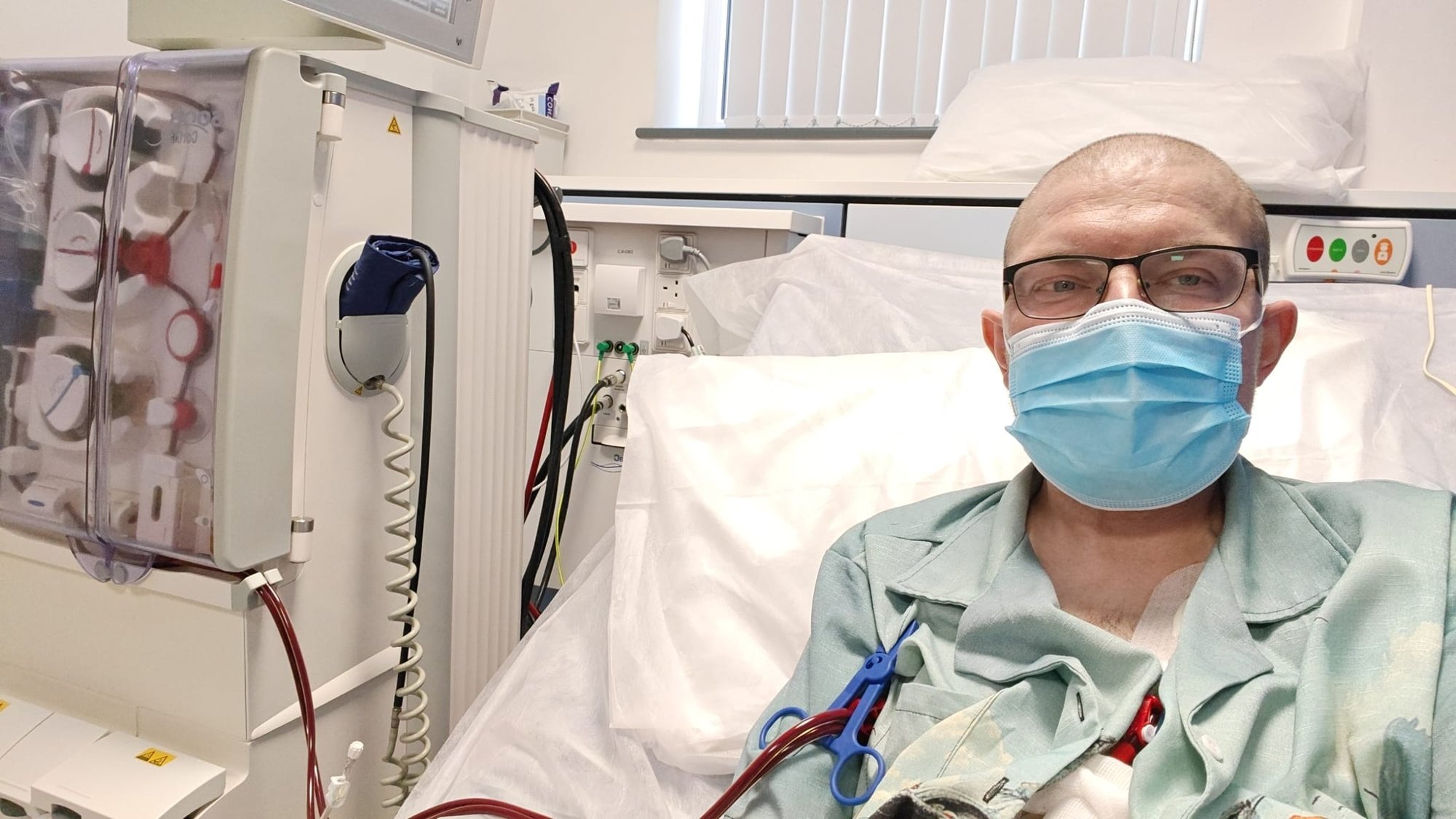
The thing about working full-time, while on haemodialysis, is that you don't ever get a vacation, from dialysis. Whether it's a weekend or a getaway, there is no let up, ever.
Don't get me wrong: I am so grateful for lifesaving dialysis. But it's also, unsurprisingly, hard on your body.
I highly recommend giving evidence to a Select Committee. If you are invited to give oral evidence, it is such a great experience and opportunity.
I have responded and agree with Martin.
But they make it hard to respond. "Which specific F2 and F3 category pyrotechnics do you feel should be restricted?"
Most people, me included, would not have a clue!
Also, there is no space to express a broader view about fireworks.
Peat bogs. Totally flammable. Fire can spread underground to pop up elsewhere. They are so dry that firecrews cannot extinguish the fire.
Peatlands hold more carbon than the entirety of the world's forests. If they burn, it will have huge consequences.
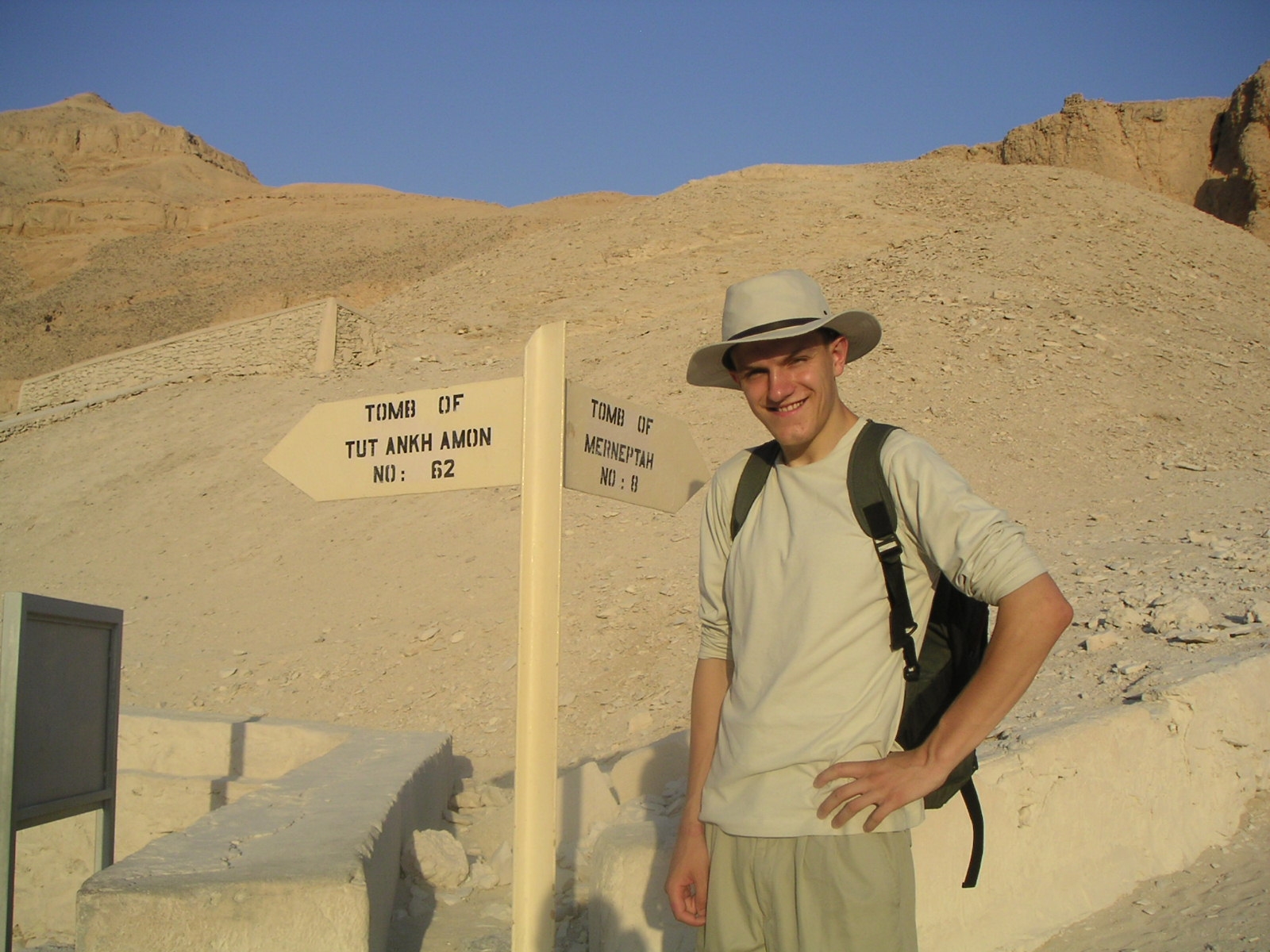
Wikipedia's article of the day is the Nile and it's bringing back amazing memories for me. If I could do one thing in my life again, a riverboat down the Nile, in Egypt, would be it.
(However, if there's one thing in my life that it is most unlikely I will ever be able to do again, with kidney failure, on dialysis, a riverboat down the Nile is also it.)
This is truly lovely.
https://www.theguardian.com/lifeandstyle/2026/jul/26/the-moment-i-knew-1961-third-date-love
'He quotes political theorist Paolo Gerbaudo’s evocative phrase “bodies without organs”.'
Perhaps, unless I am missing something, Zoe Williams should read Artaud for the origin, then Deleuze and Guatarri for the popularisation & development, of this phrase.
https://www.theguardian.com/politics/2026/jul/23/anton-jager-groundbreaking-book-being-devoured-by-left
This afternoon I read Horii, Mitsutoshi, and Tisa Wenger, ‘The Crisis of the Humanities: Method and Theory in the Study of Religion’s View’, Studi e Materiali Di Storia Delle Religioni, 91.2 (2025), pp. 477–97
This article makes widening & redefining the human the central task of the humanities.
It posits that it is impossible to do this reform inside the structures of the contemporary university.
It notes the "systematic defunding and market-driven restructuring" of higher education and also neoliberalism's reconfiguration of "the very language, goals, and practices of governance".
OK. But there is no proposal for what this new structure should look like or mention of existing experiments -- e.g. the Really Open University that have tried to do this. There is no proposal for an economic mechanism to compensate the labor of those who might teach in such an environment.
One could argue that the current model of HE, with Professors and Lecturers and so on is part of a division of labor that should be abolished. But if we do want people whose job it is to do scholarship and then teach based on their own extensive knowledge, then we need to be able to pay them.
I finally read Han Kang's The Vegetarian. Certainly a disturbing, unsettling, and poetic book. Compelling and intriguing, but violent. I have not properly collected my thoughts on it yet but suspect it will remain with me for a while.

I felt sick at this.
Universities, the cornerstones of many towns, viewed simply like travel agents, where a sign of "market health" is their bankruptcy and collapse.
I also dislike the way it pits staff v students. The pain of redundant academics is immeasurable.
https://wonkhe.com/wonk-corner/ministers-are-throwing-students-to-the-wolves/
"Students and their families will remember one thing – that the state took the numbers cap off, told them the register meant their university was sound, told them a protection plan had their back, and called it “wholly irresponsible” to warn them."
https://wonkhe.com/wonk-corner/ministers-are-throwing-students-to-the-wolves/
I am excited to read this!
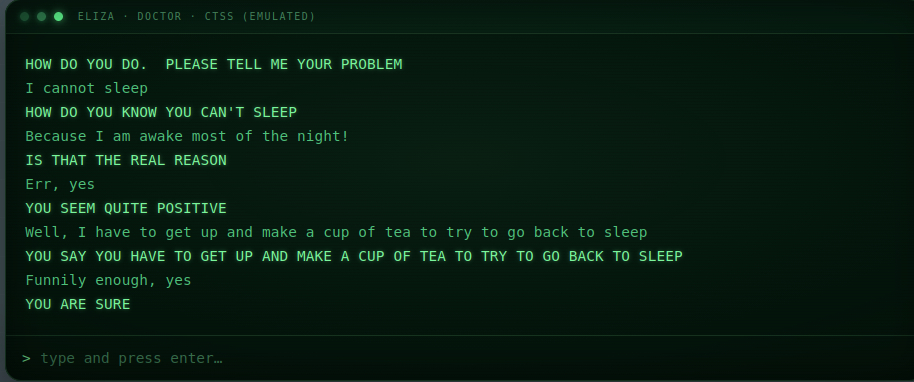
Sarah Ciston et al., Inventing ELIZA: How the First Chatbot Shaped the Future of AI, Software Studies (MIT Press, 2026), https://doi.org/10.7551/mitpress/15790.001.0001
It has always interested me that the context for this early chatbot, in the 1960s, was health: of therapy and counseling.
Specifically, it is apparently a "Rogerian therapist".
Ironically, of course, Carl Rogers's approach, pioneered in the 1940s, was called "person-centered therapy" (or "non-directive" / "client-centered"). It amuses me that the person-centeredness is hugely disturbed by the machine presence.
I am impressed by their "Try Eliza" page: https://findingeliza.org/try.html (Though it does show how bad this chatbot is, by contemporary standards)
It's a Javascript implementation, with source here: https://github.com/anthay/anthay.github.io/blob/main/eliza.html
The "doctor script" is fascinating: "(WHAT DOES THAT DREAM SUGGEST TO YOU)".
I'm continuing to experience terrible nausea and vomiting directly after dialysis/IV feeding. Need to speak to my medical team, but I haven't had this for 3 years and it's an unwelcome return.
Awful.
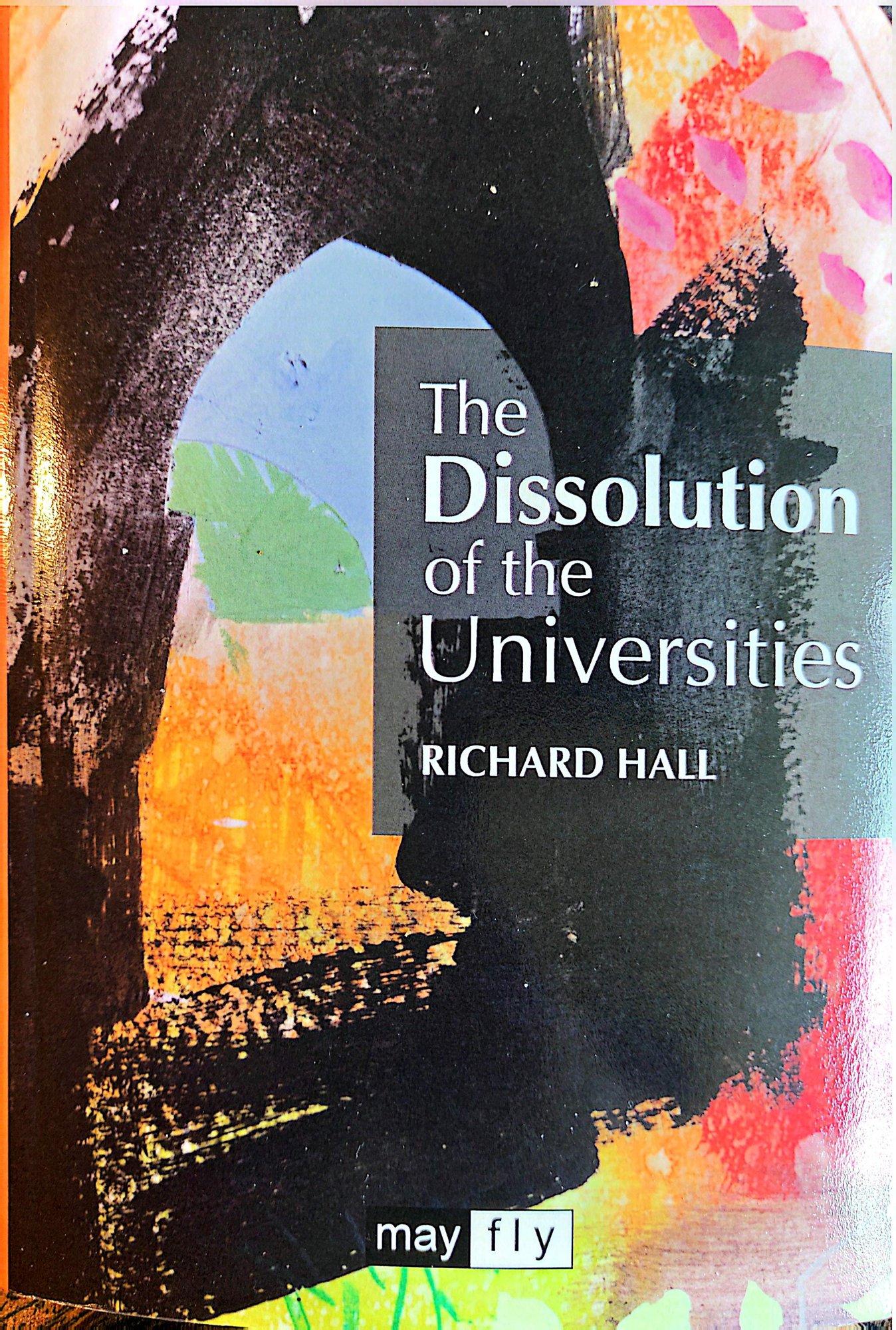
You want to know what's going on and the only responses left? @hallymk1.bsky.social can tell you. See the opening words on page 19: "Shit is fucked-up".
The Dissolution of the Universities continues.
Having cleared my desks of writing projects, I am now turning to write my book on the The Dark Web for The MIT Press. This is going to be fun!
https://eprints.bbk.ac.uk/id/eprint/56615/
I also have another secret book project on the go...
We don't need a "Scrooge cinematic universe" and we especially don't need it in the middle of the summer.
A nurse the other day, when planning my need for a side room at dialysis, told me: "don't worry! Norovirus is self-resolving and it will go away in a few days."
Me (calm on the exterior, screaming inside): "Not in my case. It can take 3+ years to resolve in immunodeficient patients."
On the terminology of open access (e.g. "diamond"):
"I think these terms are terrible and confusing."
"Springer Nature [... issued] an ultimatum about a year ago that we needed to increase the number of papers we accept per year immediately, and by a significant amount".
Academic freedom and peer-reviewed quality control at its finest.
I am having a particularly rough time at the moment. The norovirus is attacking me viciously. I struggle to digest any food and the nausea is ridiculous. My weight is just about stable, at 59.5kg. Some nights, I barely sleep, because I am up so much.
The UK government has imposed a funding model on universities that cannot sustain them.
Party time!
Today I re-read Eileen A. Joy, ‘Not Self-Indulgence, but Self-Preservation: Open Access and the Ethics of Care’, in Reassembling Scholarly Communications: Histories, Infrastructures, and Global Politics of Open Access, ed. by MPE and J Gray (The MIT Press, 2020), pp. 317–29, https://doi.org/10.7551/mitpress/11885.003.0032
It struck me that, despite the title, there isn't actually much on "care" in the chapter, despite its centrality to the themes.
The opening salvo to the piece is, though, still bang on target. Painfully accurate in its questioning and diagnosis.
"How might certain forms of academic publishing—especially scholar-led, community-owned, open-access platforms, and presses—enable better forms of institutional life conducive to personal flourishing and the increase of public knowledge (and to lubricating the important connection between the two)..
... especially at a time when the University is swarming with managerial techno-crats invested in privatizing and outsourcing higher education, students are saddled with staggering levels of debt, and the casualization of academic labor is at an all-time high?"
When we articulated, this week, the values we wanted for @kcommons.bsky.social, we could well precisely (if perhaps less eloquently than Joy) ourselves said that we want to "enable better forms of institutional life conducive to personal flourishing and the increase of public knowledge".
But I digress as I assemble a history of "care" in OA publishing rhetoric, descended from Mol, Annemarie, The Logic of Care: Health and the Problem of Patient Choice (Routledge, 2008).
Also, a disclosure if it wasn't obvious from the first post: I am MPE. I edited the volume in which this appeared and, thus, edited the piece itself.
A word I can never spell correctly, when first typing it, is "Caribbean".
"asymmetric"
I am very pleased to say that I have been promoted to Associate Director at Knowledge Commons, in MESH research, at Michigan State University!
I will be the Associate Director for Platform Development, overseeing our technological development team and shaping our future digital architecture.
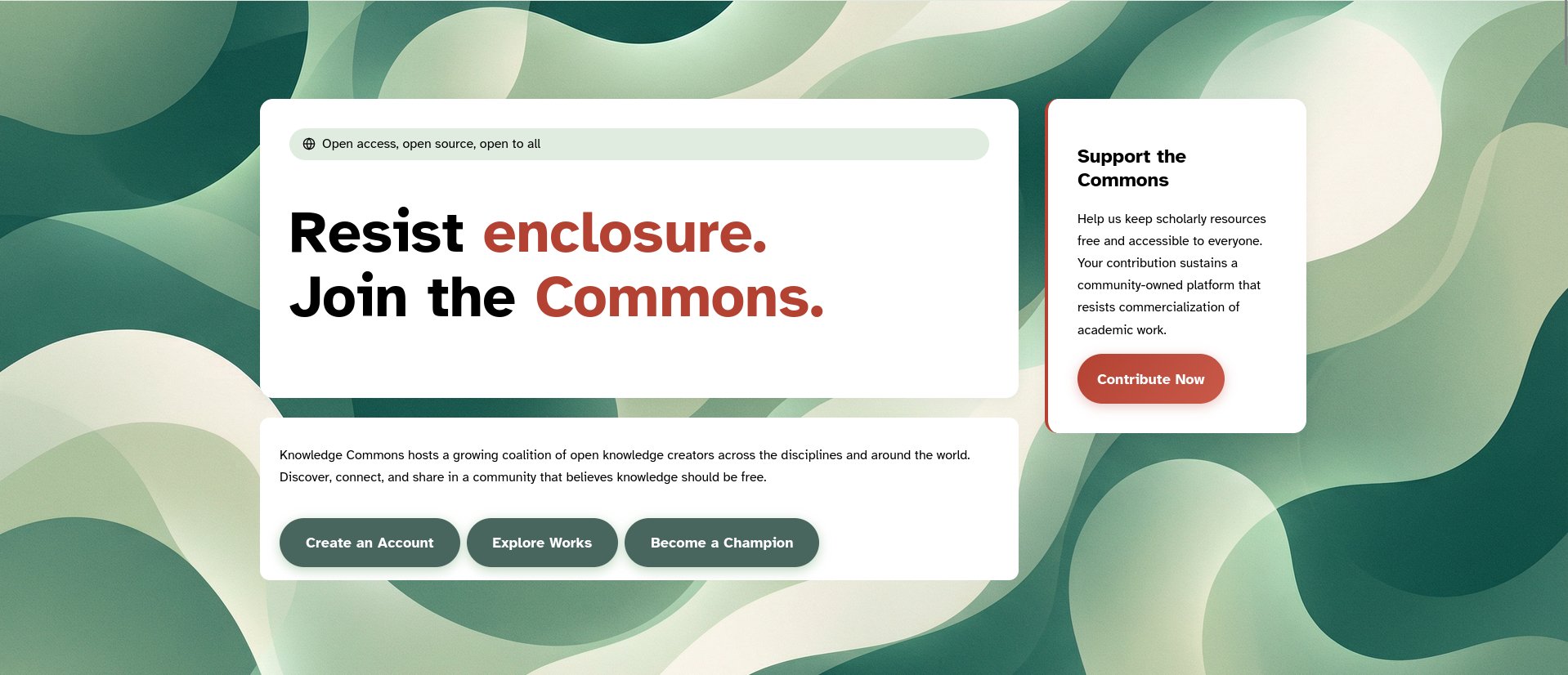
A remarkable shift since the frosty and sceptical reception that @theblochian.bsky.social and I received, when we spoke to CUP about the need for OA in 2013.
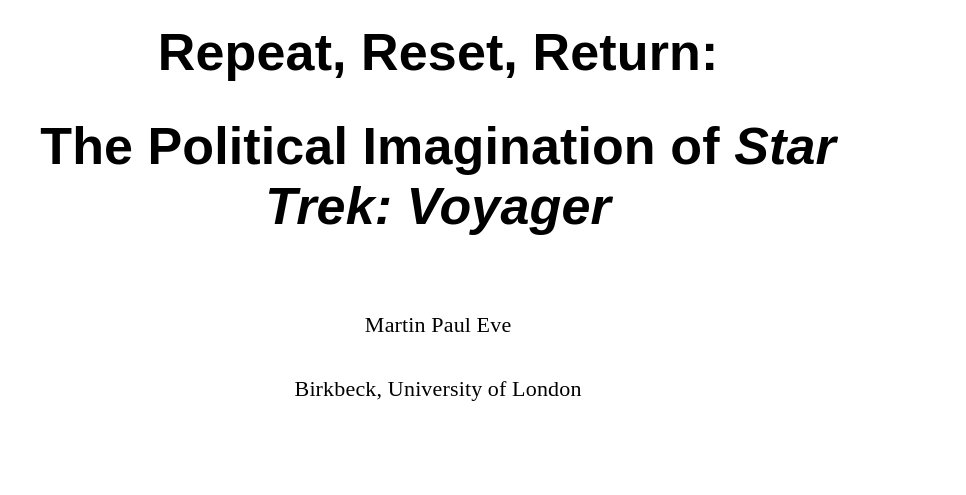
Today, I submitted the final manuscript of Repeat, Reset, Return: The Political Imagination of Star Trek: Voyager. Hurrah!
I have been working on this book, on and off, since 2022.
The book is under contract with Lever Press, so will be open access but also available to buy in hard copy.
This is my 11th academic book. I am so pleased to be with Lever Press, too.
Their model of liberal arts colleges banding together to fund a press - born open access - is excellent.
They also have some cracking titles. https://www.fulcrum.org/concern/monographs/xw42n9821?locale=en
During the course of writing this book, my kidneys failed and I began dialysis. A new type of life began at that point. This book gave me the opportunity to revisit Voyager, though. This kept me rooted during a tough period. So here's "to the journey"!
I am hugely depressed today.
We are trying to move house, the timing of which is, obviously, beyond my control.
I have to move my (home)dialysis care. The hospital in the new area have said that I can possibly move, but "they have to be happy to accept" me and they don't know the waitlist length.
So, what, I can't move house if they are "not happy to accept" me? As though I am not constrained enough by dialysis...
If I turn up at A&E, what will they do when I tell them that I am registered in their catchment area and they see that I have kidney failure?
But also: no idea on timings.
So let's say they graciously offer me a space, but I have not sold my house. What do I do? Or I have sold my house, but not got a slot (yet). What do I do?
I cannot travel 500 miles 3x per week from my new home, back to the old dialysis centre.
FURTHERMORE, they won't test a property's suitability for home dialysis in advance. You have to own the house, have moved in, and had the filters installed.
So basically, you have to jump with two feet and could then learn that the chemical balance of the water isn't suitable.
Then it's "bad luck, you just did an incredibly stressful and expensive house move and now have to go into hospital 3x per week, instead of doing it at home".
I just want them to make something easy for once.
My life is not easy. My health is terrible. I work full time (though I love my work). But it is hard to work with total kidney failure. Quite frankly: most people do not. All the medical staff are totally surprised when they hear that I work.
Why do they have to play that power game of "if we decide to accept you"?
Why can they not say "we'll help you to coordinate the timings on this and understand, of course, the difficulties and stresses of moving home. Don't worry."?
Why, basically, can they not just help me and make this easy?
RAGE AGAINST THE MACHINE LEARNING
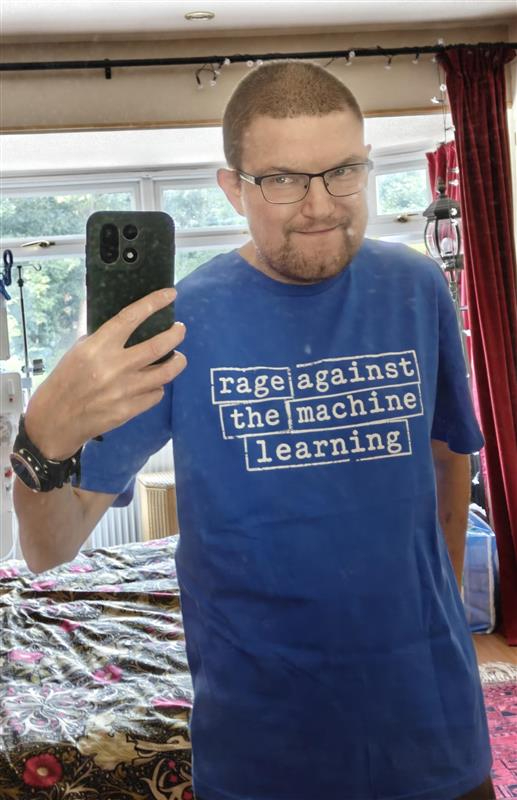
Wow. Final judgement in the Anthropic class action is approved.
Anthropic will pay $1.5 billion to authors whose works it pirated. The lawyers get $101.56 million (6.8%); a third of what they initially requested.
There is a 30-day notice-of-appeal period.
https://storage.courtlistener.com/recap/gov.uscourts.cand.434709/gov.uscourts.cand.434709.680.0_1.pdf
The Guardian gets with the programme
https://www.theguardian.com/commentisfree/2026/jul/20/the-guardian-view-on-humanities-cuts-in-universities-academic-departments-are-more-than-cost-centres
"Everyone is excited about using large language models for humanities research."
This is either supreme trolling or operating in a different world to me!
This is fantastic news! Congratulations Élika!
Here's my review of Binding Media, forthcoming in ALH Review, if OUP ever decide to publish the next issue...
https://works.hcommons.org/records/kekjq-s7m51

I will look forward to this!
Lots of late-ish night work for me this week, as we're having a huge Knowledge Commons team planning week. But I could not make the slot we had b/c of dialysis. Everyone is very kindly working around me to make it work, starting much later. This team is so good at making such accommodations.
I can report that, when you have been working for an overseas org, who do not use the UK PAYE system, the self-assessment tax return lump figure is eye-watering.
But then - outrageously! - HMRC also makes you pay an extra 50% as collateral against next year's tax. So-called "payment on account".
First, though: I do not mind paying tax in the slightest. I wouldn't mind paying more tax, in fact, if the cost of living were better.
The health service literally keeps me alive, and I am happy to pay for that, and for others to be able to use it too.
This is not an anti-tax rant.
I am unhappy, though, with HMRC guessing how much tax I will need to pay next year and taking it in advance, or then charging interest if they don't.
Next year, I will not have this situation as I have been moved to a UK employer who uses PAYE.
So HMRC have completely wrongly estimated my self-assessment tax for next year.
However, they are still using that figure to try to get me to pay on account for it! I have applied to have this lowered to near to zero.
Why, though, do HMRC have the right to demand that people pay speculative amounts of tax on speculative future earnings?
HMRC say it's because it reduces the number of people who get to the point of payment and say they don't have the funds.
Okay, I guess, but it really does not sit easy with me that they ask for 150% of the tax that you owe upfront rather than just 100%.
Here endeth my spiel about doing a tax return.
Monday ✅️
Geek t-shirt ✅️
It's like that ✅️
And that's the way it is ✅
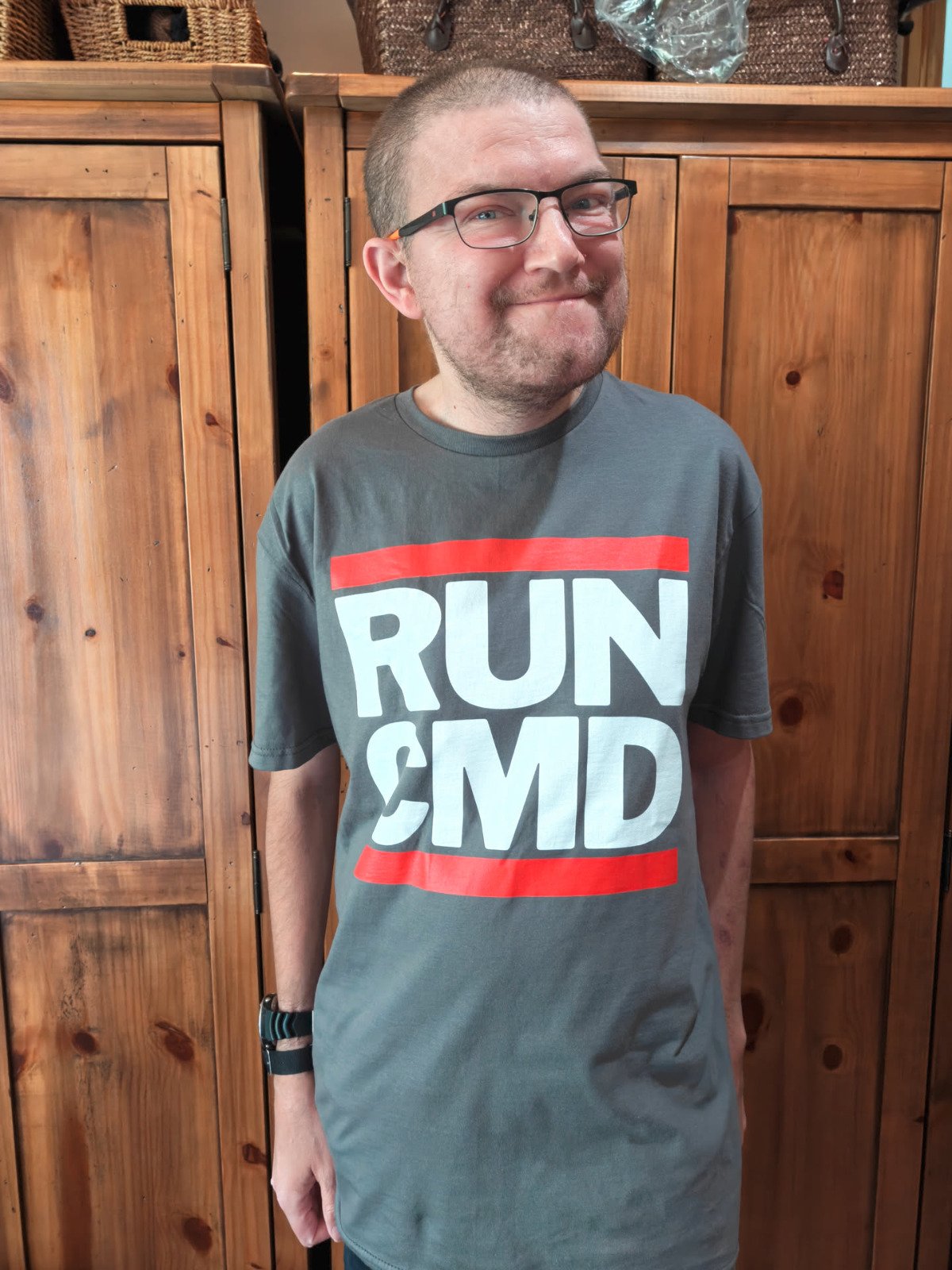
But can it run Doom?
Don't. Use. Substack.
An annoyance: MHRA referencing uses "doi:10.xxxx/xxxxx" for DOIs. Crossref DOI display guidelines say DOIs must:
* always be displayed as a full URL link in the form https://doi.org/10.xxxx/xxxxx
* not be preceded by doi: or DOI:
This ref style does the exact opposite.
https://www.crossref.org/display-guidelines/
I also dislike its "and others" instead of "et al."
It sounds a bit trivial and dismissive. A literal othering(!) of the authors whose names are not mentioned.
But I otherwise really like the style. And footnotes all the way!
Yeah, I know, I know.
I hugely admire the author(s) of this book for writing on this grim, crucial subject.
Sarat, Austin. Lethal Injection and the False Promise of Humane Execution. With Mattea Denney, Greene Ko, Nicolas Graber-Mitchell, Rose Mroczka, and Lauren Pelosi. Stanford Briefs. Stanford University Press, 2022.
@romeoromeotango.bsky.social hey! Robyn says hello
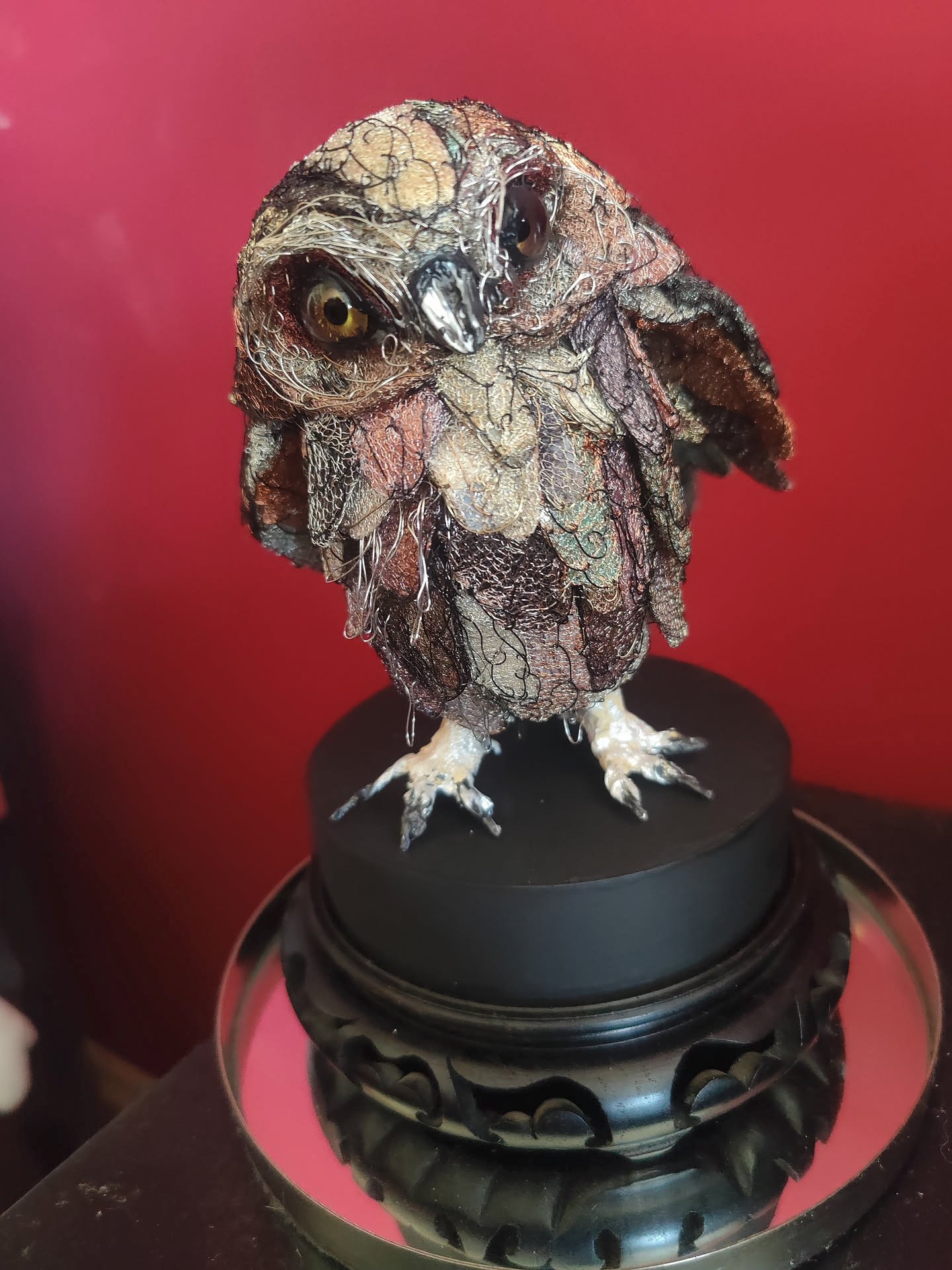
We have a beautiful owl sculpture, of a little owl, called Mr Tumble.
I was just reminded of this curious artefact, for no reason.
When I submitted my book MS, I included PDF and ODT files for convenience. A reader, with very helpful suggestions, has used the ODT file and given page numbers... which, obviously, do not match what I have. So "revisit the sentence in the middle of p. 114" with no extra context will be fun...
Works like Juskus, Ryan, ‘Sacrifice Zones: A Genealogy and Analysis of an Environmental Justice Concept’, Environmental Humanities, 15.1 (2023), pp. 3–24, https://doi.org/10.1215/22011919-10216129 are highly underrated. Openly accessible, it gives a genealogy of "sacrifice zone" in Environmental Justice activism.
I wanted to learn more about this term and this was such a great orientation. My thanks to Ryan Juskus!
I wish that more fields, where a term has evolved, had articles like this, for newbies like me (at least to the phrasing "sacrifice zone", if not the fundamental concept).
It led me to read the canonical paper on this: Bullard, Robert D., ‘Overcoming Racism in Environmental Decisionmaking’, Environment: Science and Policy for Sustainable Development, 36.4 (1994), pp. 10–44, https://doi.org/10.1080/00139157.1994.9929997
Really interesting/useful for my writing right now.
There's also @samuelmoore.org's ace ‘A Genealogy of Open Access: Negotiations between Openness and Access to Research’, Revue Française Des Sciences de l’information et de La Communication, no. 11 (2017), https://doi.org/10.4000/rfsic.3220
Perhaps more contested, but another great historical starting point.
For this week's tici taci release, Duncan gets funkaan. Great groove, very cool drums.
https://ticitaci.bandcamp.com/track/netbacks
This is worth responding to. There's a proposal, in here, to
"introduce a statutory requirement for employers to publish information about pay and conditions in job adverts"
So no more "competitive salary" nonsense!
Businesses will try to shout it down, but worth a go.
https://www.gov.uk/government/consultations/equal-pay-and-pay-discrimination
"Running a similar classifier task on Appiah’s own academic CV helps show the absurdity... When I asked an LLM to classify the published titles and book descriptions in Appiah’s CV... I found that Appiah would seem to be part of the trend he wants to critique"
https://www.chronicle.com/article/kwame-anthony-appiah-hasnt-done-the-reading
Feeling pretty rough, but about to give a conference paper remotely to Passau...
... The Archive at the End of the World: Speculative Preservation and the Politics of Loss
https://works.hcommons.org/records/szjqm-k8214
My publisher's submission guidance:
"For some projects, submissions are handled in @janewayolh.bsky.social, in which case there’s no need to send the files outside Janeway, but the MS files do need to be separated and formatted as explained above before being uploaded to Janeway."
Hell yeah!
(For those that don't know, @janewayolh.bsky.social is a platform I wrote with @ajrbyers.bsky.social and that is now managed, maintained, expanded, and run by Andy at @openlibhums.org. So good to hit these unexpected uses!)
I have been writing acknowledgements.
The trouble is, once you get started, the list of people you can remember to whom you owe gratitude grows and grows until you are thanking your Nan's local vet.
But even worse: there are definitely people I have forgotten, who *should* be "on the list".
This morning's writing is the FINAL revisions to this beast. It's. Almost. There!
Hmm. Do we want to entrust the "universal archive" to a two-year-old for-profit company with no information about how it is funded?
They have not even filed their first accounts (which are due *today*, so looks like they may be fined...)
https://www.tryleo.ai/blog/leo-collections-our-plan-to-build-a-universal-archive
https://find-and-update.company-information.service.gov.uk/company/16019040

No! I am a big fan of OnePlus devices and have had them for a long time now. :/
We're totally dead.
Haha these people have clearly never been in a school classroom for 20+ years.
Imagine the loss of authority a teacher would suffer if they had to ask a robot what they should teach next.
The robot would, in fact, undermine the teacher at every turn, just by its panoptic presence.
I have just arrived at dialysis and, as I was eating lunch, waiting to start, thought:
something you never think about/realise/understand if you don't have kidney failure is that, at nearly any time, 24hrs per day, thousands of people in the UK are connected to haemodialysis machines.
I am at least pleased to see that my university is not working to "bring together academia and the Armed Forces", as are 35 others.
I mean, urgh. Military-industrial-education complex vibes made explicit, here.
https://www.gov.uk/government/news/boost-for-skills-and-research-as-35-universities-across-the-uk-partner-in-new-defence-alliance
Rereading Suber (2012) this AM for a research article. https://doi.org/10.7551/mitpress/9286.001.0001
Have we abandoned his definitions -- thought fairly canonical -- with terms like diamond? A short thread.
Suber: all “OA delivered by journals is called gold OA, and OA delivered by repositories is called green OA” (6)
Gold OA is “not intrinsically tied to [...] any particular business model” (103)
Almost “the most common myth about gold OA is that all [gold] OA journals charge ‘author fees’ or use an ‘author-pays’ business model” (137-8)
This false belief “that most OA journals charge authorside fees and that most toll-access journals don’t”, writes Suber, has “caused several kinds of harm” (139)
In 2013, Christian Fuchs & Marisol Sandoval introduced a formal definition of "diamond". Funnily enough, they don't lead with "no fees".
They define diamond as when “not-for-profit, non-commercial organizations, associations or networks publish material that is made available online in digital format, is free of charge for readers and authors and does not allow commercial and for-profit re-use” (438).
https://doi.org/10.31269/triplec.v11i2.502
Diamond is, in their definition -- the first -- not-for-profit, non-commercial, and *forbids re-use by for-profit entities*.
They argue that this is needed because “Suber and others mesh together qualitatively different models, i.e. for-profit and not-for-profit ones, into the same category” (438).
So, wow, is this a far cry from where diamond has been taken (perverted). A grim focus now exists on only the APC/fee component. If you are fee-free, it is claimed, you are "doing diamond". Well, if you look at how it was actually defined... you are not. You're just doing gold under another model.
An example of further derailment: Open Research Europe has implicitly been aligned with diamond. "CERN to host Europe’s Diamond Open Access publishing platform" thunder the headlines. https://connect.oeglobal.org/t/cern-to-host-europes-diamond-open-access-publishing-platform/8889
But ORE will only accept "researchers funded by an eligible European Commission grant"! It's not even fee-free/open for all. It is _certainly_ not restricted to non-commercial and not-for-profit re-use. In fact, one of its goals is to accelerate commercialization!
This raises the spectre of licensing. CC BY has long been the favoured license for OA advocates:
"This is the license recommended by the Open Access Scholarly Publishers Association (OASPA) and the SPARC Europe Seal of Approval program for OA journals. I support this recommendation" (Suber, 69).
CC BY is not, though, compatible with diamond OA, in the Fuchs and Sandoval tradition.
Anyway, just some thoughts and a history of where these terms have come from and where they are going.
Extremely worrying.
There's a review of PIP. Says it isn't working because it's too difficult to get. An ordeal for claimants.
Labour government then immediately seizes on the phrase "isn't working" to begin cutting the benefit.
https://www.theguardian.com/society/2026/jul/15/labour-stop-writing-cheque-benefit-claimants-pat-mcfadden-welfare-reform
One of Sam Neill's most underrated or under-recognised roles is in the film Dean Spanley. It's great and you should see it! It's kindof about dogs...
But Neill himself rated it very highly and was proud of the role.
https://faroutmagazine.co.uk/movie-sam-neill-considered-most-overlooked/
Oops. I look a bit angrier than I meant to, in this recording!
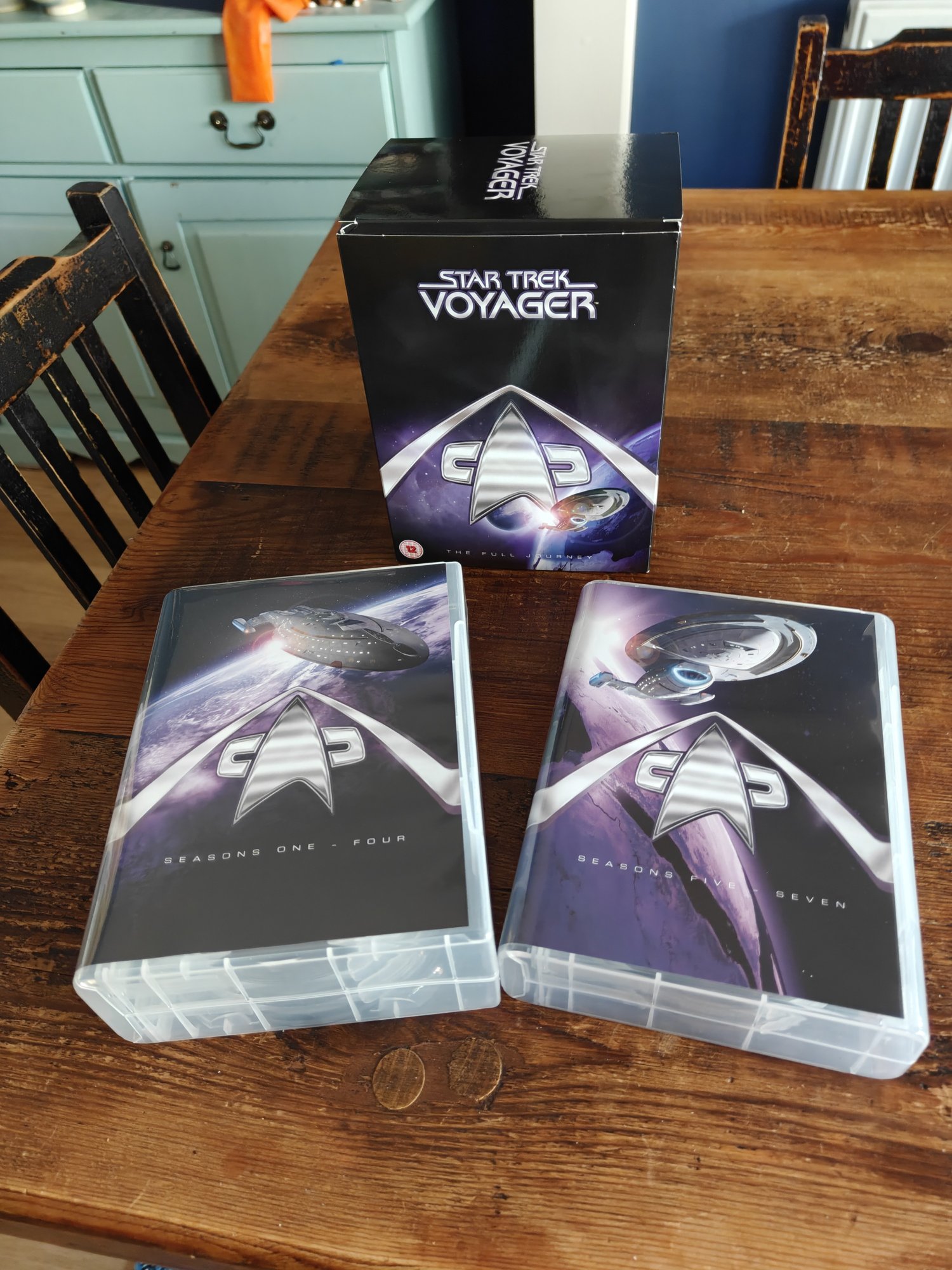
So, they took it off Netflix, so we can't watch it there. Then I found out that my TV is too old to run the Paramount+ app. Well, they don't support it. Grumble. So can't watch it there.
So, I took radical action and bought some DVDs.
There's an interesting write-up of the distinctive review process used in this issue, here. Good to see!
But it misses a hidden downside; I didn't participate because I could not commit as an author to the massive amount of extra labour involved.
https://journals.publishing.umich.edu/jep/article/id/9283/
As a reviewer, I was hospitalised at the time and it required an in-person meeting that I could not attend, as opposed to an entirely asynchronous request in the usual model.
Synchronised meetings make processes much harder for disabled people. That, obviously, is also a form of access.
The Journal of Electronic Publishing has a special issue on OA in the humanities. It looks great!
On a vanity note, I get a fair few citations... And I wrote/founded the software that hosts the journal 😊
https://journals.publishing.umich.edu/jep/issue/456/info/
@ajrbyers.bsky.social @janewayolh.bsky.social
Hot on the heels of us upgrading to WordPress 7.0 at @kcommons.bsky.social, they go and release 7.0.1. Ha! No big deal, though. On the case...
Yes. I really hate in-text citation styles.[1] It kills the flow of the prose while also discouraging more comprehensive referencing.
[1] Eve 2026.
Another thing: although it's proprietary, terribly named, and hated by many as they had to use it during the height of Covid, Panopto is actually a really cool tool.
Works in-browser. Captures separate streams for slides and presenter. Does captioning. I actually love it.
Also: I tend, these days, to rehearse my presentations... and record them, using Panopto. This means that all my conference papers can have a version in the institutional repository. Certainly, the final version may differ, but this is a good compromise.
I really hate/resent creating slides. It bugs me. A tedious task.
But I also realise it is important, particularly for people for whom the visual mode works better. I have struggles to hear, ever since my stroke in 2016, so truly understand that they can be helpful.
I just don't like making them.
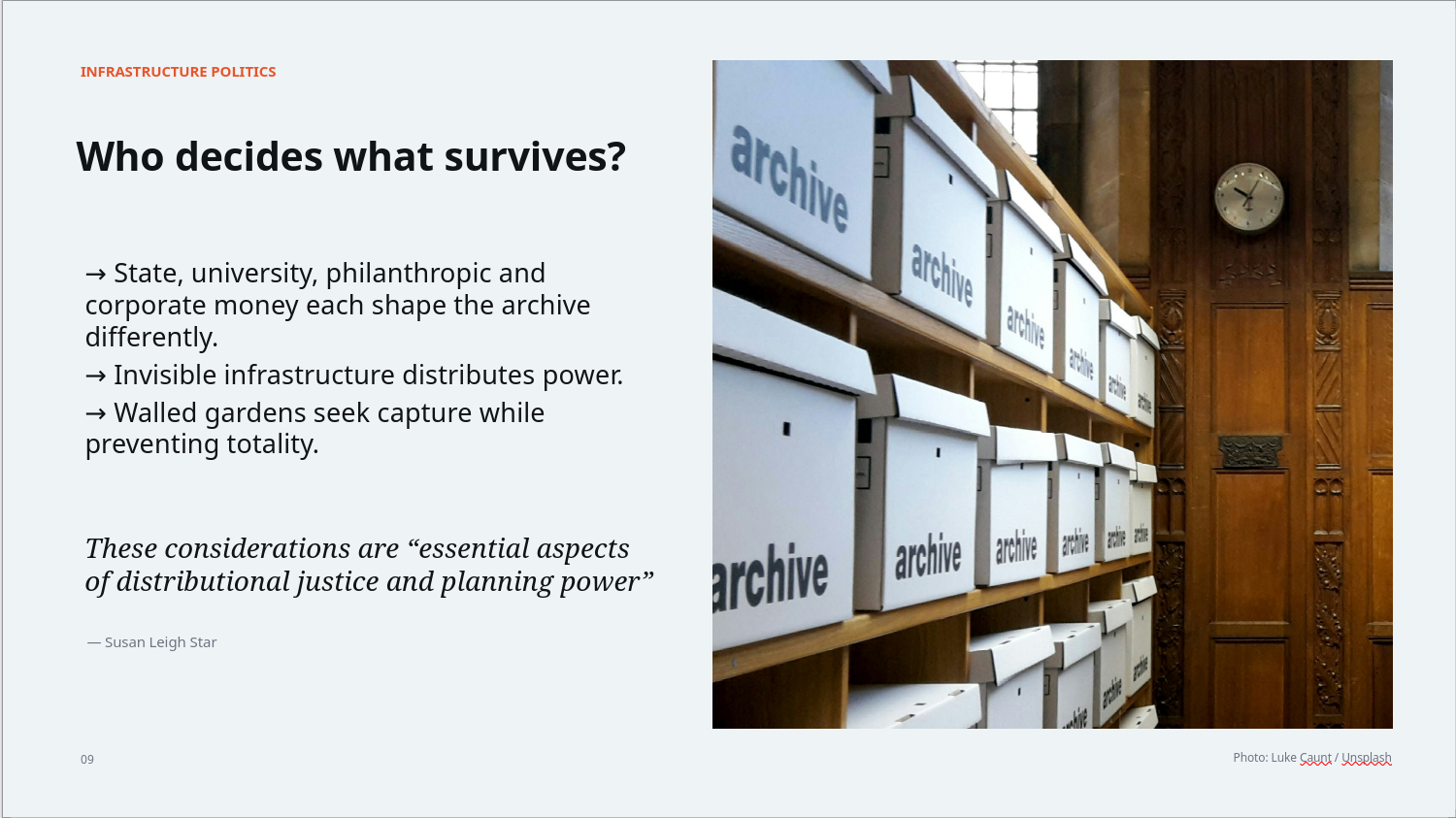
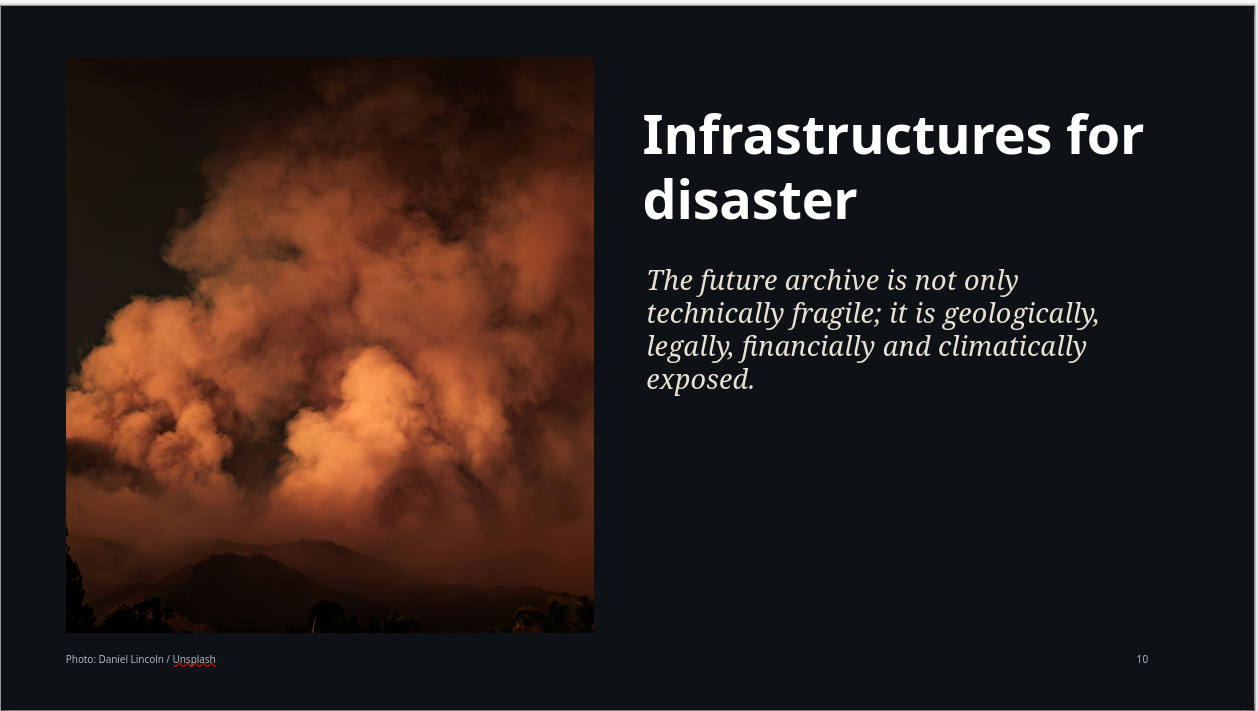
Preparing for a talk. It's a cheerful one.
New resource on https://Fluke.fm, from this morning, that I forgot to post: an interview with Fluke about how they made "Atom Bomb" https://fluke.fm/resources/official/interview-with-fluke-on-magnetic-mag-by-will-vance/
It's obvious, but: I am always astonished when I see that the #1 political issue for people is "immigration".
Because most people have never seen an immigrant or a "small boat".
It's just that the media have successfully told the story that the dire state of the UK's economy is due to immigration.
Can't get a job? Immigration.
Cost of living? Immigration.
UK benefits cost? Immigration.
Can't understand the strangers at the next table in London? Immigration.
There are non-white people and you don't like it? Immigration.
(OK, that last one is true. But you are a racist if it applies.)
Creating media hysteria around the cost of disability benefits is one step from appraising how much specific individuals "cost" the NHS.
For example: the drug that makes it possible for me to live and work is very expensive. Tabloids would have a field day with £800 per month for an arthritis drug.
A really interesting browser fingerprinting technique - browsers have different mathematical outputs depending on the operating system
https://scrapfly.dev/posts/browser-math-os-fingerprint/
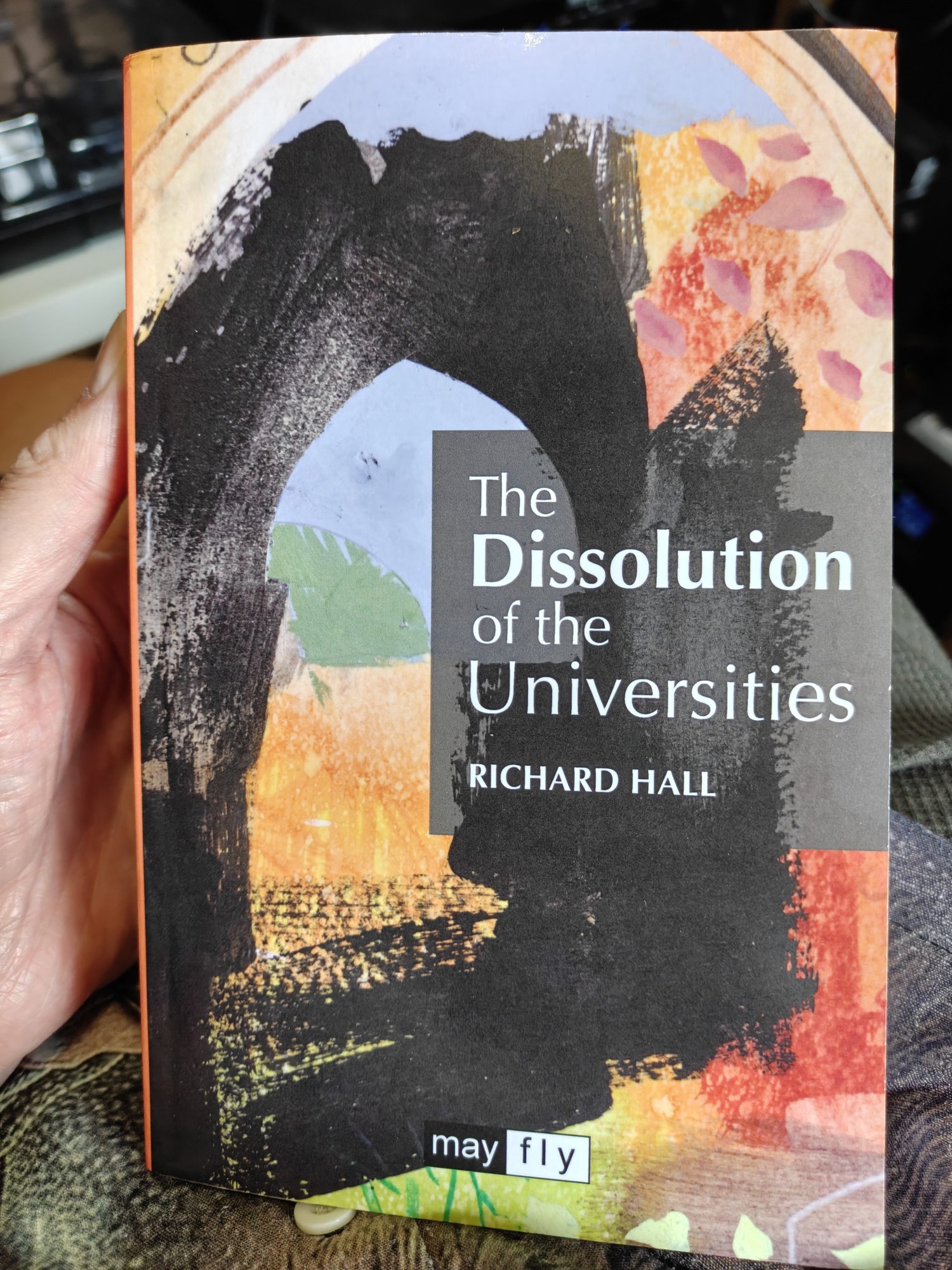
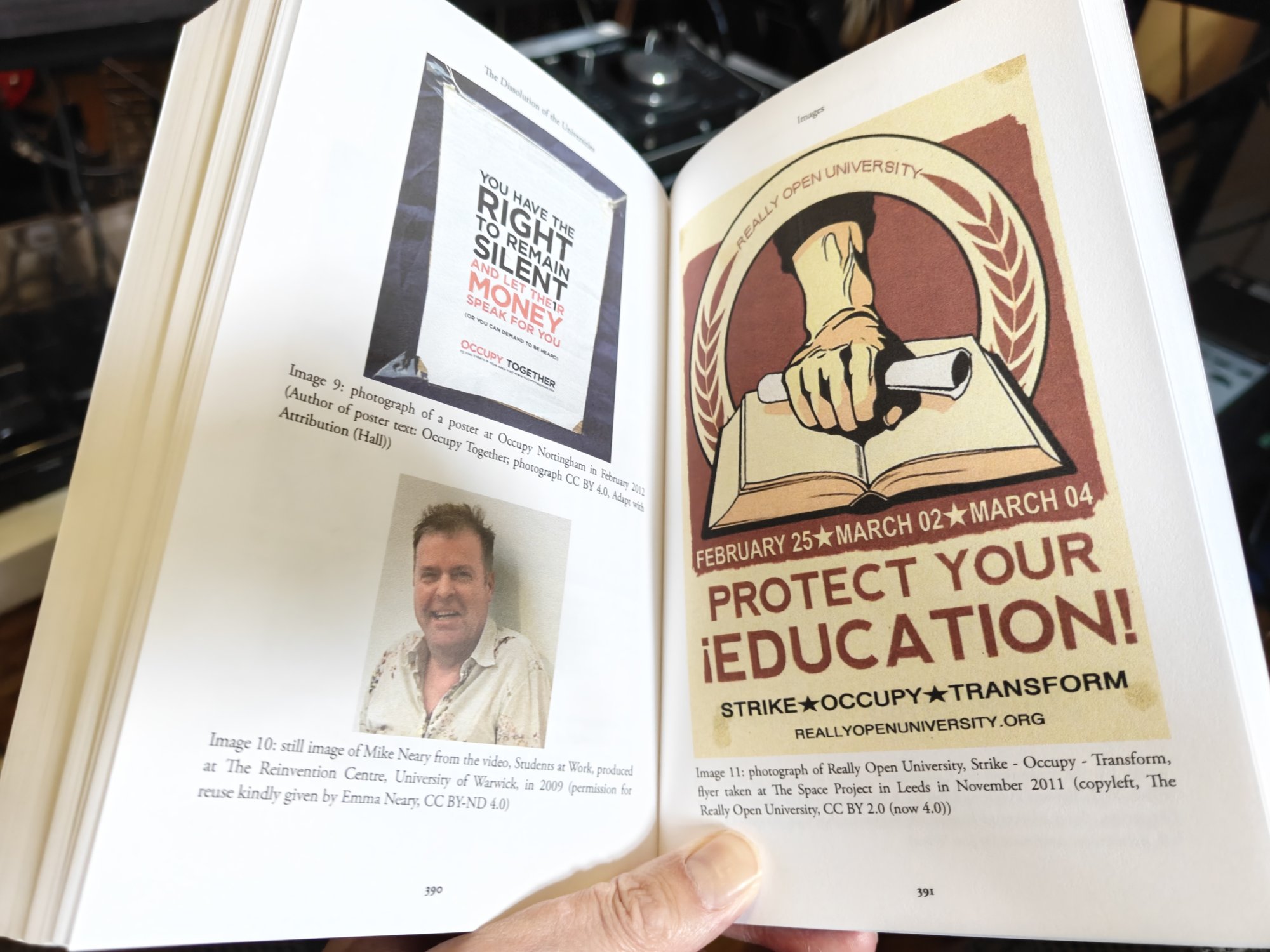
The post/mail brought a lovely surprise! @hallymk1.bsky.social's new book, in hard copy: The Dissolution of the Universities. Thrilled to receive this. Had started reading the open access copy, but I do love a print book and usually buy them, even if OA. But, in this case, thank you, Richard!
We're back to a plane crash full of people per day dying and the government shrugging, as it's business as usual.
https://www.theguardian.com/environment/2026/jul/13/june-heatwave-killed-440-people-a-day-england-wales-data-suggests-climate-crisis
We could have been anything that we wanted to be...
https://www.theguardian.com/film/2026/jul/12/we-were-kids-dressed-as-gangsters-running-riot-alan-parkers-bugsy-malone-at-50-by-its-cast-and-crew
I did get some conference paper written, but it's been a pretty rubbish day. After a good week at work (huge platform upgrade!), I have felt very unwell since yesterday afternoon. Constant autonomic attacks and feeling very sick. Not fun. And now I must do dialysis, again.
I don't know what has happened to The ALH Review. It was publishing quarterly, but seems totally to have collapsed. I was told my piece would appear in January. It's nowhere to be seen, in July. Good work OUP.
https://academic.oup.com/alh/pages/the-alh-review
Today, I am preparing for the Textual Ecologies conference next week. I will be participating on Zoom, rather than being in lovely Passau, but that's the way it goes when you need dialysis to live. My co-panellists are Matthew Kirschenbaum (Virginia) and Elaine Traherne (Stanford).
Publishing as Collective Infrastructure
https://cloud.servus.at/s/oRiRS28t9BsNmyY?dir=/&editing=false&openfile=true
I spent the final part of my Friday investigating ATProto (the thing that Bluesky runs on) and whether we could use it at @kcommons.bsky.social
https://eve.gd/2026/07/10/investigating-atproto-here-and-for-knowledge-commons/
Do election candidates have to attend the count in person and stand on the stage next to the others? Just asking...
Basically: no.
Am I right that the Anthropic class action case has stalled on final approval, primarily because of objections to high lawyer fees? And there's been no progress since May?
https://arstechnica.com/tech-policy/2026/05/authors-fight-for-higher-payouts-from-anthropics-1-5b-copyright-settlement/
I am very much looking forward to reading Ciston, Sarah, and others, Inventing ELIZA: How the First Chatbot Shaped the Future of AI, Software Studies (MIT Press, 2026) <https://mitpress.mit.edu/9780262052481/inventing-eliza/>
Out this month and a well overdue critical history lineage.
Breaking out the serious cooling technology and near point blank range to my head.
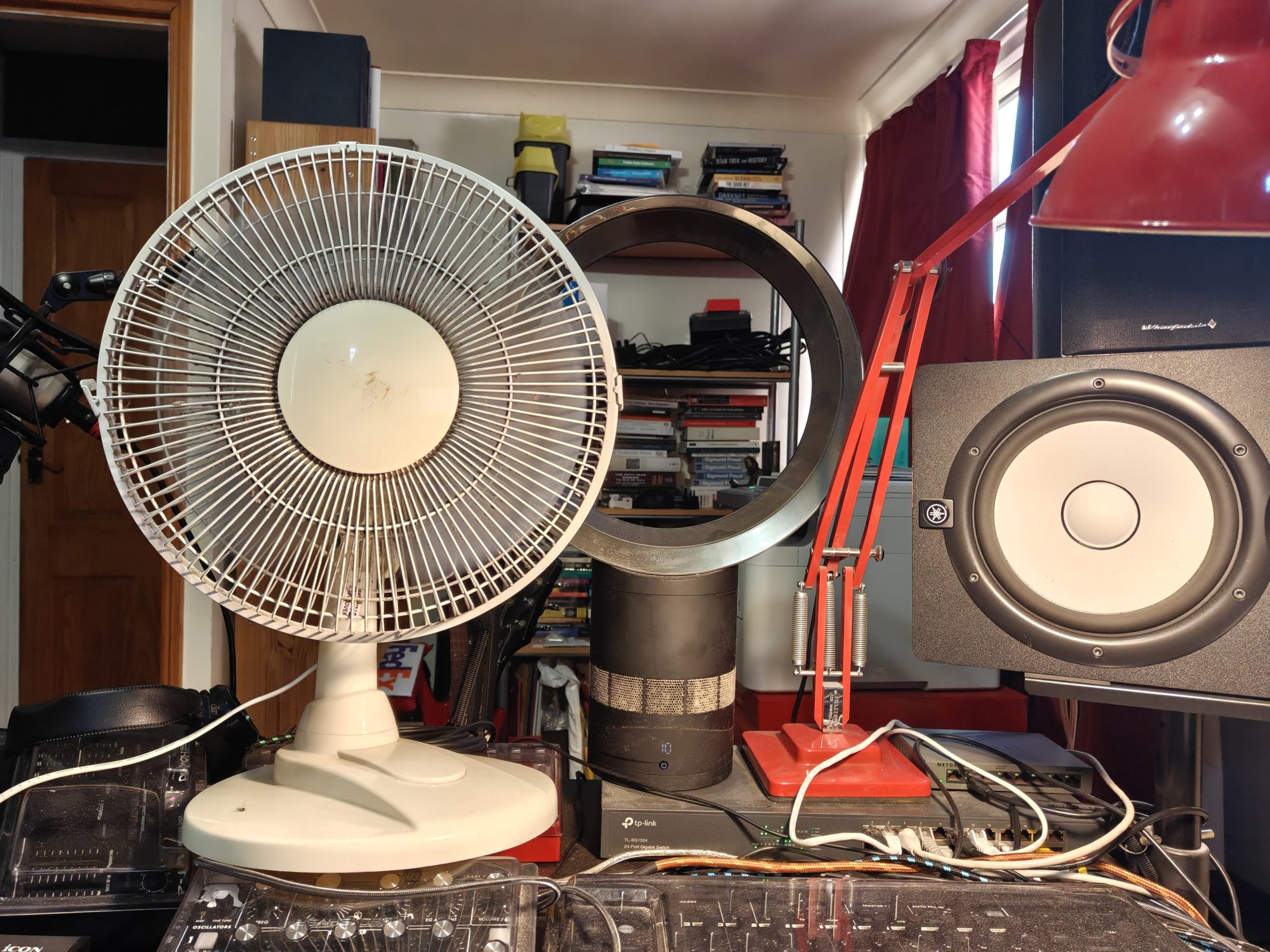
Having total kidney failure in this heat is very challenging.
At this point, I pass no urine. At all. It all has to come out via dialysis (or via the bowel).
So you have to calculate how much fluid to remove & how much is safe to drink. But in the heat, this calculation is hard, because you sweat.
Obviously, in the heat, you are thirsty. So you want to drink. But if you drink too much, the fluid will get on your lungs, overload you, and cause you to drown internally. So then, if you don't drink enough, you become dehydrated.
Then, when it comes to dialysis, you have to try to work out how much of your weight is fluid and should be removed. If you take off too much, your blood pressure will crash and you will have terrible cramps and eventually pass out. Don't take off enough, and you risk the overload.
So, as I said, it's extremely challenging, especially if you also have chronic norovirus, meaning that you are losing a lot of fluid through the bowel route.
RANT AHEAD
I am miffed. We had a submission at Orbit that we went to great pains to review. It was extremely challenging to find readers. Our internal team read it, too.
It was through to acceptance. And then the author pulled out because their university demanded a Q1 or Q2 ranked journal.
I do not blame the author, here (although they could have checked this before submitting). I understand the pressure they are under (it was part of a portfolio for a doctorate by publication).
But WTF with this journal ranking nonsense? Appalling. It clearly induces a Matthew Effect...
because if institutions demand publication in Q1 and Q2 journals, and that is where all the quality material goes, then newer and outsider publications can never break into those quartiles.
Also, I believe this Q1/Q2 stuff is a SCOPUS fabrication. So if you use this, you're in bed with Elsevier.
Finally, if you make requirements like this, it's clear that you are delegating your appraisal of the work to an external proxy for quality; a very flawed one. This sets up success bias in the viva examination, because the examiners will feel it has already been through a "Q1 standard process".
This university needs to take a serious look at DORA and, specifically:
"the need to eliminate the use of journal-based metrics, such as Journal Impact Factors, in funding, appointment, and promotion considerations;"
https://sfdora.org/read/
/END OF RANT
"Meta Is Toying With the Idea of Smart Glasses That Record Everything, All the Time".
Of course they are.
It's just insane, evil, wrong, and bad. This totalising desire for data maximalism will destroy all that is good about human interaction. And they think that's desirable for some reason ($$$).
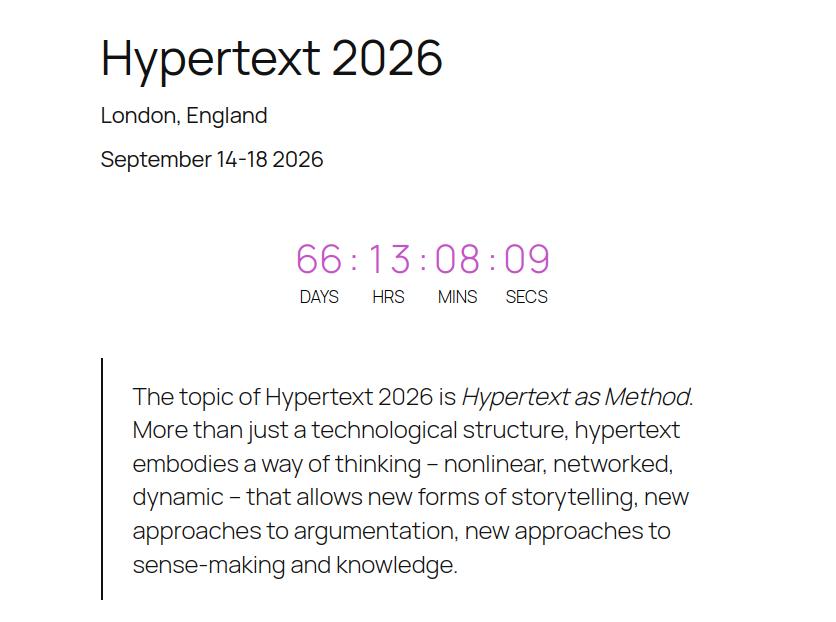
I will be giving a keynote at the ACM Hypertext 2026 conference, hopefully in person, though this is dependent on health.
But I love these countdown banners. As though there is an urgency to get tickets to see me (and others) speak. Ha!
https://ht.acm.org/ht2026/
I love to start my day with a bit of heart-stopping technical work. Ha!
But Knowledge Commons Sites and Groups are now operating on WordPress 7.0.
That sounds trivial, but with tens of thousands of Sites and users, we can't mess up on a big upgrade like this.
But here we are!
You would not believe how much testing we have to put into each WordPress upgrade, to ensure we don't break people's sites. We have a comprehensive spreadsheet of all core functions and we send multiple humans through this list, trying things, by hand, so that we are sure they still work.
It is great to have the metadata back, with links to theses in institutional repositories. But it's still a mere shadow of what EThOS once was. The BL cyberattack continues to impoverish our digital knowledge record.
The Guardian reached out to Tice for comment on what they'd uncovered in their investigation.
He didn't answer their questions. He instead forwarded on what they had found to The Telegraph to get a gentler write-up. The Telegraph published it without any credit.
https://www.theguardian.com/politics/2026/jul/08/more-reform-uk-transactions-worth-millions-reported-to-national-agency
Really very weaselly not to criticise Microsoft and just say "oh, what a shame, I'm so sorry for you all".
This is a massive company! It could easily afford not to have wrecked 1000s of lives. It just wanted more money.
https://www.ign.com/articles/my-hearts-with-all-of-you-john-romero-says-id-software-has-done-a-great-job-moving-the-studios-legacy-forward-and-hopes-someone-is-working-to-preserve-it-all-amid-xbox-layoffs
Definitely not my area, but the other highly commended runner-up for the SHARP Book History Prize is /Manga: A New History of Japanese Comics/ by Eike Exner
Might be of interest to @ernestopriego.com!
https://yalebooks.yale.edu/book/9780300280944/manga/
The thing is, these fines don't go to the customers who were, basically, scammed. They just get absorbed by Ofcom. It penalises the firm, for sure, but it doesn't compensate the victims.
https://www.bbc.co.uk/news/articles/c982vm2jzl1o
SHARP also awarded some runners-up. 😀
/Literature’s Refuge: Rewriting the Mediterranean Borderscape/ by William Stroebel does, indeed, sound extremely interesting (and pertinent at this time).
https://press.princeton.edu/books/paperback/9780691266053/literatures-refuge
My only critique of the SHARP setup: Zoom Workplace (ZW) is vicious.
Conventional Zoom calls can be done in the browser. (When it fails to open the app, it gives you an option to proceed in browser. I always use this.)
But ZW requires the app. On my Linux system this was crashing badly.
A dozen or so "The system has encountered an error" messages popping up, just before I was supposed to talk. Far from ideal. I was sweating!
Also on the SHARP front, congratulations to Joan Judge!
Her book, /The Politics of Common Reading: Vernacular Knowledge and Everyday Technics in China, 1894–1954/ has just won the SHARP Book History Prize.
It truly made my year winning this in 2025. I look forward to reading this volume!
With great regret, I missed the #SHARPIES panel yesterday on "Archives, Power, and Preservation", with @jeffmakala.bsky.social, Gloria J. Morales Osorio, @bryansinche.bsky.social, Yael Sternhell, and @colleenlovesbks.bsky.social.
Fortunately, I can now watch the recordings!
I am a big fan of what SHARP has done with this conference. I know it won't and can't replace in-person events. But I feel so much more included in this week-long event. And the recordings are so helpful; I have dialysis and will miss swathes of it. But now I can still listen and watch, afterwards.
When that's done, we can concentrate teaching in fewer UK universities, too!!
Sigh.
Cautiously optimistic that the review will be a positive thing.
Pessimistic that the government will implement it in a positive way.
And, of course, it was "not allowed to suggest changes that would increase the overall projected welfare spend".
https://www.theguardian.com/society/2026/jul/08/disability-benefits-not-fit-for-purpose-timms-review
So glad that so many people are mounting such a comprehensive response to this.
But it's so frustrating to see the US government waste so much of so many people's time, responding.
It's a classic tactic, of course. Bureaucratic overload; also used in UK disability benefits/welfare.
Congratulations to @bobeaglestone.bsky.social!
https://www.nate.org.uk/2026/06/10/professor-robert-eaglestone-to-receive-nates-outstanding-contribution-to-english-teaching-award/
@jsench.bsky.social we (Matthew K and I) had a good bit of discussion around your Intimacy of Paper earlier today during our SHARPIES session
Matt is absolutely the most generous interviewer anybody could hope for. It was a huge honour to have him talk with me about my work, given how formative an influence he has been on me.
(I am glad he didn't manage to inflict my music on the audience, though. He tried!)
In case you really want it: https://www.youtube.com/watch?v=reGK27VIG5Y&list=RDreGK27VIG5Y&start_radio=1
UK! UK! UK! (Please)
Tragically hilarious.
Opticians say that I need an urgent "MECS" appraisal - the Minor Eye Conditions service.
I have phoned 6 MECS providers and none of them could offer me an appointment. They won't book beyond tomorrow.
Farcical.
Made me laugh - and I am in this camp - but I appreciate that some people do like to listen to material rather than read it.
But is that what this does? Is it just an audio version? Or is it some terrible AI fakery with two people talking about it? 🤔😕
This morning, I read Froehlich, Heather, ‘Against Cultural Heritage Wastelands’, Internet Histories, 5 July 2026, pp. 1–21, https://doi.org/10.1080/24701475.2026.2696719 (£$€🔒)
A good articulation of the endless "bespoke vs standardized" dilemma that underpins digital preservation questions.
Many right-wing attacks on Personal Independence Payments (PIP). It's appalling.
People with disabilities face so many additional costs. PIP allows people to have a life by defraying these.
And it's SO hard to get. Questions include: "can you feed yourself?" Nobody is getting PIP for mild anxiety.
If only someone, somewhere had written something about this.
I have a problem with my eyes.
In dimmed light, my right eye has a "missing" patch in the middle.
I believe that this may be the cataract of which they told me, before, and that is a consequence of my long-term needed steroid treatment.
Does this symptom sound a likely consequence of a cataract?
Got my special edition Fluke art cards and bag today 😁
https://fluke.fm/resources/official/the-second-bite-special-edition-supplements/
On Tuesday, I'll be talking with Matthew Kirschenbaum about my book, Theses on the Metaphors of Digital-Textual History.
In the meantime, as prep, I'm revisiting my work on the history of digital pagination and how development of the PDF was almost cancelled (!)
https://muse.jhu.edu/article/872063
Happy Independence Day and 250th celebration of this to my American friends. I wish it were under better circumstances.
"I've spent about 100 hours of work over the past month to make sure git-annex can build without dependencies that contain LLM generated code"
How far down the stack are other devs willing to go to eliminate any LLM dependency?
https://joeyh.name/blog/entry/no_LLM_code_in_dependencies/
Did you know that patients on transplant lists can't travel more than 2hrs (varies) from their designated hospital? They then have to be prepared for "the call" 24/7. They must then get to the hospital, immediately. You can be on such a list for several years.
https://www.theguardian.com/society/2026/jul/03/people-awaiting-hospital-treatment-three-weeks-notice-nhs-england
A hellish way to live. In constant hope, always on edge, every other call a disappointment. But also tethered. You are stuck near your hospital.
I am not on a transplant list. I need haemodialysis for life. But I know many dialysis patients who are awaiting a transplant. Waiting for the call.
Thomas Pynchon, Vineland (or Mason & Dixon or even Gravity's Rainbow, but these are too subtle and long)
Toni Morrisson, Paradise (or Beloved)
Philip K. Dick, The Man in the High Castle
A friend sent me a link to this article. We are really not a serious country, with our MPs spending time on this.
https://www.theguardian.com/tv-and-radio/2026/jul/02/mps-uk-broadcast-russian-cartoon-masha-and-the-bear
This would cause catastrophic breakage to your system
Here's a question about citation metrics and book chapters... If you edited a book - and the editing was, really, pretty thorough, including rewrite suggestions etc. - would citations to that chapter be counted for the editor? I am guessing not. Not "authorship". Seems wrong.
On giving talks and making slides
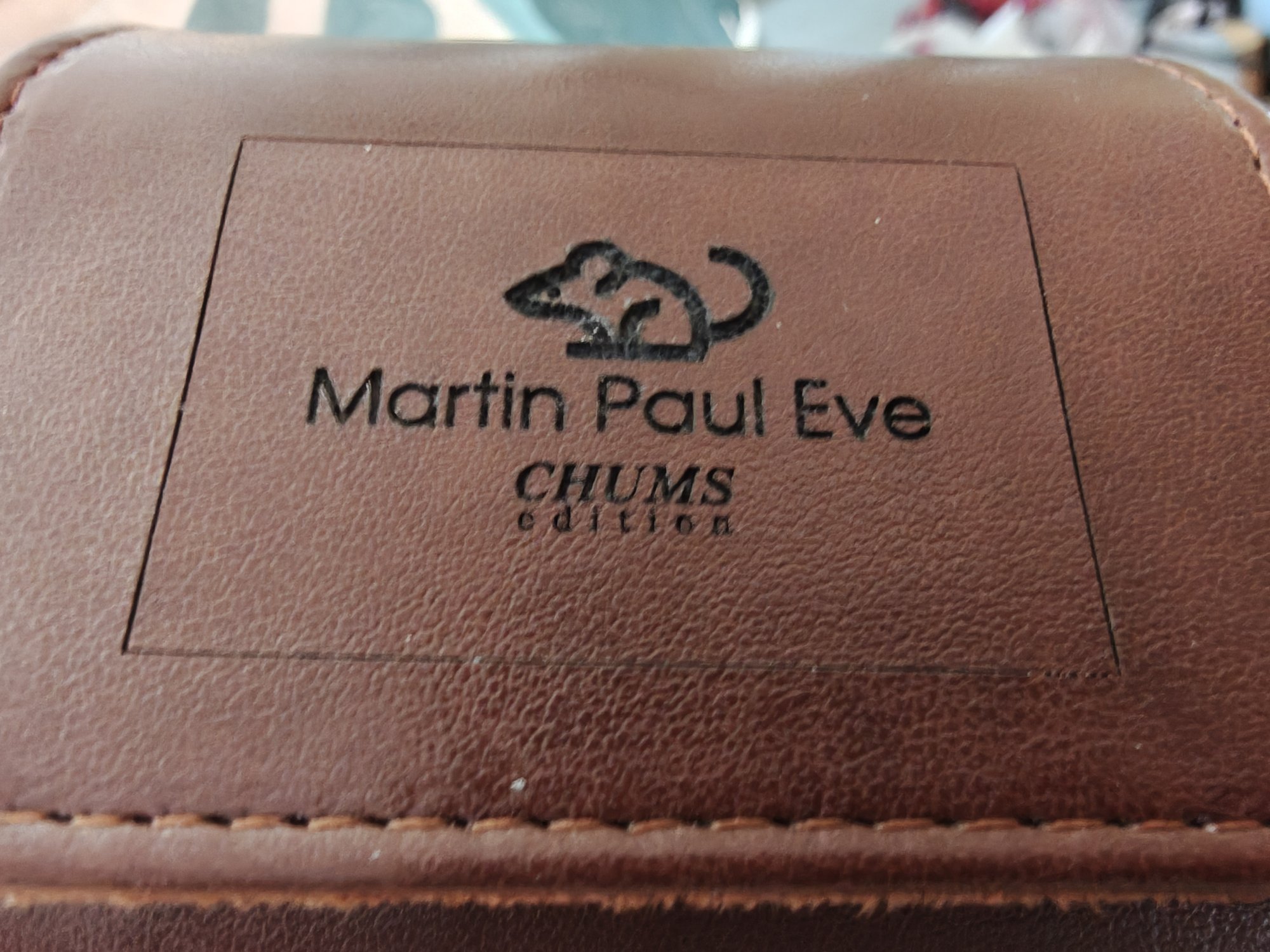
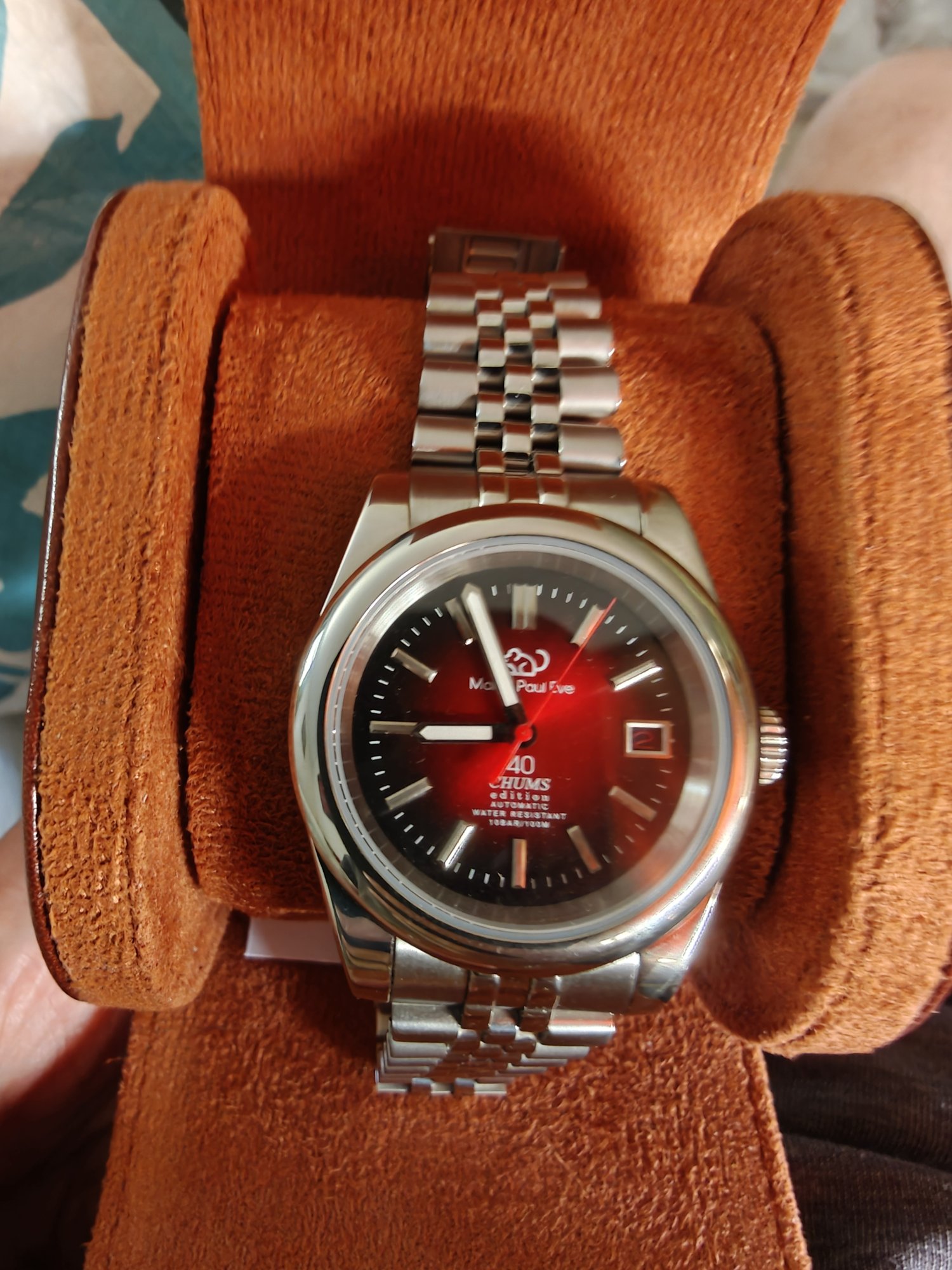
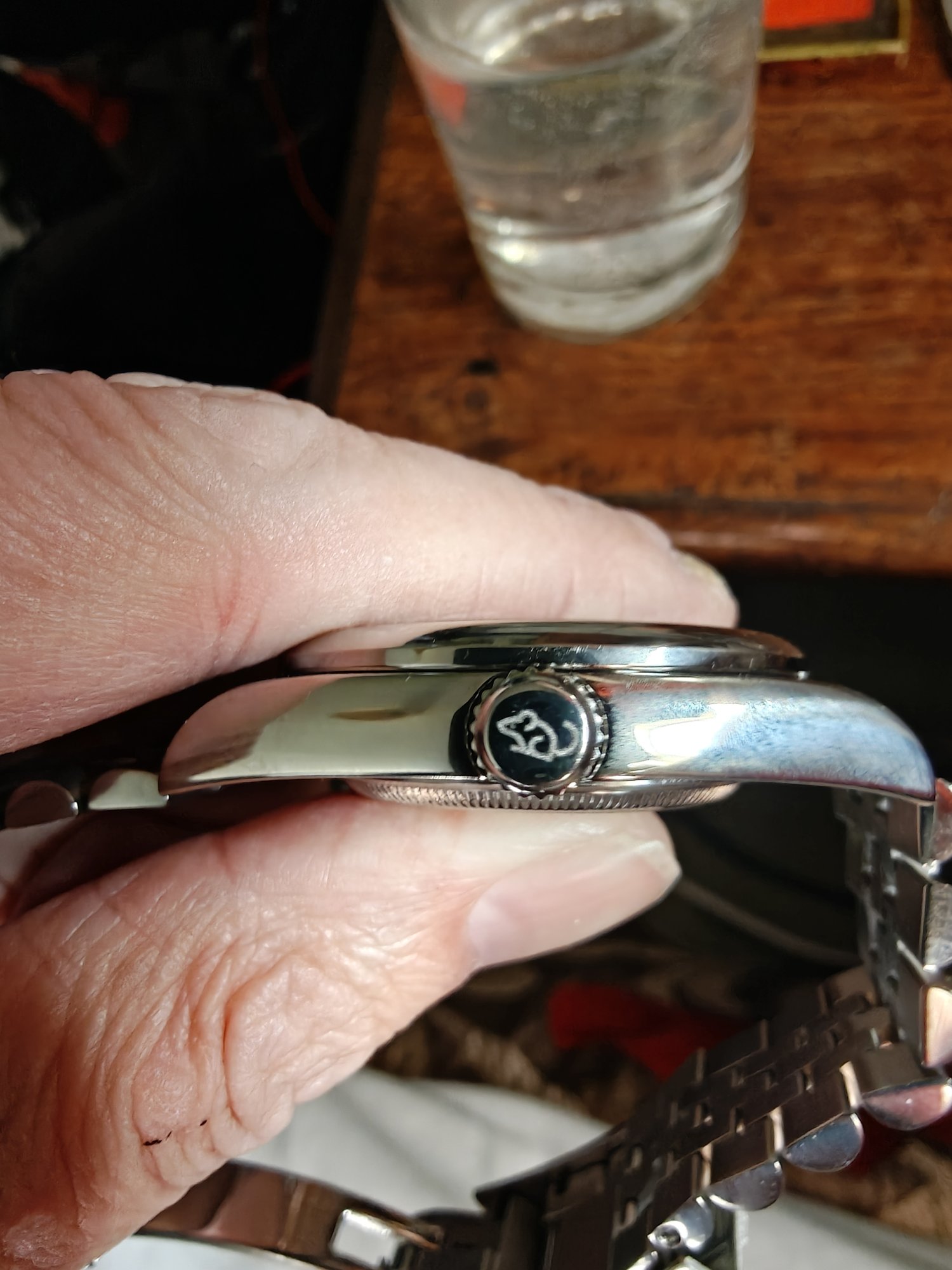
I have some incredible friends. For my 40th birthday, this friend *made* me a watch. He ordered all the component parts with custom etchings and engravings, then learned from YouTube how to put them all together with tweezers and other techniques. My nickname is "Mouse" btw; hence the mouse logo!
I am getting people I do not follow appearing in my "Following" feed. I had this one come up. Then I had @motherjones.com. I do not follow this acc either. What's happening - and can I ask anyone at Bluesky?

I just learned that the term for the bits of card that fall away, when you punch data cards, is "chad".
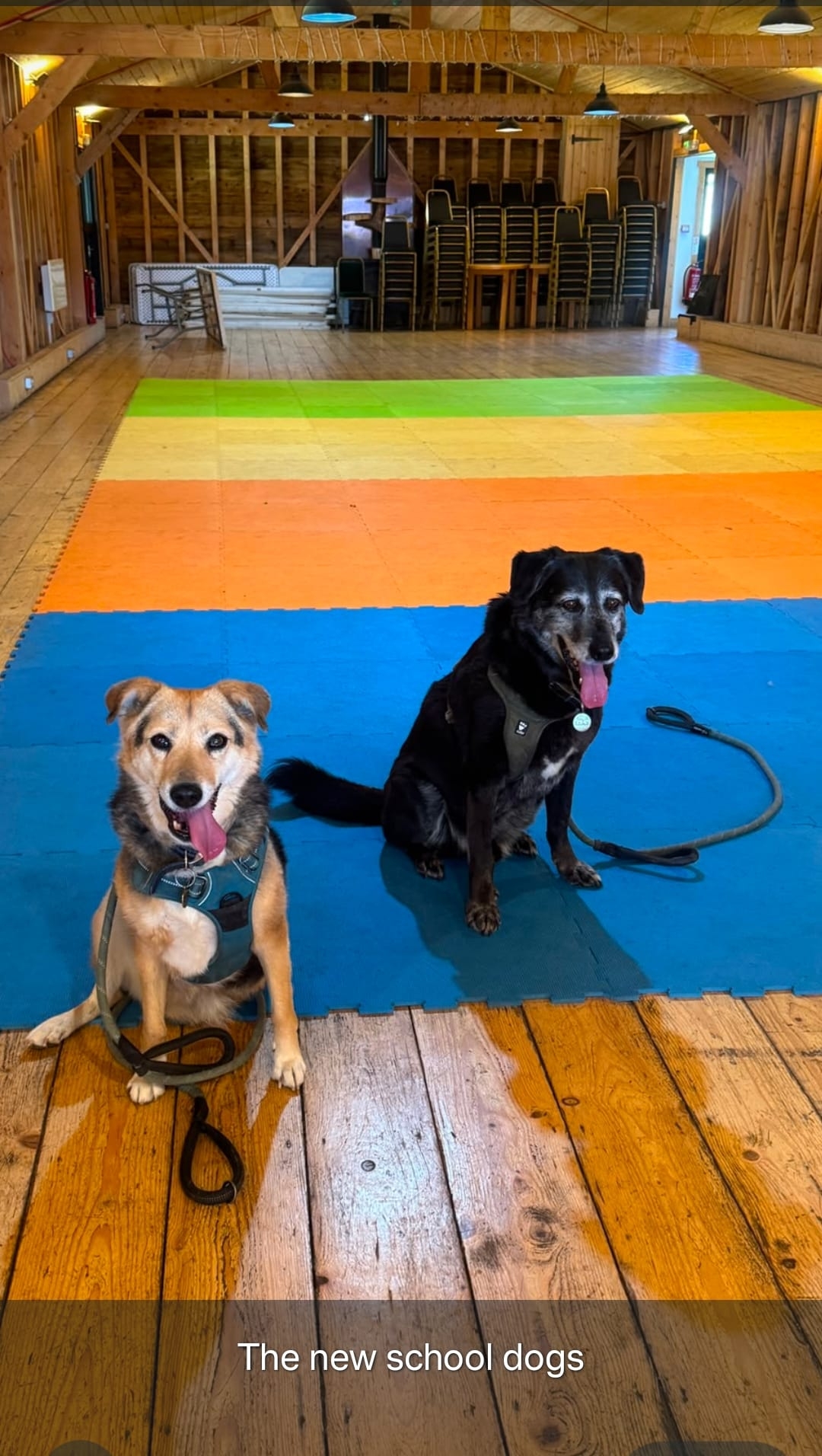
Robyn and Luka are being looked after at home by our friend and trainer, Louisa. She's been taking them to the dog training school. Here they are, setting up!
arXiv goes independent https://blog.arxiv.org/2026/06/30/arxivs-next-chapter/?utm_source=tldrnewsletter
Tried to sum up my Star Trek book yesterday, picking one thread of my nuanced argument about episodicity to solicit help with the title.
I am so grateful to (almost) all who replied. The suggestions were helpful and the enthusiasm palpable!
Except for the one Trekker/Trekkie who took against it.
Ratio of enthusiastic to immensely critical was good, in my favour (lots:1).
But brutal/blunt words stick in your head. Even though this bloke has not read the book and its, I hope, sophisticated treatment of this matter. Even though the peer reviewers (definitely knowledgeable) like it.
Even though it's *obvious* that when posting about a book on Bluesky, you have to compress and condense, because there's a *character limit*. Even though the same goes, *even more* for a book title!
Anyway, I am not looking for reassurance. I just wanted to post, first, to thank everyone else.
But also, second, to say that this never goes away: criticism, no matter how uninformed (someone who, obviously, has not even read the yet-to-be-published book), never doesn't hurt, when you have spent years of your life working on something (a book).
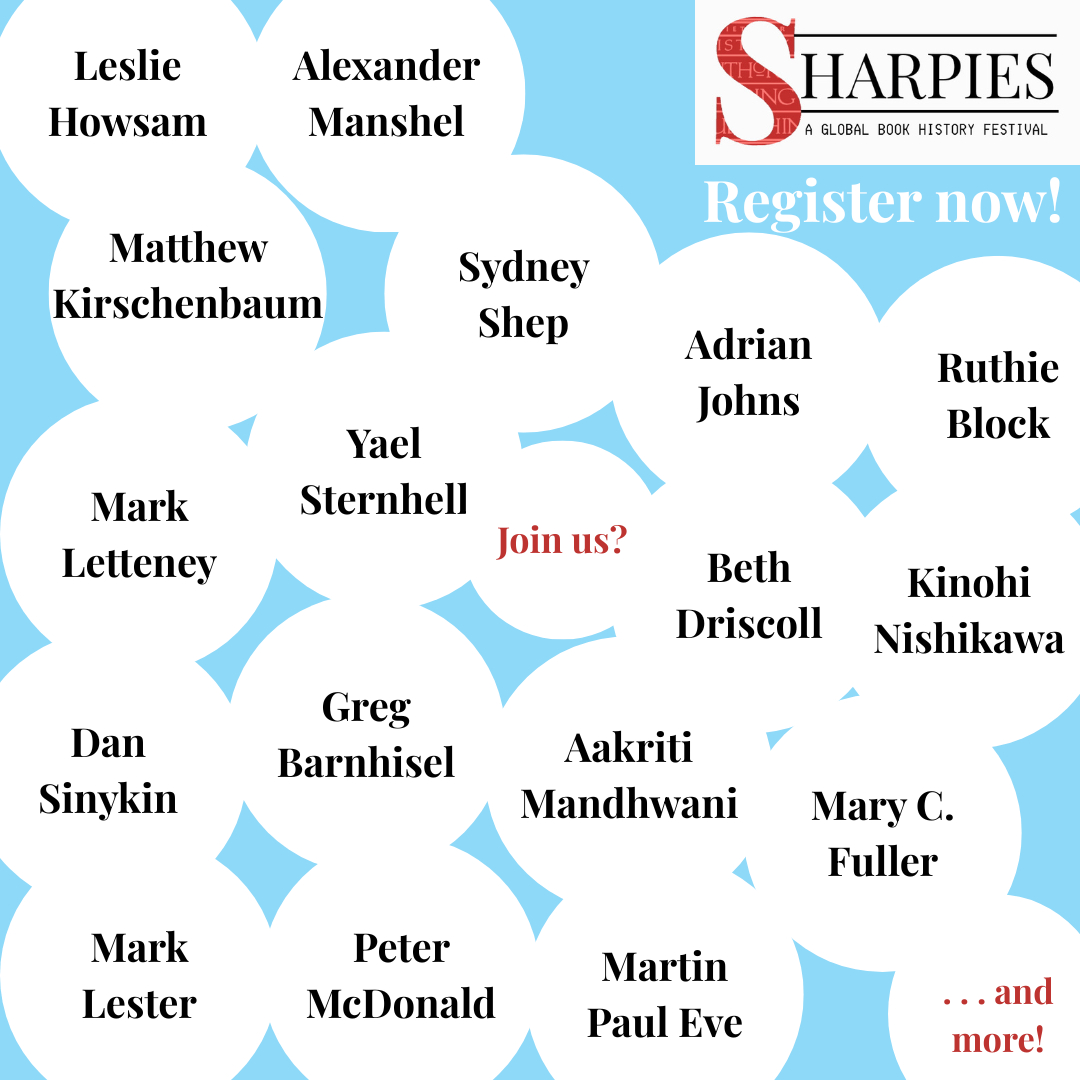
What's that, you say? Massive online book history festival/conference next week?
I'll be being interviewed by Matthew G. Kirschenbaum about my work. This is one of my few outings this year, so do please come along if you can.
(It's free for SHARP members.)
https://sharpweb.org/conferences/sharpies/
This is, quite frankly, terrible news. Research Professional is SUCH an invaluable source for UK HE news. For Clarivate to shutter it, is vandalism.
https://www.researchprofessionalnews.com/rr-news-uk-open-access-2026-7-research-professional-news-to-discontinue-publication-at-end-of-2026/
"Several respondents positioned payment for OA publication as an expected fact about the world, although about 71% of the journals in the Directory of Open Access Journals (DOAJ) do not charge article processing fees"
https://journals.plos.org/plosone/article?id=10.1371%2Fjournal.pone.0351430
Radical, dangerous lot. Clearly fringe insanity. With thinking like this, they could never govern a country. </sarcasm>
Second holiday dialysis session is underway at Bridgwater Dialysis Satellite Unit.
But I forgot to bring my own low-flux dialyser and saw they had a high-flux setup. I asked, and they found *one* single low-flux alternative on the premises. A narrow escape as H-F makes me terribly nauseated.
£100k salaries according to The Telegraph (a joke paper that people seem to take seriously).
Far too much, of course, for those who save lives and trained for years to do so.
At the same time, a poverty wage causing misery due to excessive taxation.
Good work, UK gov. Efforts to placate the US (Trump) on drug pricing will cost up to 229,000 excess deaths.
229,000 people will be sacrificed for this. 229,000 people will die for this.
https://www.bmj.com/content/394/bmj-2026-340588
OLH flips another journal to diamond/fee-free OA, from Taylor & Francis. Another world is possible.
https://www.openlibhums.org/news/970/
Good name for a tool. Interesting use case. Might encourage bad security-by-obscurity practices.
https://github.com/google/copybara
New Fluke merchandise and limited release of vinyl The Second Bite this week
https://fluke.fm/news/2026/new-fluke-merchandise-and-limited-release-of-vinyl-the-second-bite-this-week/
I need some help, please, Bluesky! My book on Star Trek: Voyager is almost complete. But I am stuck on the title.
The book focuses on the foreclosure of political thought in Voyager due to its episodic form. Every episode resets at the end.
The best I have are in thread below. Any ideas?
The best I've got is "Repetition, Reset, and the Political Imagination of Star Trek: Voyager".
I also quite like "Sameness, Stasis, and the Political Imagination of Star Trek: Voyager" - but worry that stasis might put people off.
The audience is academic, but with fan crossover.