
October 2025
100 releases on tici taci records, today! https://ticitaci.com/releases/duncan-gray-five-fathoms-further.html
Luka, October 2025
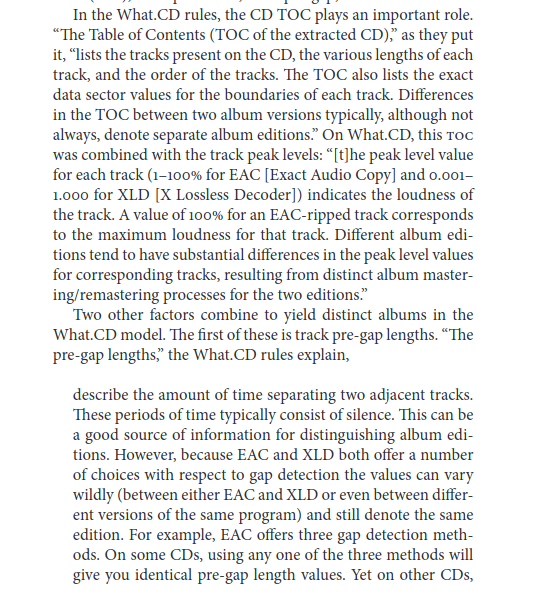
Tonight, I am virtually attending the talk by Eamonn Bell, "Toward a more perfect rip: Lessons learned in the digital history of "secure" digital audio extraction (DAE) from CD media". Exciting stuff, for me, given that I'd covered some of this in my own work.
The COPE plagiarism guidelines are a helpful resource, but they put a huge amount of work on the editors of the journal - compiling evidence and so forth.
Intel 8080 bottleneck made classic 47-year-old Space Invaders arcade game run faster as enemies died — expert coder asserts 'hardware accident' to blame https://www.tomshardware.com/video-games/retro-gaming/space-invaders-arcade-game-ran-faster-as-enemies-died-due-to-intel-8080-bottleneck-expert-coder-asserts-hardware-accident-to-blame
Orbit has just published a monumental piece of data work by Erik Ketzan, in memory of Michel Ryckx, which attempts to assemble every dedicated critical work on Thomas Pynchon. There's also a CSV and BibTeX download option if you want the material offline.
https://doi.org/10.16995/orbit.23348
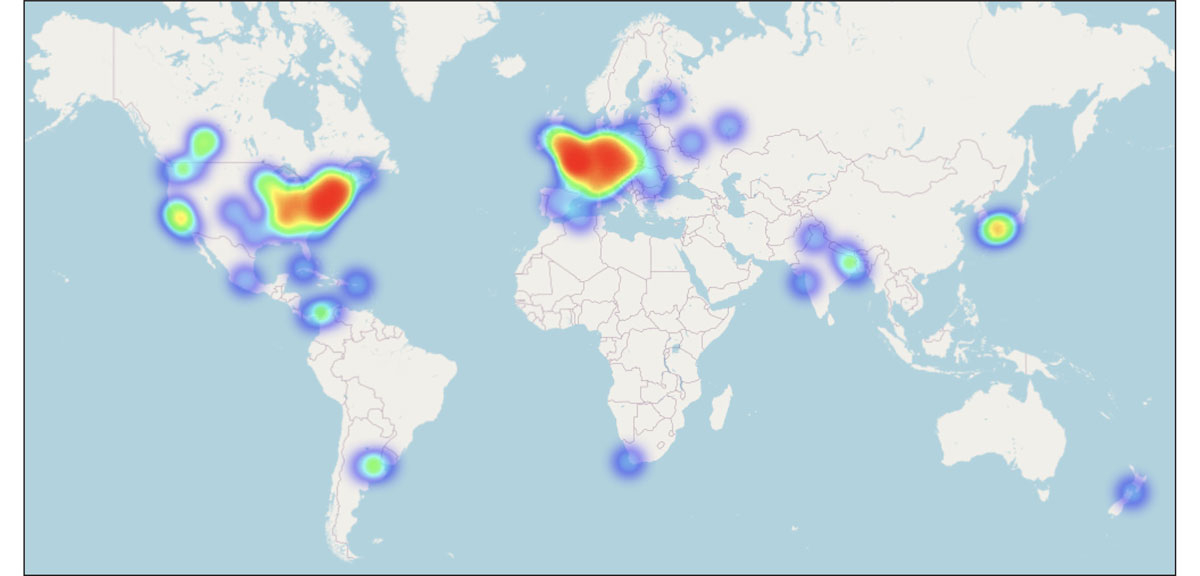
Heat map of people named in the titles of works on Pynchon -- just one of the many neat tricks that EK pulled out, purely from bibliographic metadata.
Help, My Boss Started Programming with LLMs!
https://mo42.bearblog.dev/help-my-boss-started-programming-with-llms/?utm_source=tldrnewsletter
Signal chief explains reliance on AWS (very well) https://www.theverge.com/news/807147/signal-aws-outage-meredith-whittaker?utm_source=tldrnewsletter
Highlights a challenging exclusionary data modelling question for ROR and other systems like OpenAlex. Affiliation MUST be an optional field.
A very good book on the history of an important privacy tool.
A thoughtful piece. I need, at some point, to write a long copyleft defense of CC BY-SA.
With respect to Eamonn's talk, I wrote about the history and prevalence of secure audio rips for CDs in Eve, Martin Paul, Warez: The Infrastructure and Aesthetics of Piracy (punctum books, 2021), pp 178-9.
As I say, I'd *so* love to go to this talk, but can't.
https://www.bbk.ac.uk/events/event/55032/toward-a-more-perfect-rip-lessons-learned-in-the-digital-history-of-quotsecurequot-digital-audio-extraction-dae-from-cd-media
You can download for free or purchase in print Warez at punctum books' site https://punctumbooks.com/titles/warez-the-infrastructure-and-aesthetics-of-piracy/
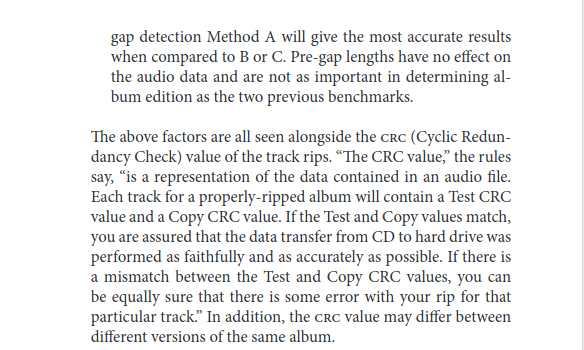
Fuming here. I *really* wanted to go to this event on Thursday, about the history of CD ripping. But I can't, because I have to do dialysis. So frustrating. https://www.bbk.ac.uk/events/event/55032/toward-a-more-perfect-rip-lessons-learned-in-the-digital-history-of-quotsecurequot-digital-audio-extraction-dae-from-cd-media
Trust in Science: Accessibility, Persistence, and the Public Good a talk by our Knowledge Commons leader, @kfitz.info, at the University of Rwanda https://about.hcommons.org/2025/10/27/trust-in-science-accessibility-persistence-and-the-public-good/
Our team developed an open-source WordPress plugin that lets you pull in items from your ORCID profile and display them on your site. Very cool!
Schopieray, S., & Eben, G. (2025). Linked Open Profiles - ORCID Global Participation Fund Final Report 2025 (p. 3). MSU Commons. https://doi.org/10.17613/ypchf-jgx88
I'm on several dialysis groups on other social media, and the thing I find most distressing is the conspiracy theory that dialysis is firstly just a money-making conspiracy in the USA. They claim that people are treated unnecessarily and that it makes you feel worse. It's so depressing.
Yes, US healthcare revolves around profit, but these people skip their treatments, risking severe consequences (I know firsthand - because it almost killed me two months ago, though I did not skip). Also, there are waiting lists for dialysis chairs. This behavior denies a chair to another patient.
The basic bottom line is that for-profit healthcare introduces a supposed motive that causes people to harm themselves here. It's really distressing to hear that people with kidney failure don't trust their doctors because of this.
Yes, it is true that dialysis can make you feel worse after a session. But try going without it and see how quickly you end up feeling far, far worse.
Posted from a dialysis session...
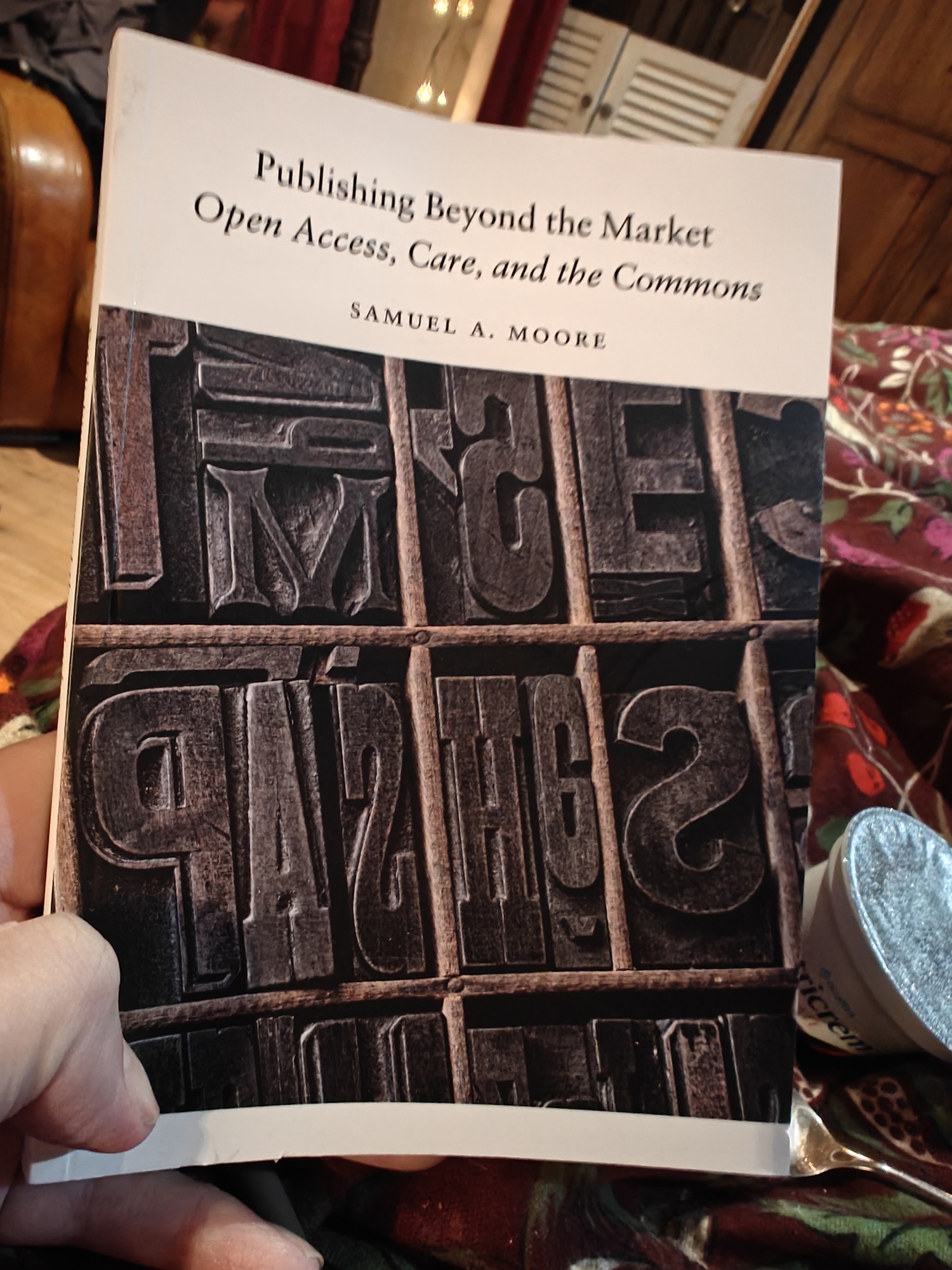
This also arrived today, to distract me from other reading. And thank you, @samuelmoore.org, for the kind acknowledgement at the start. It sounds as though I will enjoy this intellectual provocation.
I'm going in...
Trip out on clock-change morning! Used the wheelchair to get to a lovely seaside cafe. Luka (the dog) had sausage and bacon.
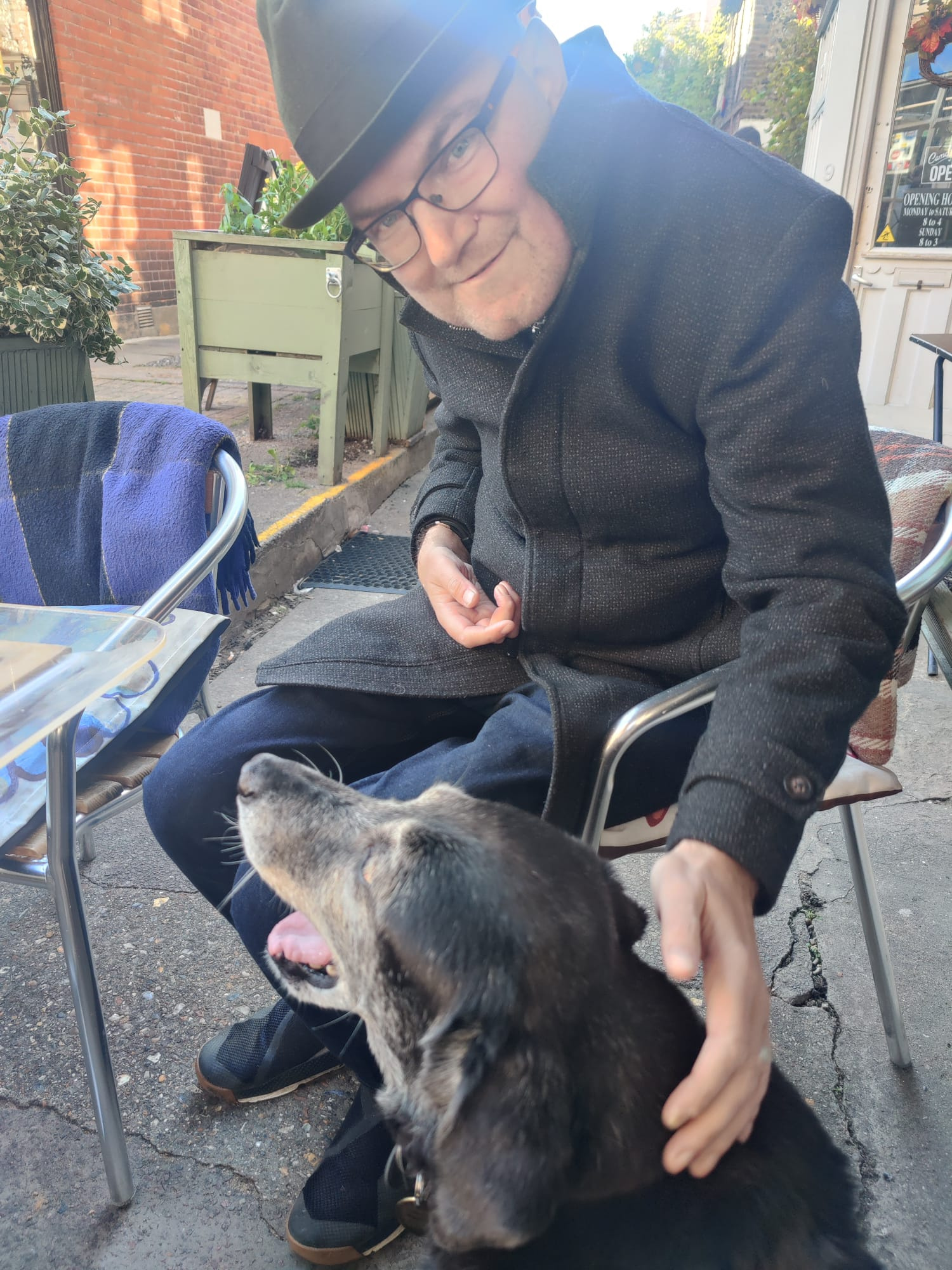
We're off to listen to some Gregorian chant in Canterbury. Hopefully this should lower my blood pressure!
This was enjoyable, but the highlight was the organist, ending with a fantastic William Byrd number.
Having a nightmare dealing with the Royal Free Hospital and their rheumatology department.
I put in a repeat prescription request in mid-September for an absolutely crucial drug that I take. I have 5 pills left now and they still haven't sorted it.
Absolutely beside myself with worry.
Hard to describe how unwell I am without this medication. I can't walk at all, I throw up from the pain. It's hell.
I've been in touch with PALS and they have tried to help, with very little luck.
A thoughtful thread on the politics of OA and the potential limits to those politics, with which, I add, I am sure others may disagree.
Cruel and unusual
Some good news for the morning! My nieces are just beginning to read and it's great to see them get into stories and to start to read them to themselves. Children's fiction is so important.
Imagine, for a moment, that UK faculty get 30% research time (ha!). And then imagine how much research they could actually do in that time, if they weren't applying for, and failing to get, these grants.
Just terrifying, really, that this is how everyone is spending their time, writing massive applications, with 98% of it wasted. As @ernestopriego.com said to me yesterday: it also makes universities look like idiots to outside partners, who provide support letters, all for nothing.
A video and transcript of the talk I gave at lunchtime today, on the research methods and questions in my recent book, Theses on the Metaphors of Digital-Textual History. Thanks to my respondent, Prof Katie Grant FBA (sadly not recorded).
https://works.hcommons.org/records/1xh0v-05j32
I have been having problems with dialysis. In particular, my phosphate levels have been dropping far too low, so I've been placed on these heavy-duty supplements. Now my phosphate is too high before dialysis and it drops down to the normal range after a session. It's a constant balancing act!
I have spent the last month using Kagi instead of Google for search. You have to pay, but it is such a better search experience. I get webpage results instead of just AI goop and adverts! It's very nice to have a search provider where I am the customer, not the product.
This morning, I am doing disability awareness training at MSU. It will be interesting to see how good it actually is...
Verdict: actually pretty good. It was very policy and legal heavy but I found the stuff on digital accessibility, even if already something I knew, a useful thing for everybody to have to understand.
Also, some fakes come from people at known institutions?
Also really worth a look is this OLH annual report. To have this level of growth in library memberships is astounding, given universities' financial situations. When times get tough, libraries don't seem happy just to funnel endless £$s to big corporate players and want an ethical open alternative.
It's 10 years since the Open Library of Humanities published its first article. Since then, OLH has published 13,000 open access scholarly articles which have been downloaded over 8 million times.
This excellent editorial by Rose looks back at that decade.
https://olh.openlibhums.org/article/id/25841/
"And yet, their [me and @theblochian.bsky.social's] announcement dared to hope for change in a primarily closed-access research landscape in which academic publishing costs were frequently passed on to the reader via paywalls, or to the author via Article Processing Charges"
And, as this editorial concludes, and as we wrote: ‘What is before you today is not, of course, the end product; it is just the start’.
The Open Journals Collective, run by @theblochian.bsky.social and others, is working on large-scale transformation.
https://www.openjournalscollective.org

Feel like I am back in the saddle today. Got up early, done some good work on my next book, ready for some coding, some infrastructure work, some outreach, and some fun!
This is an excellent breakdown of what the post-16 educational white paper means for UK universities. It sounds bad, to be frank https://www.researchprofessionalnews.com/rr-news-uk-politics-2025-10-at-a-glance-what-s-in-the-post-16-white-paper-for-higher-education/
It's open access week!
We, at @kcommons.bsky.social, are running a webinar later this week, showcasing what we do and what we have! Do please come join us... https://msu.zoom.us/meeting/register/yyQaJwxgRl62qBc-EzVSvQ#/registration
#oaweek25 #oaweek2025 #openaccessweek
I've just put an exciting and somewhat incredible article into production at Orbit. It's going to be a really useful piece of work for many scholars working in the field. :)
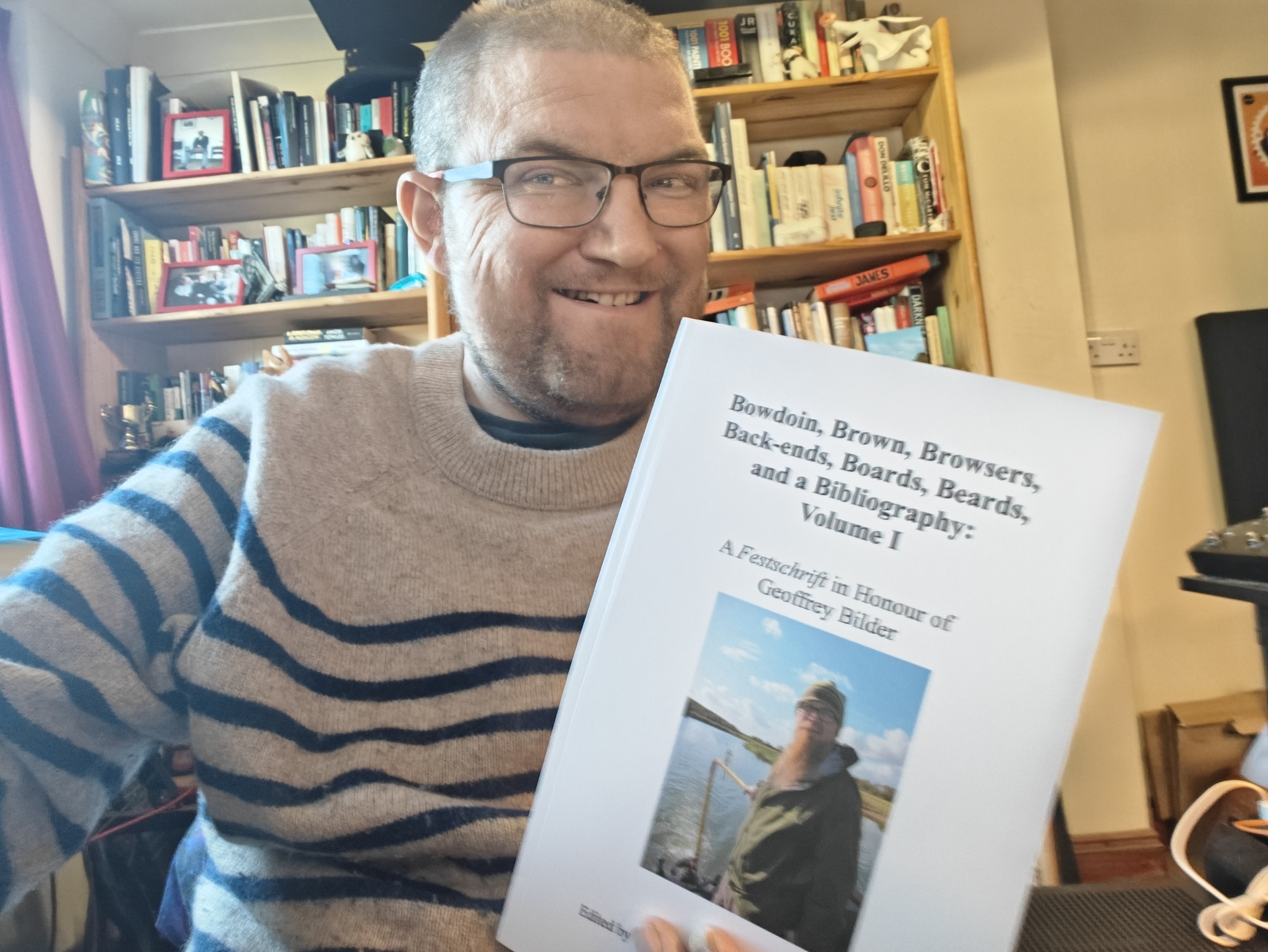
Creating this festschrift reminded me of a basic truth: you can do something nice for someone whenever you want. Don't wait until people are dead to praise them. Don't hold out for someone else to do it. Nominate people for prizes. Write someone a note of appreciation. Today's the day.
I just despair of this government. I read about their post-16 educational plan and the rhetoric is all about bashing universities. "Low quality providers" to be de-funded etc. Instead, why not *fund* such institutions, to improve them?
The problem used to be reversed: every org running their own servers in data centers and many of them doing it badly and insecurely. Because running a datacenter is a specialised activity - it's not something every org should do in-house. But the capital needed to enter this hosting market is huge.
If anybody would like 2x (free) tickets to see a talk tomorrow evening in Shaftesbury Avenue at 7pm - "FROM SHERLOCK TO SILENT WITNESS - Forensics in Film and Medicine" by Dr Peter Dean - then please reply to this message. Afraid it will be first come, first served on these.
This is the event: https://londonmonthofthedead.com/fromsherlocktosilentwitness.html
The first non-opioid painkiller https://worksinprogress.co/issue/the-first-non-opioid-painkiller/?utm_source=tldrnewsletter
It's good to see this recommitment to the POSI principles by DOAJ.
But the POSI dashboard built by @gbilder.com shows that DOAJ hasn't updated its self-assessment in 1,110 days. 🤔
See: https://gbilder.com/posi-dashboard/
https://blog.doaj.org/2025/10/20/doaj-recommits-to-the-principles-of-open-scholarly-infrastructure/
Committing to POSI is an ongoing activity and it requires frequent self examination.
Perhaps the most surprising casualty of the AWS East-1 outage is Signal. I didn't realise that they depended so heavily on AWS infrastructure and that it was so centralised to one region, unless the outage is a complete coincidence...
As a result, @kcommons.bsky.social is temporarily down. There's little our engineers can do here except wait for AWS to come back. We should also note that as our funding body grows and institutions support us, we plan to implement multi-region redundancy, which will militate against such a problem.
It looks like there's a major outage in AWS US east-1 region (North Virginia). This means large portions of the internet are not going to be functioning. We're so reliant on Amazon's infrastructure for everything now.
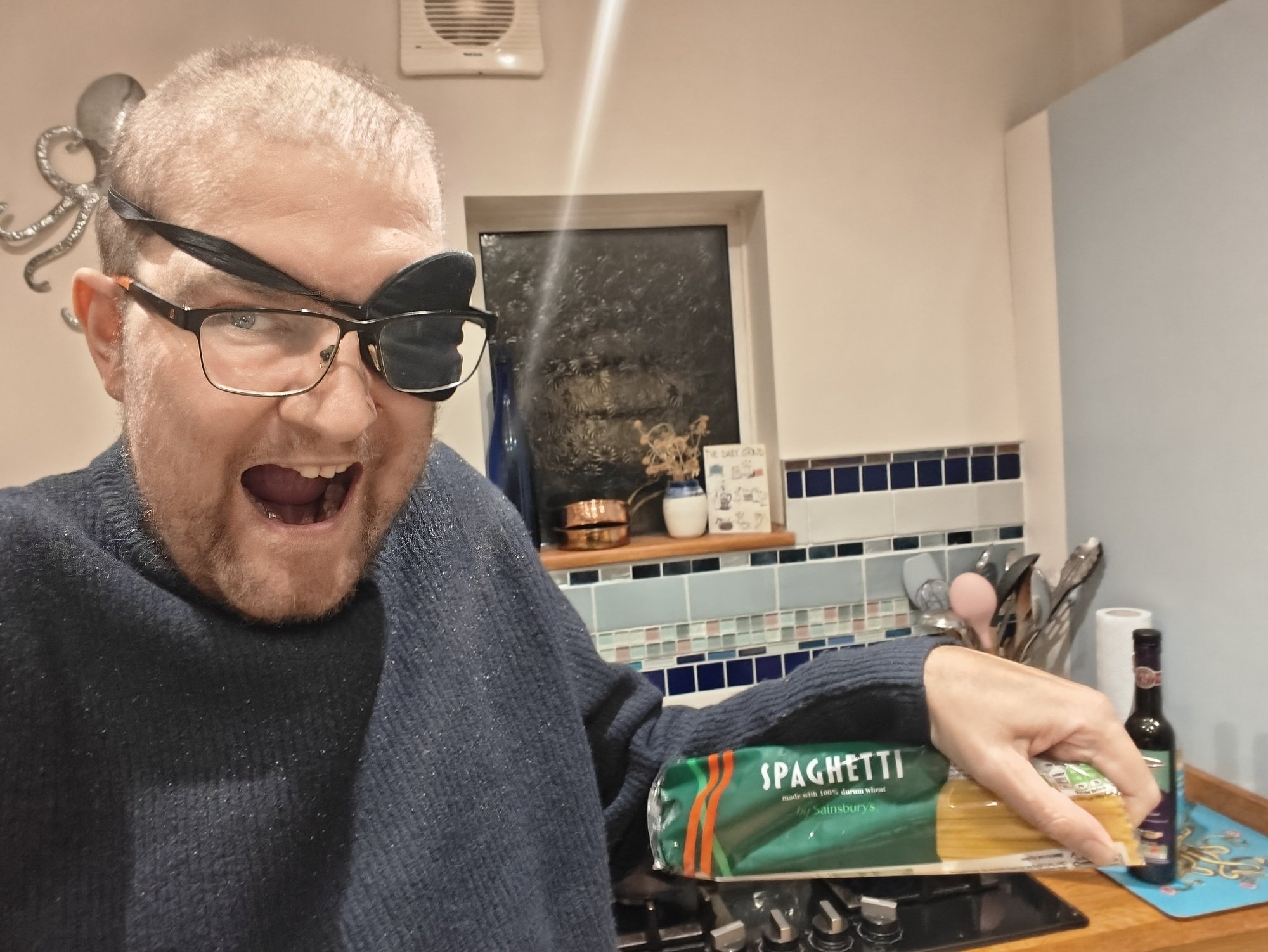
I'm struggling to do any cooking myself at the moment, with my upper-arm paralysis, but did manage to hold the spaghetti yesterday, looking like some kind of pasta pirate (no, the eye problems are not resolved).
tici taci records has hit 100 releases on the main label!
Huge congratulations to Dunc for everything he does to run it. It's no small feat, coordinating remixes, supplying correct and pristine metadata to distribution channels, and remixing stuff himself.
So here's to the next 100!

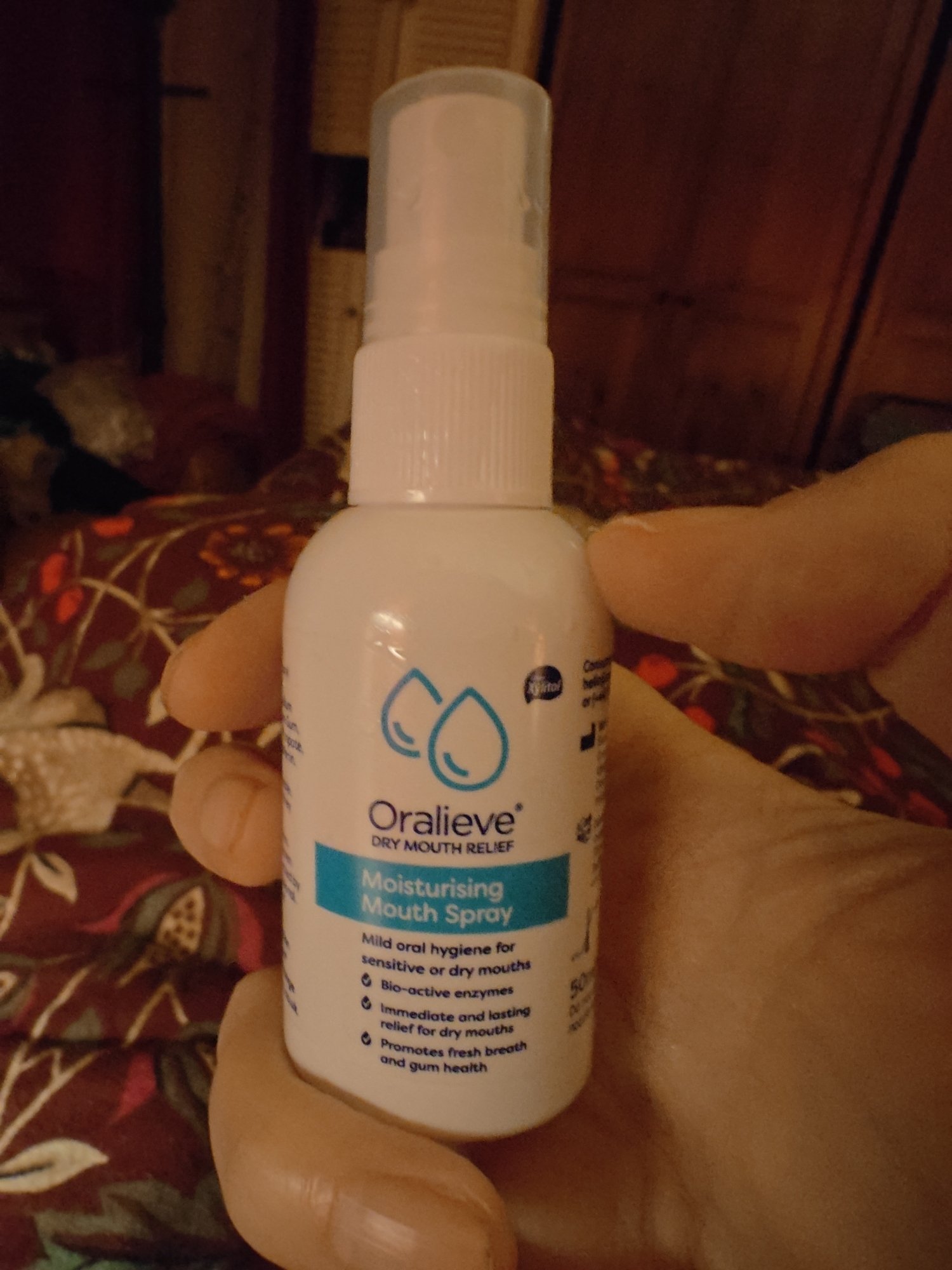
I am trying a possible aid to make this fluid restriction less unpleasant: artifical saliva (I did not know this existed).
It makes you feel as though your mouth is hydrated and seems, therefore, to reduce thirst. It tastes sweet, but is xylitol, not sugar.
I gather this is used in cases where people have so dry a mouth that they can't swallow, in end-of-life care and so forth.
Several years ago, I thought Grammarly was a tool that could help my students improve their writing. Heck, I thought it might help me improve my writing!
It's now going off the deep end of the AI dark side. They *know* these features constitute academic misconduct. There's no other explanation.
The attack on Knowledge Commons (@kcommons.bsky.social) seems to have ceased, for now, and I have re-enabled access to user profiles. We will do a full postmortem on Monday and continue our efforts to thwart this. It's difficult when your attacker has billions of $s of computing power.
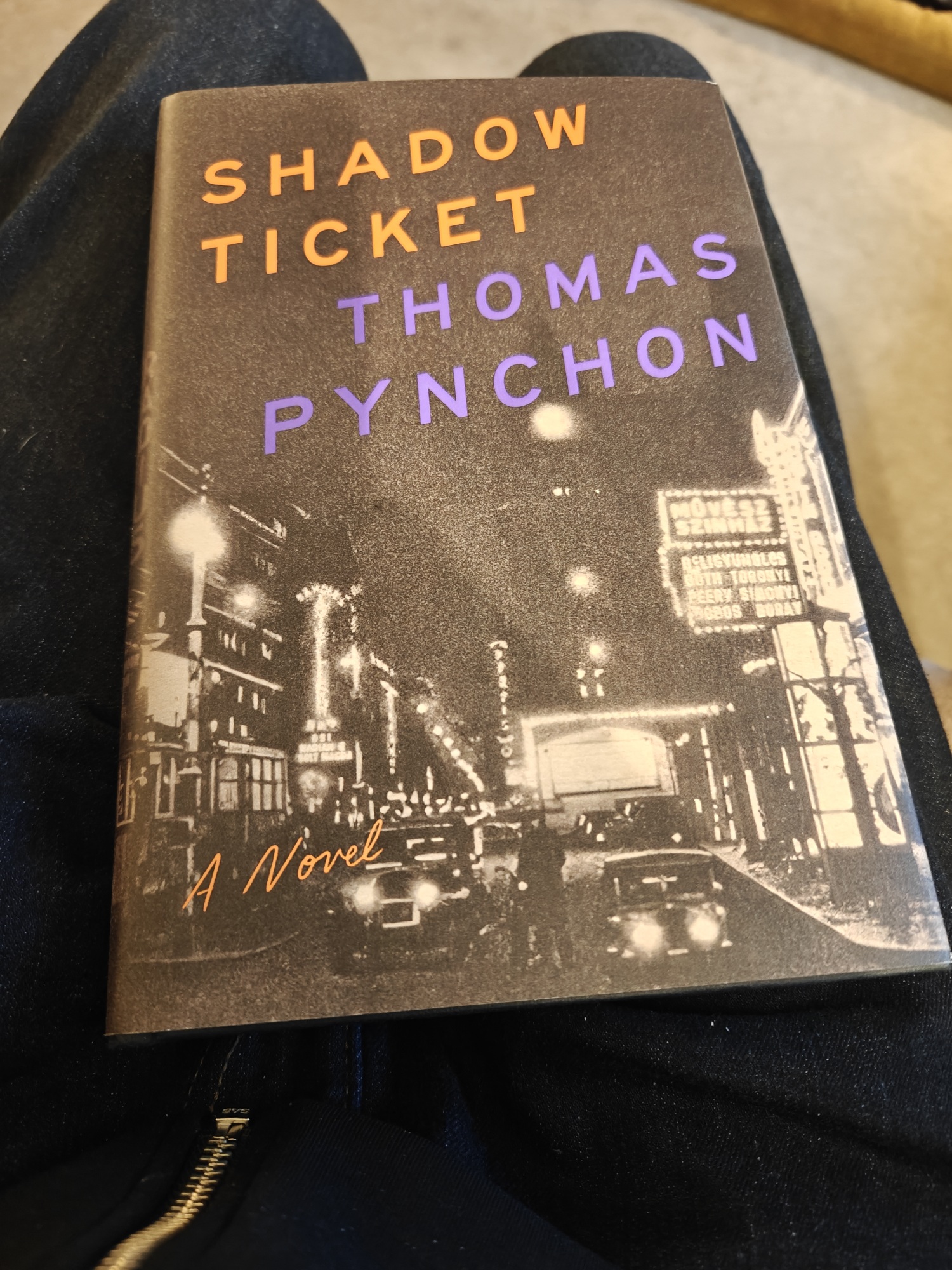
“If our world survives, the next great challenge to watch out for will come — you heard it here first — when the curves of research and development in artificial intelligence, molecular biology and robotics all converge.” - Thomas Pynchon 1984
https://www.nytimes.com/2025/10/18/books/review/thomas-pynchon-the-simpsons-william-gibson.html
Also features my Orbit journal co-editor, Jo!
The infrastructure dev and I joked about the fact that these hammerings always arrive on a Friday night, UK/EU time. Worst time for our team's dev.
How we laughed last night, though. No downtime! Our new defenses were working!
We were unaware, then, that the enemy had simply switched to Saturdays.
Hmm. @kcommons.bsky.social is being absolutely hammered, again, we assume, by AI harvesting bots. I have had to disable access to user profiles on the system, as a temporary measure. Huge apologies; these crawlers are really wrecking the 'net.
Among the bad things I've read by clinicians/ChatGPT. Eg:
"Crucially, they often rely less on multiyear grant cycles and more on embedded, iterative collaboration with communities, learners, or systems."
So, they rely less on "paying people to do serious research" and more on what?
I think the charity name change from "Versus Arthritis" to "Arthritis UK" is good. But they used to be called, not long before that, "Arthritis Research UK". Seems like a lot of expensive rebranding exercises in quite a short period.
Tonight, I should be going to see a performance of Schubert's "Death and the Maiden" in a candle-lit cemetery, preceded by a torch-lit walk. Instead, I'll be staying home and looking after the dogs because I'm not in a fit enough state and Mrs Eve will go with her sister. 🥲
A fascinating read on how Amazon's ebooks are encoded (and how you can reverse this)
https://blog.pixelmelt.dev/kindle-web-drm/
Can someone please tell me what this type of plug is called? My new machine runs off it, but to my great surprise wouldn't take a standard kettle lead (and therefore, right now, can't connect to my UPS system). Any help most welcome.

This was close, guessing characters from Catch-22 for my obscure character from Gravity's Rainbow.
Another great story in the book, supplied by Penny Schenk, comes from @gbilder.com's early years, where he discovered independently a "killer poke" on the Commodore PET https://en.wikipedia.org/wiki/Killer_poke
Basically, he could make the computer actually blow up by performing certain software actions!
There are some outrageous stories in the Festschrift book. When Geoffrey was working on the technology for a major archaeological dig in Jordan, he was asked whether he wanted a hotel room or a cave. He genuinely opted for the cave and lived there over a three-year period! https://doi.org/10.5281/zenodo.16207849
"A tomb with a view", as he quipped.
Out today!
One of the best things I have done this year is to edit, with @laurajwilkinson.bsky.social, a book-length festschrift for @gbilder.com.
The book is available to buy at Blurb (https://www.blurb.co.uk/b/12575812) but also, of course, OA at https://zenodo.org/records/17372611
Let me tell you about it...
Other OA backup copies are at:
Knowledge Commons: https://works.hcommons.org/records/3dx35-0vc67
BIROn: https://eprints.bbk.ac.uk/id/eprint/56333/
"There are only a handful of people I've had the privilege to work with over the years whom I would call brilliant. Geoffrey is one of them." -- a sentiment from a contributor that was echoed repeatedly. Geoffrey's impact in the world of identifiers has been (and still is) immense.
As @laurajwilkinson.bsky.social asks: Can you guess who…
- can blow up a computer from the command line?
- managed the tech for an archeological dig from a tomb
- advocated for persistent IDs as infrastructure for scholars
- cares about provenance and history for schol comm infra as for cheese
- speaks geek, policy, and several other languages
- led Crossref Labs to birth incredible things including DOI Content Negotiation, Similarity Check, ORCID, Crossmark, Open Funder Registry, Crossref REST API, Linked Clinical Trials, Event Data, Grant Registration, ROR…
- co-authored the ORCID Principles and the Principles of Open Scholarly Infrastructure (POSI)
- brought the Retraction Watch database into the Crossref stable
- developed the Abulafia hypertext system
It's all @gbilder.com -- the honoured recipient of our edited book.
The book mostly celebrates Geoffrey, but there are also some fantastic and significant historical reminiscences from Cameron Neylon and Jennifer Lin about the birth of the Principles of Open Scholarly Infrastructure (POSI)...
and also from Allen Renear on the early days of the Brown Scholarly Technology Group, meeting Steve Jobs, and basically causing a riot! Capturing these histories is an important act of digital-cultural heritage. We hope this book performs some of these functions.
An interesting debate this week at Knowledge Commons as to how we can concisely distinguish between generative AI that creates text for someone vs forms of AI used in assistive technology, such as speech-to-text engines. The latter remains the person's words, while the former is the machine's.
AI Content vs using AI in production is no good as a binary to encapsulate these two generativities. I feel strongly that the accessibility advances of these technologies should not be classified in the same breath as people who are passing off words as their own.
"The protocol taught us that technology can be based on human values like ethics and morality. It showed that voluntary compliance works when all parties benefit."
On robots.txt.
https://www.heise.de/en/background/Obituary-Farewell-to-robots-txt-1994-2025-10766991.html
A really interesting piece about the indebtedness of the University of Chicago and how it is destroying its academic reputation - killing the humanities subjects - so it can finance prestigious buildings by top architects.
https://www.thenation.com/article/culture/uchicago-debt-humanities-phd-rubenstein/#
Just incredible. 😔
https://electionlawblog.org/?p=152536
Sorry, it ain't openly accessible (many UK unis, at least, have access, I think), but if you have access to Research Professional, I said a few things about the CUP report: https://www.researchprofessionalnews.com/rr-news-uk-open-access-2025-10-unchecked-growth-in-publishing-threatens-economic-model/
There's a big report out today from Cambridge University Press about transitioning to open access and the broader academic changes needed. Interested in the language they choose to adopt for this: "radical", "collective action", and lots of "diamond" talk within.
https://www.cambridge.org/core/services/aop-file-manager/file/68ef9df9a6c3702e57eae12a/Cambridge-University-Press-Publishing-futures.pdf
However, the whole piece has a very cautious and sceptical tone. I wonder whether the language of radicalism is being co-opted here by a traditional publisher.
There's an instance of a publisher saying they like Diamond OA but don't think it is feasible. But presumably they would pay an APC? So why don't they just fund Diamond infrastructures instead?
I have only had time to read the report extremely briefly and at speed. I would like to take some more time to digest it properly, as it does seem a thorough engagement with the current set of circumstances in which OA is embedded.
it's also very enmeshed in conversations about peer review. It was good to see the mention of preprint servers and the idea of a publish, review, curate workflow. However, their faith in peer review as a way to cut down the volume of material, at first glance, seems to me to be problematic.
When I was working on studying peer review the main thing that leapt out time and time again was that it is not the "be all and end all" effective gatekeeper. Peer review can get things very badly wrong.
I mean, an example of how we can't tell quality in advance: Beckett's Dream of Fair to Middling Women was notoriously rejected multiple times, by different publishers.
So the question becomes: what mechanism do we have to reduce the publisher labor time that is spent on each piece of work, while also incentivizing people to comment openly as a peer-review process on works that are made openly available in advance?
The report stresses that we need to incentivise peer review in universities. At the moment the PR system is stretched to breaking point. Academics have lost their jobs in most UK higher education institutions now due to financial crisis. So there are fewer academics left even to do PR.
I need to go back to this and read properly. I suspect parts of it will make me a little bit grumpy, but we'll see. This should have been a blog post.
that first "publisher" there should have read "funder"!!
Exciting book out early next year! It will be open access 6 months after print publication. I have a chapter in there on shadow libraries as infrastructure.
Edited by @alanyliu.bsky.social, Urszula Pawlicka-Deger, and James Smithies
https://www.upress.umn.edu/9781517916084/critical-infrastructure-studies-and-digital-humanities/
I haven't read it yet, but HEPI has a report out on AI and the Future of Universities. Includes a chapter by Vint Cerf (!!!). But also one "by" ChatGPT (who cannot be ascribed authorship). I'll read the former and skip the latter, I think.
https://www.hepi.ac.uk/reports/right-here-right-now-new-report-on-how-ai-is-transforming-higher-education/
@resprofnews.bsky.social hello! Can I please request that when you write a paragraph including for example, "according to a report from the Higher Education Policy Institute", you link to the report itself? It would be helpful for me to read the actual source. Thanks for your consideration.
Apparently, in web design accessibility guidance, you want to avoid saying "To see the report, click here" and instead go for the approach I just outlined: make the actual text of "a report today from Research England" for example clickable to the report.
Thanks for this conversation and for engaging with it. It seems a small point, but it would enrich, I think, your articles.
It's 9am and I have already drunk this much of my total daily allowance, under fluid restriction for kidney failure. It's really tough!
A candid and transparent postmortem of two technical incidents we've had on Knowledge Commons recently, brightened up at the end with a summary of the good work we're doing in moving development forward.
https://about.hcommons.org/2025/10/14/downtime-profiles-data-bug-and-a-round-of-more-positive-technical-updates/
Sorry. I did not add alt text. The image is Boromir in Lord of the Rings saying "One does not simply set up infrastructure and leave it"

A preprint/author's original version of my review of @elikaortega.bsky.social's Binding Media.
Posted under OUP's self-archiving policy https://academic.oup.com/pages/self_archiving_policy_b
https://works.hcommons.org/records/kekjq-s7m51
Signal upgrades its protocol to become resistant to quantum attacks https://arstechnica.com/security/2025/10/why-signals-post-quantum-makeover-is-an-amazing-engineering-achievement/?utm_source=tldrnewsletter
We found quite a serious bug in the Knowledge Commons core this evening. It's now resolved and I'll write a full post-mortem tomorrow AM. #transparency #accountability #headache
YES! This is such excellent news. Utrecht University now supports Knowledge Commons.
PLEASE ask YOUR library today if they will consider supporting us. We are free to all to use, but we NEED university support to make that possible.
https://about.hcommons.org/2025/10/13/utrecht-university-joins-knowledge-commons-as-a-sustaining-member/

Post you from a different era
"We said, no, not for you, not like that, only for us. So even there, so early, the apple is associated with colonization — it is, in a sense, an intrusive, invading fruit."
https://terribleminds.com/ramble/2025/10/06/apple-review-9-ingrid-marie/
The idea of linking fees to TEF is clearly an attempt to bankrupt a set of universities. The reputational damage of association of cheaper tuition with lower quality* will ring a death knell.
* of course, TEF does not measure teaching quality
New SF reviewed in the Guardian. I like the sound of The White Octopus Hotel.
https://www.theguardian.com/books/2025/oct/10/the-best-recent-science-fiction-fantasy-and-horror-review-roundup
Read the piece on P Thiel's views on the antichrist and the apocalypse and I find it so horrific that someone with so much power and influence via wealth has such barking views, rooted in such cruelty. I can imagine him arguing that many people should die to lower his taxes, and this is "Christian".
At whom should I direct a post requesting a feature in the BlueSky Android application? It remains hugely frustrating to me that the client always takes you to the most recent post when you refresh. I want to stay where I was and then work forward to the present!
"Many with large assets" need to understand that wealth doesn't buy them out of society and the collective endeavours we fund.
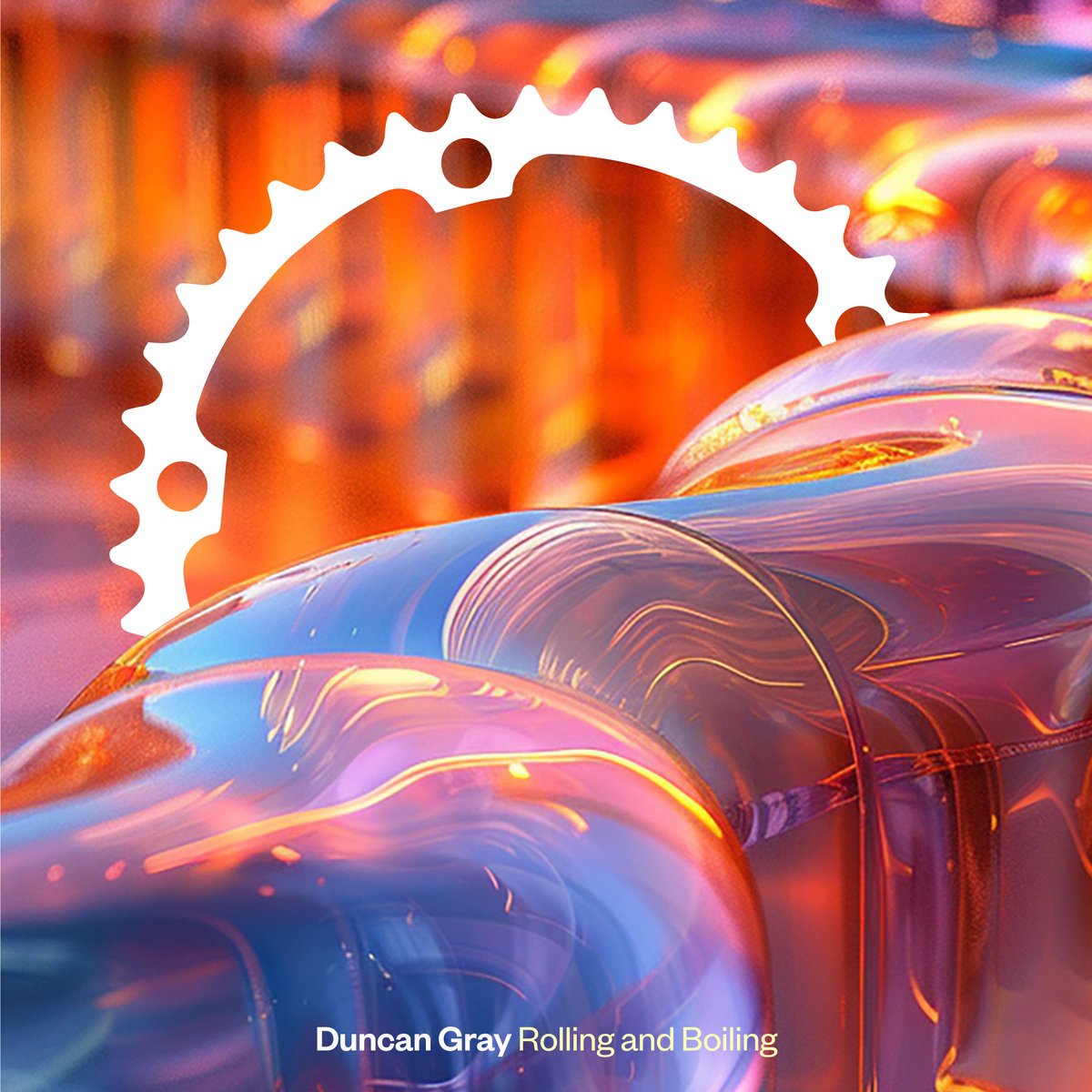
The latest release on tici taci records is now out! Duncan Gray / Rolling and Boiling / 2025 / TTBC 0037 https://ticitaci.com/releases/duncan-gray-rolling-and-boiling.html
I've been dealt a temporary setback. My phosphate levels are not stable and keep dropping, so I am no longer allowed to undertake nocturnal home haemodialysis. Have to do it in the day/evening for shorter sessions until we can get this blood chemistry sorted. So frustrating.
If you are interested in what I said, here's an open, online version of the talk I just gave on "Maps, Models, and New Modalities: What Do Digital Literary Studies Do?" https://works.hcommons.org/records/z677b-ht443
Oh dear. It looks like the Great Firewall has censored me and cut us off!
Up bright and early to give my keynote at Zhengzhou University. I'm talking about generations of digital humanities work and the shift to machine learning/modelling.
Another brilliant online service that I use all the time: MusicBrainz. And, it seems, with great social media support.
On the music front: I remain so lucky that my hearing loss from my stroke was confined to speech perception. Music powers me through the day. And MusicBrainz provides the metadata.
Would love to hear Dominic at parties.
"So what do you do?"
"I'm an academic who specialises in killing children in British fiction"
I feel like doing random shout outs from time to time, just to lift the otherwise grim mood. Today, I just want to say THANK YOU for Zotero and CSL. I use them every day. @adam42smith.bsky.social is a particular light in this area, maintaining CSL and supporting Zotero users.
Martin Fenner's Rogue Scholar is SO cool. (in a really geeky sense of cool) https://rogue-scholar.org/records/r5pxf-5mv41 Just pulled in my latest blog post, assigned it a DOI (which I requested by giving it the DOI in the atom feed), got the full text, archived and mirrored it, and more.
Argh, On a problem I had in my lunch break: the MusicBrainz API uses a new UUID4 when you merge, say, releases. It redirects, but the API returns just the new data, so you can get confusing results if your locally stored correlating DB entries expect the ID you submitted https://eve.gd/2025/10/09/using-a-public-api-or-the-instability-of-musicbrainz-ids/
Basically: your IDs shouldn't change. If you redirect, there should be some explicit data about redirects available.
This post resonates with me. Big time.
I was thinking about this at one point in OA and the Humanities. "Reproducibility" of close readings seems to consist of readings falling within certain acceptable standards - eg factually accurate re texts and persuasively historicised. But more than one can do so. And all very subjective.
So very different to reproducibility in hypothesis driven research.
Curious discussion with pain team today. The consultant sorted my pain management, then pulled me aside (telephonically) to tell me about advances in curing viruses using mRNA technologies. This is significant because it's a virus that blocks my access to transplant. Kind of him to offer such hope.
Pretty outrageous tbh
Oh yes - it's here!
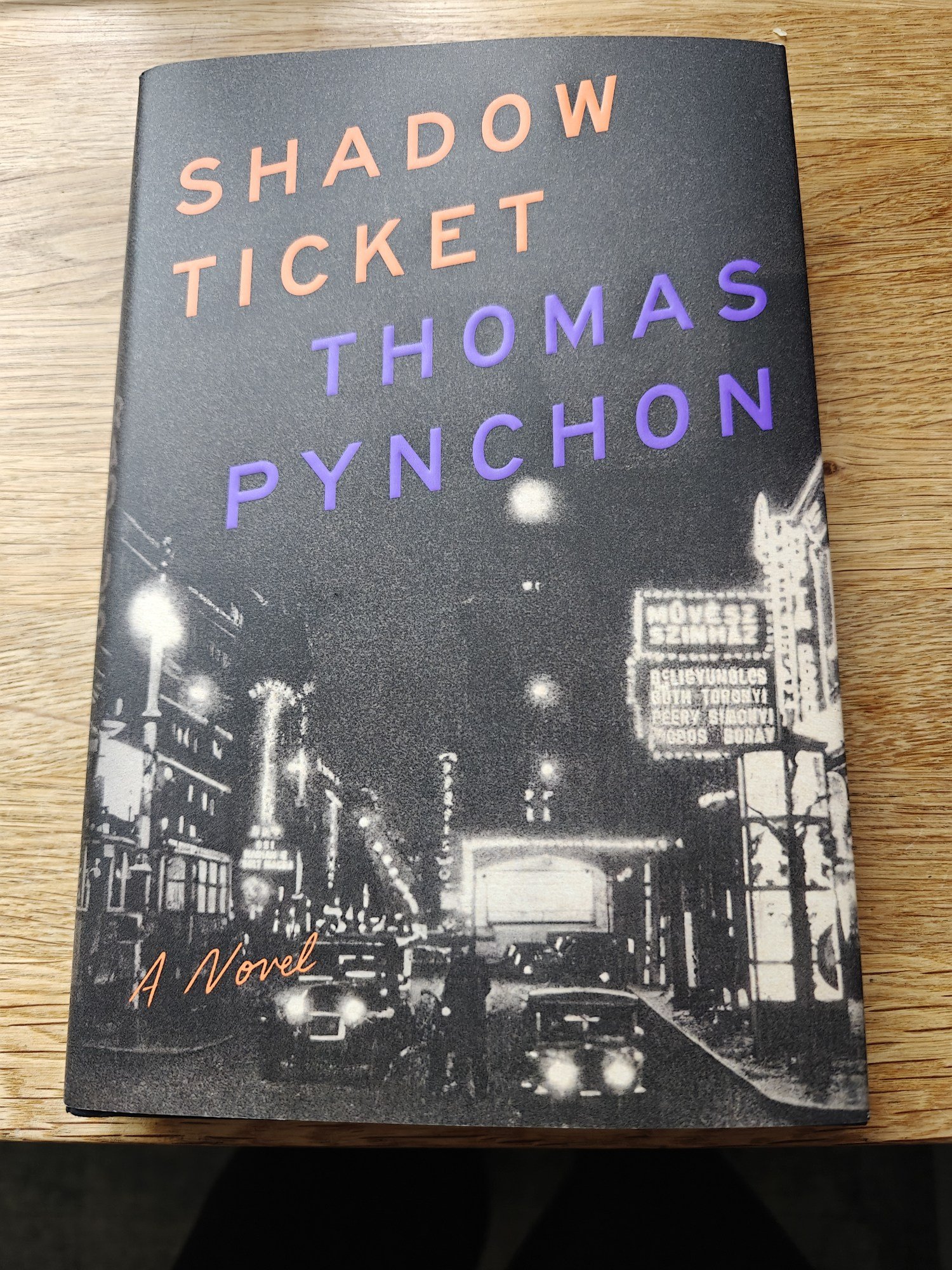
I wrote an undergrad diss on Pynchon, an MA thesis on Pynchon, a PhD on Pynchon, and a book on Pynchon & I endorse this sentiment
"Pynchon’s work is often labeled “Postmodernism,” but it’s also interpretable as a body of left historical literature concerning antifascism"
https://lithub.com/thomas-pynchon-has-been-warning-us-about-american-fascism-the-whole-time/
This makes me so angry. These people view all life as training for lifelong servitude/work. There's no room for interest, enjoyment, and culture in their bleak vision of education. At least she'll never be in power to see it through. Though Reform are probably worse.
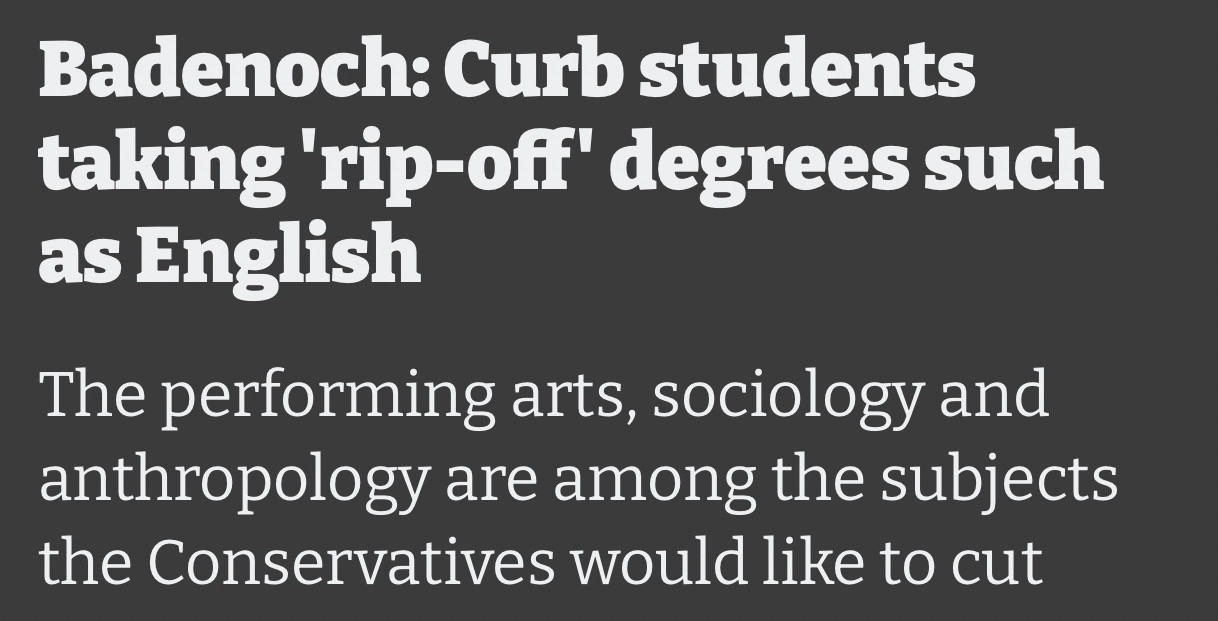
A race to the bottom now. All three (!) parties committed to shrinking the university sector. Because nationalist racism hates people being educated and thinking. Disgusting.
Exciting dev news at @kcommons.bsky.social - I just made the first successful login loop to our WordPress stack using CILogon. That means that, *soon*, you'll be able to login to Knowledge Commons using your institutional credentials. Independent scholars can use ORCID, Google, Microsoft, and more.
Getting this sorted greatly eases our maintenance burden on the identity stack, but also allows us to integrate with university systems. Key for our repository offering: Works for Institutions.
Classic infrastructure problem here: identity management definitely counts as BORING INFRASTRUCTURE. When it works, you don't notice it. https://eve.gd/2020/04/19/notes-on-susan-leigh-stars-the-ethnography-of-infrastructure/
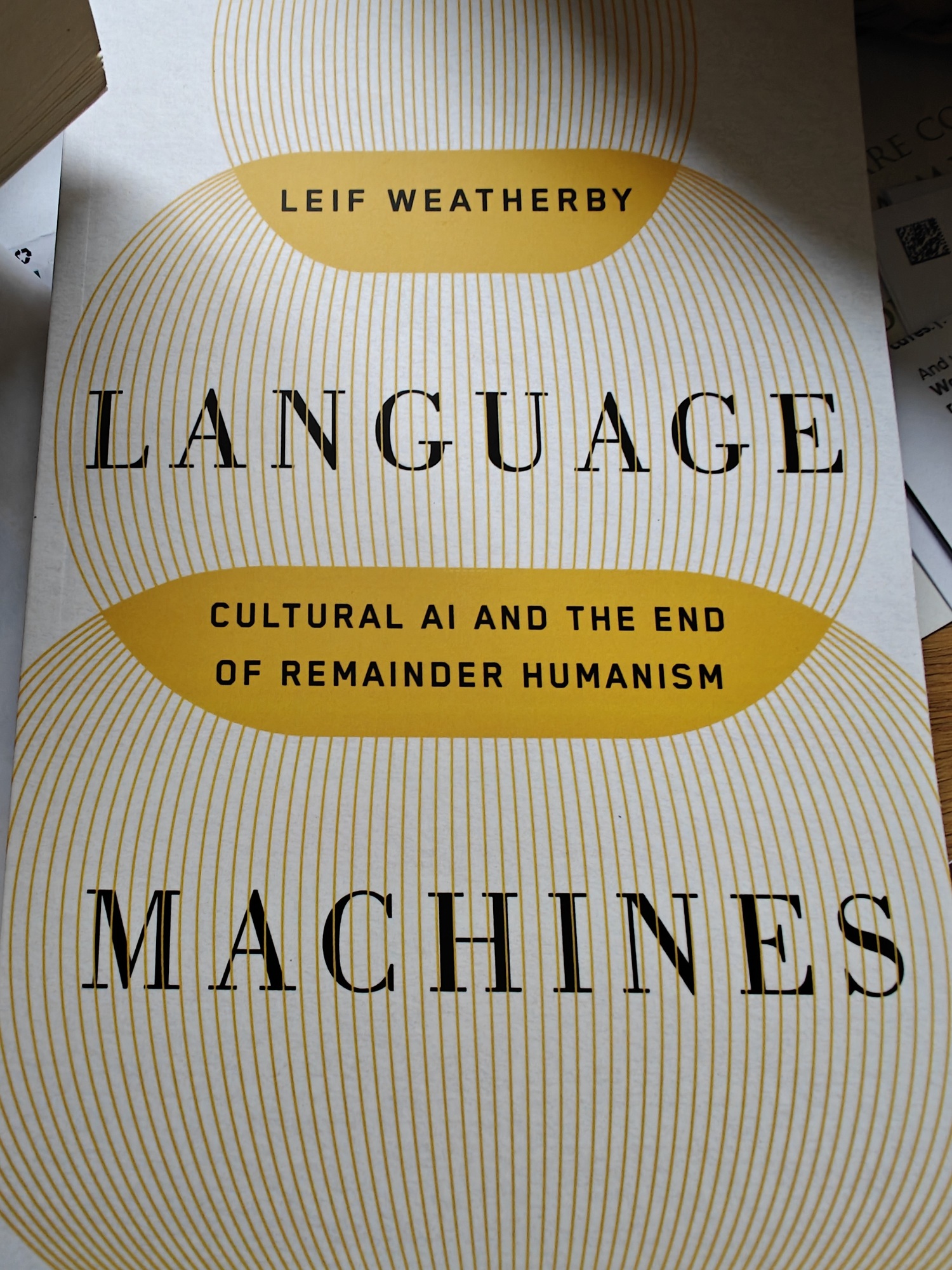
Postal goodies #3 is @leifw.bsky.social's Language Machines
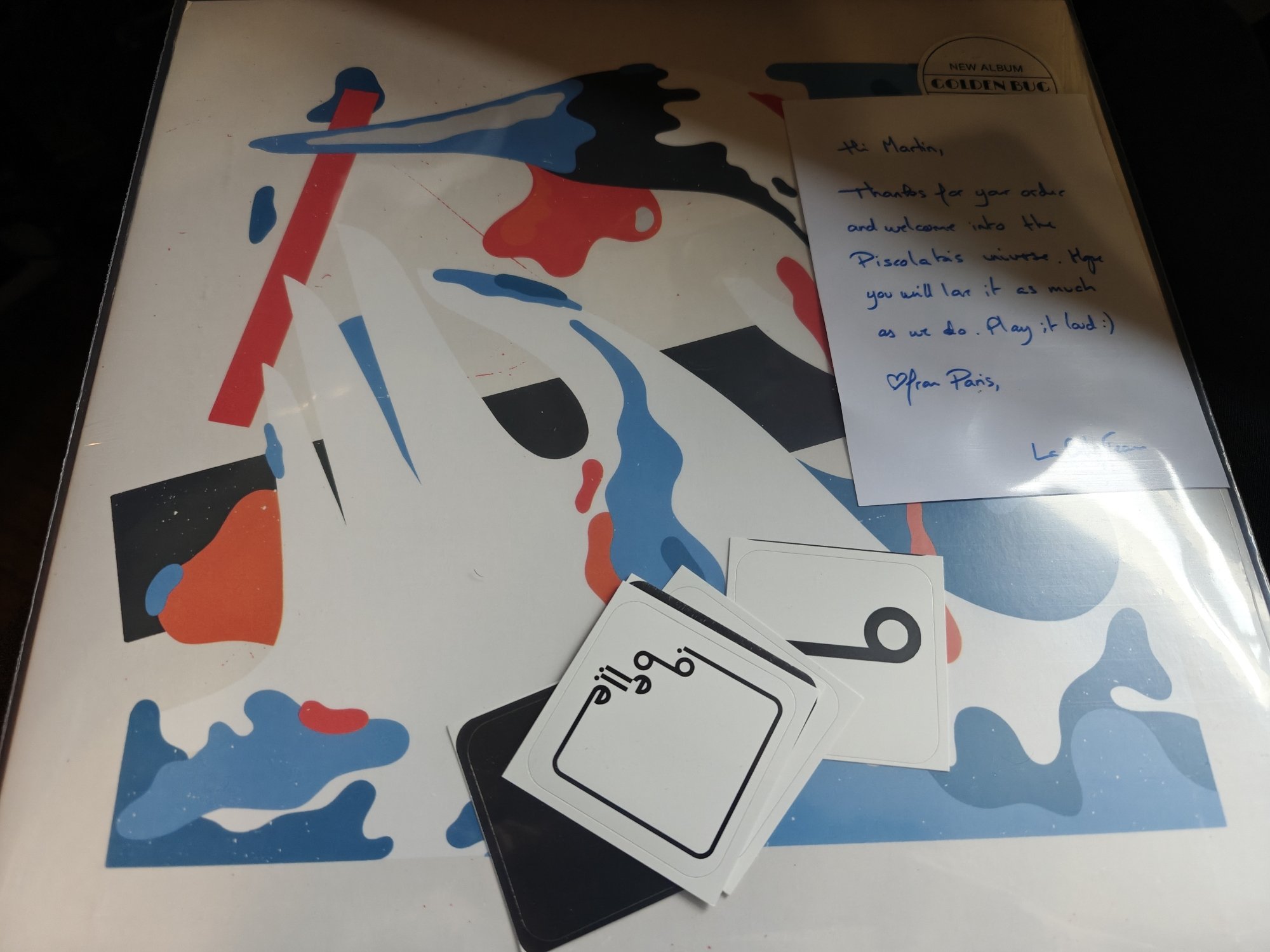
Excitement #2 in the post: my new Golden Bug vinyl record. A really great producer making nice tracks!
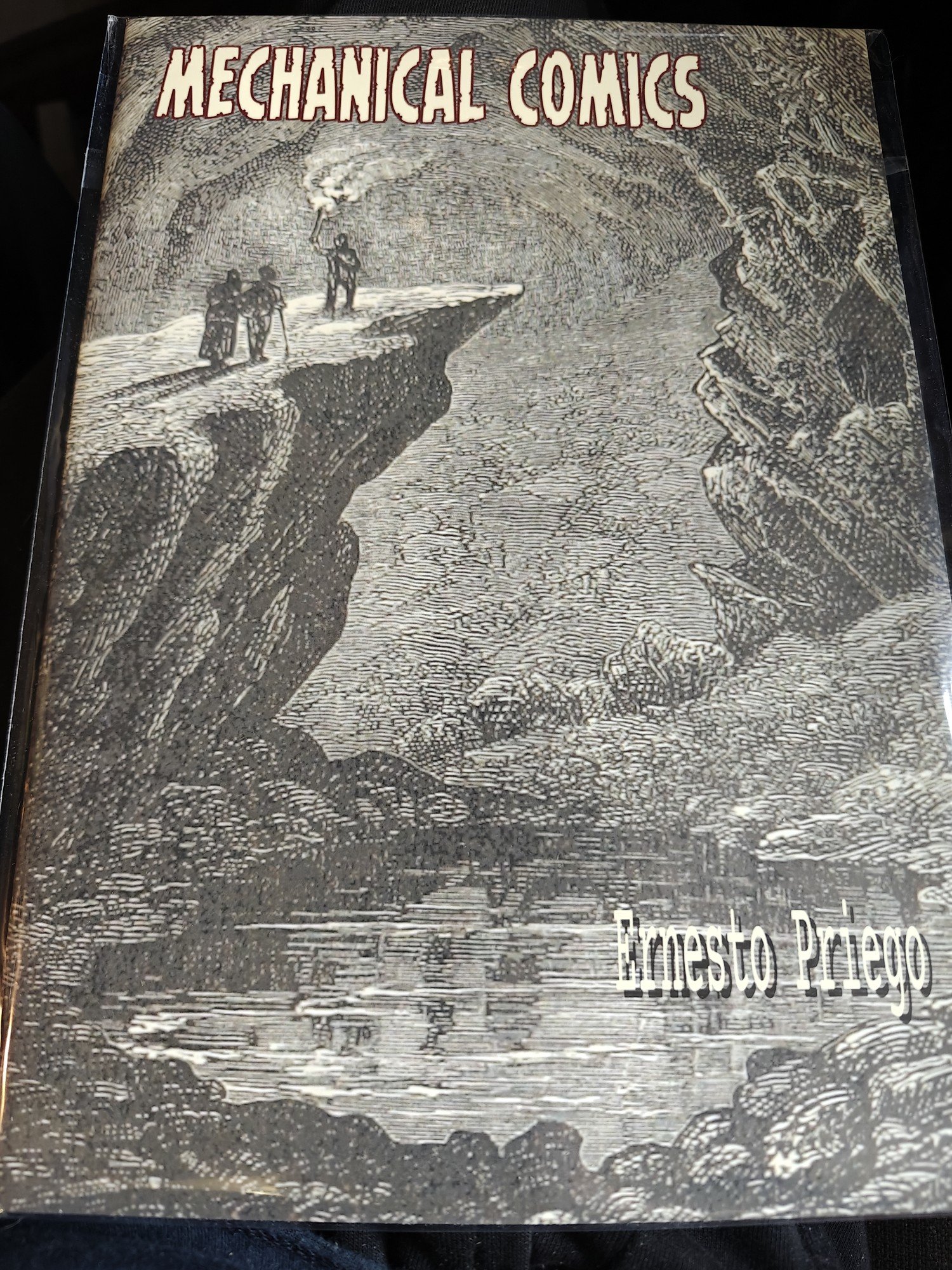
First exciting item in the post today is Mechanical Comics by @ernestopriego.com! A set of wordless one-page comics created from the British Library's Mechanical Curator - like a digital oulipo. Enabling constraints.
I don't think that working and HE need to be mutually exclusive (it's Birkbeck's specialism), but 60 hours is a lot and doesn't leave any time for studying and, when you get there, you will already be exhausted.
Watched the Elementary (modern reworking of Sherlock Holmes) episode "Hounded" last night -- a contemporary take on The Hound of the Baskervilles -- and awoke in the night shouting "THERE'S A MASSIVE DOG!"
I do not remember this!
Flu and covid jabs: done. Now hoping I don't get the after-effects I had after last covid jab of feeling like I had been hit by a truck.
Next Saturday at Zhengzhou University, Henan, China, I will be speaking by Zoom on the theme of "Maps, Models, and New Modalities: What Do Digital Literary Studies Do?".
Approx 1,000 people trapped on the slopes of Mt Everest.
https://www.bbc.co.uk/news/articles/cj4ykkgxqwko
This is an excellent piece for those who want to understand what's happening with the US university system.
I'm losing my lovely but inaccessible office at Birkbeck. We're moving to shared offices... With a capacity for 4 but an assignment of 6 staff. @paulaclemente.bsky.social is kindly helping me pack up all my books as I can't reach the office right now and can't pack books with my paralysed arm.
Legend has it that my soon-to-be-ex office was Virginia Woolf's bathroom.
I say "legend" because it might be the room next door. But I'm happy to take the title.
I've been pushing myself on my recovery - up at regular hours, back to work, etc - but this morning, I finally hit the wall. Absolutely shattered. Just can't get going.
I am really unsure about this. What we call things does matter and open access has different modalities that work differently in different cases. If we don't correct misconceptions, with new terminology, then people will never learn.
Wikipedia. Not unproblematic, but still perhaps the greatest thing to come out of internet utopianism and optimism about collective behaviour. And they want to destroy it.
That "used to" is doing some heavy lifting, sadly.
Can report that the hospital-provided "protein puddings" for kidney failure patients are disgusting.
And there I was thinking identifiers were simple/easy 😂😉
https://overreacted.io/where-its-at/?utm_source=tldrnewsletter
In the last 3 years, I have become disabled. But one of the things I feel ashamed of is that until it happened to me, I was not as aware of disability issues as I could have been. I hope that this month offers the opportunity for us all to reflect further on how we build inclusive structures.
This is the logo for Disability Pride Month at MSU.
Just bought Golden Bug, Piscolabis II (Anniversary Edition) on vinyl. A really nice item! https://goldenbug.bandcamp.com/album/piscolabis-ii-anniversary-edition

A good reminder, on Bandcamp Friday, that buying a musician's work for a few quid is an infinitely better return for them than you streaming it. And you then own it!
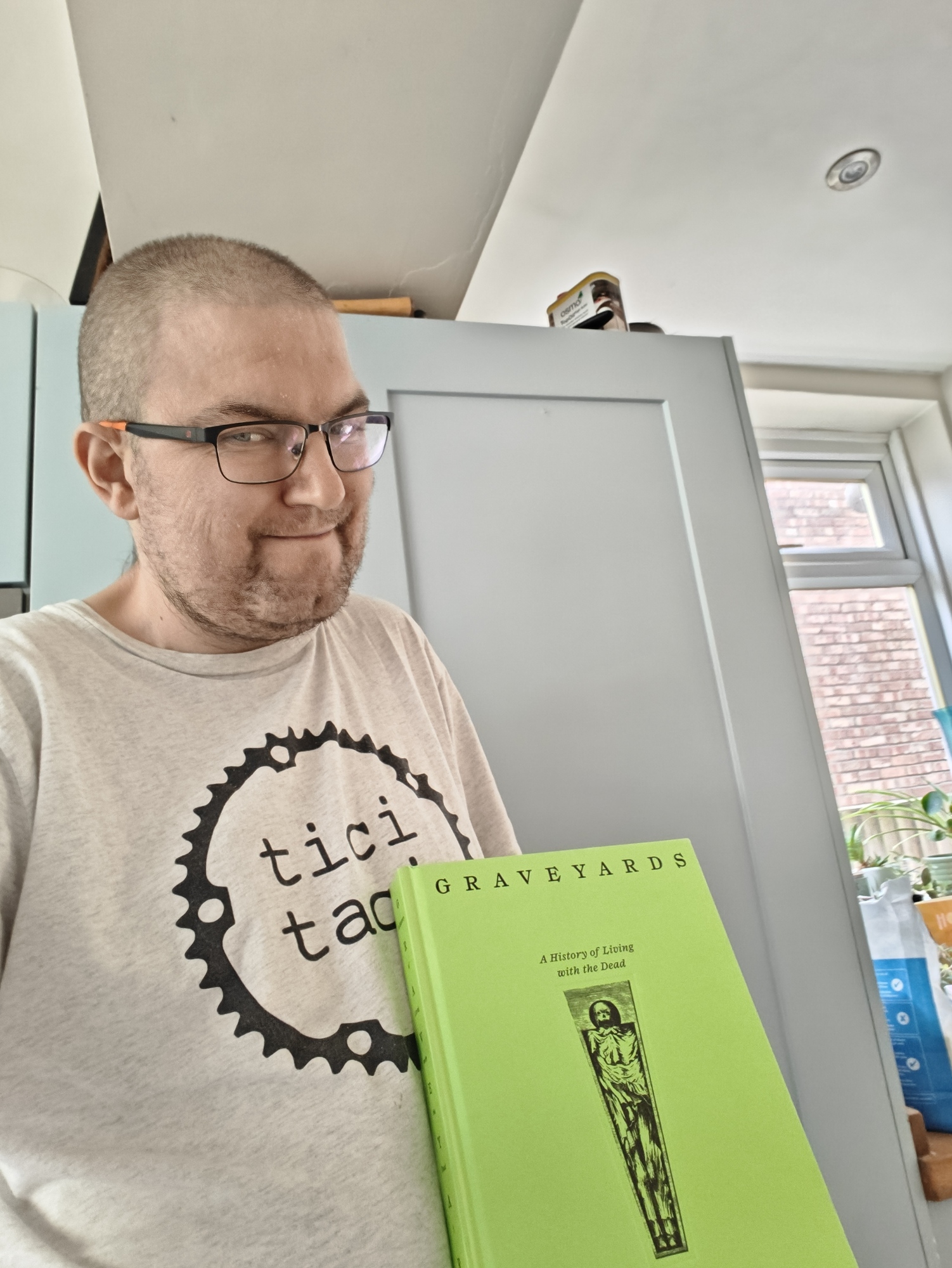
That's my reading sorted for a bit, thanks to @theprofrog.bsky.social. The graveyard is certainly a great subject!
I submitted a claim for several books. Will be interesting to see if they go through, as they were/are open access.
This is a must read to understand the context of Britain's universities and their finances.
UK university mergers seem unavoidable. There's a document out today that reports on the merger of City University with St George's. https://www.advance-he.ac.uk/news-and-views/new-report-provides-practical-insights-university-mergers
Very cool!
Ignore the Hinton prediction headline - lots of this is interesting on the subject of lab testing vs real-world environments
And opt out AFTER the event
Rats. We've managed to get my phosphate under control and the levels on that are now much better. But this has sent my calcium low. That's a real problem because I'm on the steroids long-term and already have osteoporosis. It's a never-ending balancing act trying to get the blood chemicals right.
Incoming Christmas present "from my wife". I've got to wait several months, I know, but backlit ergonomic mechanical keyboard with clicky blue switches is already getting me excited!